Contact@prince2training.co.uk
 01344203999




 Back
Back


Table of Content

21-Sep-2026

Maria Thompson
Every project begins with a plan but keeping that plan on track takes consistent effort. Changes in priorities, delays, budget concerns, and unexpected risks can affect progress at any time. Project Monitoring gives teams the visibility they need to identify issues early, make informed decisions, and keep projects moving in the right direction.
Successful projects require continuous oversight to ensure work stays aligned with business goals and stakeholder expectations. In this blog, you'll explore what Project Monitoring is, including its importance, key components, best practices and more for delivering projects successfully.
What is Project Monitoring?
Project Monitoring refers to a continuous process of tracking a project's progress to ensure it stays on schedule, within scope, and within budget. It helps compare actual performance with the Project Management Plan and identify risks early. identify risks early, and make better decisions to keep the project on track.
A Project Manager oversees the monitoring process by regularly reviewing progress, milestones, resource usage, and potential risks. This provides clear visibility into project performance, supports informed decision-making, and ensures the project remains aligned with its objectives.

Components of Project Monitoring
Project Monitoring relies on several key components that help teams measure progress, identify issues early, and keep projects aligned with their objectives. The key components include:
a) Performance Tracking and Measurement: This involves measuring progress against the project plan. Project Managers monitor Project Milestones and deliverables to identify gaps early and ensure the project stays on track.
b) Schedule Monitoring: Schedule monitoring tracks tasks and milestones against the project timeline. It helps identify delays early so teams can adjust plans and reduce their impact.
c) Budget Monitoring and Cost Control: Tracks project spending against the approved budget. Regular cost reviews help control expenses and prevent budget overruns.
d) Risk Monitoring and Mitigation: Involves identifying and assessing new and existing risks throughout the project. It enables teams to take timely action and reduce the impact of potential issues.
e) Quality Monitoring and Control: Ensures project deliverables meet the required quality standards and stakeholder expectations. Regular reviews and testing help maintain consistent quality.
f) Stakeholder Communication and Reporting: Regular updates keep stakeholders informed about project progress, risks, and key decisions. This improves transparency, supports informed decision-making, and keeps stakeholders aligned with project objectives.
Why is Project Monitoring Important?
Project Monitoring helps teams identify issues early, make informed decisions, and keep projects aligned with their objectives. The key reasons for its importance include:
1) Budget Management
Monitoring project costs helps ensure spending stays within the approved budget. Regular budget reviews allow Project Managers to identify cost overruns early and take corrective action before they affect the project.
2) Time Management
Tracking timelines helps teams measure progress against planned milestones and deadlines. Early identification of delays allows Project Managers to adjust schedules and keep the project moving forward.
3) Quality Management
Regular monitoring ensures deliverables meet the required quality standards. It also helps prevent rushed work or cost-cutting measures from affecting the outcome. This improves customer satisfaction and minimises the need for costly rework later in the project.
4) Resource Allocation and Scheduling
Monitoring the availability and use of people, materials, and equipment helps ensure resources are allocated effectively. It also enables Project Managers to respond quickly to changes and minimise disruptions to project progress.
How to Monitor a Project Effectively?
Project Monitoring requires a structured approach that keeps teams focused on project objectives while identifying issues early. The following steps can help Project Managers monitor progress and improve project performance:
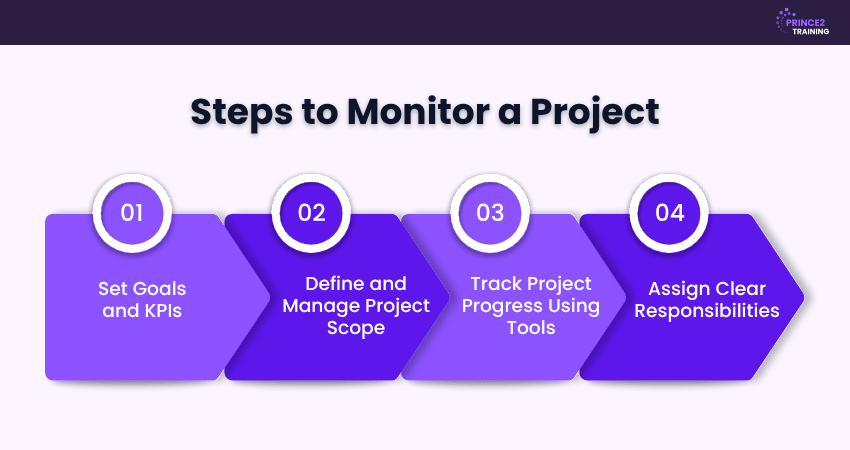
1) Define Goals and Key Performance Indicators (KPIs) During the Planning Phase
Set clear project goals and establish Key Performance Indicators (KPIs) during the planning stage. KPIs measure progress through milestones, making it easier to track performance and identify delays. They also provide measurable benchmarks for evaluating project success.
2) Clearly Define and Manage the Project Scope
Clearly define the project scope and review it regularly throughout the project. This helps prevent scope creep, controls costs, and ensures work remains aligned with the agreed objectives. Regular scope reviews also make it easier to manage change requests effectively.
3) Track Progress Using Tools such as Gantt Charts
Use tools such as Gantt charts, dashboards, and Project Management software to track tasks, timelines, dependencies, and resource allocation. These tools provide clear visibility into project progress and support better planning. They also help teams identify potential bottlenecks before they affect project delivery.
4) Assign Responsibilities and Ensure Team Accountability
Allocate tasks to the right teams and define clear responsibilities. Regular progress reviews and accountability help ensure work is completed on time and meets the required set of quality standards. This improves collaboration and enables faster resolution of project issues.
Build a strong foundation for every project by joining the PRINCE2® Foundation Training now!
What Should You Monitor During a Project?
Project Monitoring involves tracking the key areas that influence project performance and delivery. Regularly reviewing these areas helps teams identify issues early, make informed decisions, and keep the project aligned with its objectives. The key areas to monitor include:
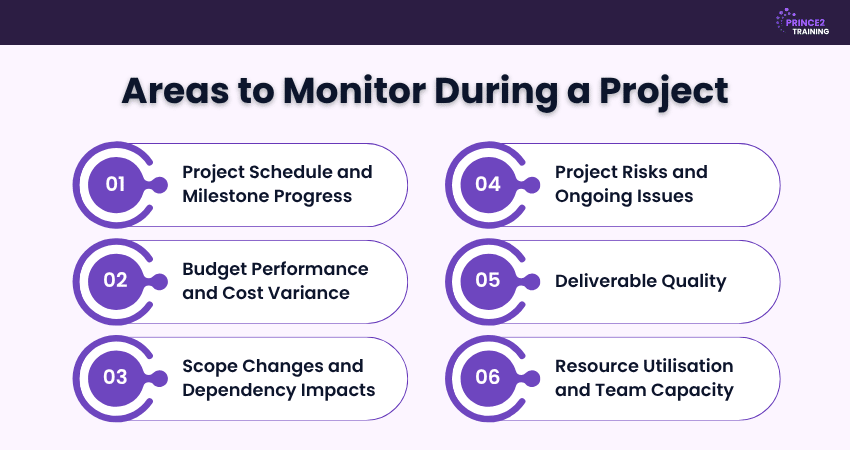
1) Project Schedule and Milestone Progress
Monitor task completion, milestones, and deadlines to ensure the project is progressing as planned. Early identification of delays allows teams to take corrective action before timelines are affected. This helps keep the project on schedule and increases the chances of meeting delivery deadlines.
2) Budget Performance and Cost Variance
Compare actual spending with the approved budget to identify cost overruns early. Regular cost monitoring helps control expenses and maintain financial stability throughout the project. Also, it supports effective financial planning and resource allocation.
3) Scope Changes and Dependency Impacts
Track changes to the project scope and assess how they affect timelines, costs and other tasks. Monitoring dependencies helps identify and prevent delays caused by interconnected activities. This ensures the project remains focused on its agreed objectives.
4) Project Risks and Ongoing Issues
Review existing risks regularly and identify new ones as the project progresses. Promptly addressing issues and blockers helps minimise disruptions and keeps the project on track. It also reduces the likelihood of small problems developing into major risks.
5) Deliverable Quality
Monitor deliverables to ensure they meet the required quality standards and stakeholder expectations. Regular reviews help identify defects early and reduce the need for rework. Maintaining quality also improves stakeholder satisfaction and overall project outcomes.
6) Resource Utilisation and Team Capacity
Track team workload, resource availability, and overall capacity throughout the project. This helps prevent resource shortages, avoid burnout, and ensure work is distributed efficiently. Balanced workloads also improve productivity and support consistent project performance.
What are Project Monitoring Techniques?
Project Monitoring techniques help Project Managers measure performance, identify issues early, and make informed decisions. Using the right techniques improves visibility, supports timely action, and increases the likelihood of successful project delivery. The key techniques include:
1) Earned Value Management (EVM)
Earned Value Management (EVM) compares planned work, actual progress, and project costs to measure overall project performance. It helps identify schedule delays and cost overruns before they become major issues.
How to Implement: Establish the project scope, budget, and schedule at the start of the project. Review actual progress against these baselines at regular intervals and take corrective action whenever significant variances are identified.
2) Using Key Performance Indicators (KPIs)
KPIs measure how effectively a project is progressing towards its objectives. Tracking metrics such as milestone completion, budget usage, and task completion provides a clear view of project performance.
How to Implement: Define a small set of measurable KPIs during project planning and review them regularly. Share these metrics through reports or dashboards so the team and stakeholders can easily monitor progress.
3) Automated Project Reporting
Automated reporting generates project updates using real-time project data, reducing manual effort and improving reporting accuracy. It ensures stakeholders receive timely and consistent information.
How to Implement: Automate recurring reports, such as weekly status updates and budget summaries, using Project Management tools. Schedule reports to be shared automatically with stakeholders to keep everyone informed.
Learn to deliver projects with precision and confidence by signing up for the PRINCE2® Practitioner Training today!
Common Project Monitoring Challenges and Mistakes
Even with a structured monitoring process, projects can face challenges that reduce visibility and affect decision-making. Recognising these common mistakes helps Project Managers improve monitoring practices and keep projects on track. Some of the most common challenges include:
1) Focusing Solely on Project Schedules
Tracking schedules alone does not provide a complete picture of project performance. Project Managers should also monitor budgets, quality, scope, risks, and resources to identify issues early. A balanced monitoring approach helps improve project outcomes and reduces the likelihood of unexpected problems.
2) Maintaining Inconsistent Reporting Practices
Irregular progress updates reduce visibility into the project's actual status and allow small issues to grow unnoticed. Establishing a consistent reporting schedule helps keep stakeholders informed and maintain project alignment. Regular reporting also enables faster responses to emerging risks and delays.
3) Relying on Outdated or Incomplete Data
Monitoring decisions are only as reliable as the data behind them. Outdated reports or disconnected systems can lead to inaccurate assessments and delayed actions. Using real-time, accurate data improves reporting quality and supports informed decision-making.
4) Measuring Metrics That Do Not Reflect Project Progress
Monitoring too many metrics can make it difficult to focus on what truly matters. Prioritise KPIs that directly measure project progress, costs, quality, and overall performance. This provides clearer insights and supports more effective decision-making.
Best Practices for Project Monitoring
Following best practices helps Project Managers improve project visibility, respond to challenges quickly, and keep projects aligned with their objectives. The following best practices can strengthen Project Monitoring:
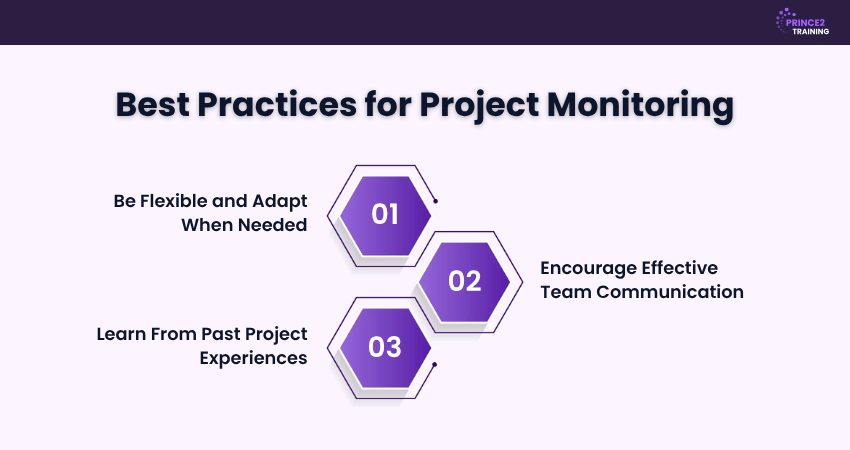
1) Be Flexible and Adapt When Needed
Project requirements and priorities can vary over time. Be prepared to adjust plans, timelines, or resources when necessary to keep the project moving towards its objectives. A flexible approach helps teams respond effectively to unexpected challenges.
2) Encourage Effective Team Communication
Encourage open communication across teams and stakeholders throughout the project. Regular updates and early reporting of issues help resolve problems quickly and keep everyone aligned. Clear communication also supports better collaboration and faster decision-making.
3) Learn From Past Project Experiences
Evaluate project outcomes after completion to identify successes, challenges, and areas for improvement. Documenting lessons learned helps refine monitoring practices and improve future project performance. Applying these insights helps prevent recurring issues and supports continuous improvement.
Conclusion
Project Monitoring plays a crucial role in keeping projects on track and aligned with their objectives. By tracking the right metrics, reviewing progress regularly and addressing issues early, teams can make informed decisions and improve project outcomes. This increases the chances of delivering projects on time, within budget and to the required quality standards.
Unlock the power of structured Project Management with the PRINCE2® Training – Sign up today!
Frequently Asked Questions
What are the Key Principles of Monitoring?
The key principles of monitoring are:
a) Setting Clear Objectives
b) Defining Measurable Indicators
c) Establishing a Baseline
d) Tracking Progress Regularly
e) Acting on Feedback
How Often Should Project Monitoring Be Conducted?
Project Monitoring should be conducted throughout the project lifecycle. The frequency depends on the project's size and complexity, but regular reviews such as daily, weekly or milestone-based monitoring help identify issues early, track progress and support timely decision-making.
How Does Project Monitoring Differ from Project Management?
Project Management covers the entire project lifecycle, including planning, execution, monitoring and delivery. Project Monitoring is an ongoing activity within Project Management that tracks progress, measures performance and compares results against the project plan to keep the project on track.



 Continue Browsing