Contact@prince2training.co.uk
 01344203999




 Back
Back


Table of Content


21-Sep-2026

Maria Thompson
Every project begins with a clear plan, defined goals, and confident expectations. Then small changes start to appear, often disguised as simple requests or quick fixes. Over time, these additions stretch timelines, increase costs, and blur the original vision. This gradual loss of control is what Scope Creep looks like in practice.
In Project Management, understanding What is Scope Creep helps keep your work focused and teams balanced. When left unmanaged, it quietly drains productivity and creates pressure across the project. Recognising the early signs allows teams to respond before damage is done. In the next blog, we will explore what Scope Creep is, why it happens, and how to prevent it effectively.
What is Scope Creep?
Scope Creep refers to the gradual expansion of a project's scope beyond what was originally agreed. It usually begins with small, seemingly harmless additions to features, requirements, or tasks that are introduced without proper review or approval. Over time, these changes accumulate and push the project beyond its planned boundaries.
Scope Creep can occur at any stage of a project, but it often becomes more noticeable during planning and delivery. Although it can happen in any industry due to changing priorities or complex stakeholder demands, unmanaged Scope Creep can result in missed deadlines, budget overruns, reduced quality and damage to organisational credibility.

How Does Scope Creep Work?
Imagine your team has agreed to update the homepage of a website by changing only the banner image. At the beginning, everyone comes together to review the current homepage and discuss the best design and placement for the new banner. The conversation is initially clear and focused on the agreed objective.
Scope of Work:
The defined task is to finalise the design and position of the new homepage banner. However, as the discussion continues, team members begin suggesting additional changes, such as modifying the navigation menu, updating the colour scheme, changing font styles, or even adding new sections to the website.
Scope Creep:
As more ideas are introduced, the discussion gradually shifts away from the original objective. The team starts considering changes that were not part of the approved scope. If these extra requirements are accepted without proper evaluation, approval, or adjustments to timelines and budgets, they result in Scope Creep, which can impact the project's schedule, cost, and overall project delivery.
How to Manage Scope Creep?
Now that you understand What is Scope Creep, the next step is learning how to control it, so your project stays on track. While there are several ways to manage it, the following practices are the most essential:
1) Clearly Define the Project Scope and Track Against the Baseline
One of the effective ways to prevent Scope Creep is to set a clear and detailed project scope from the start. This acts as the project's central reference as it outlines the tasks, Project milestones, deliverables, timelines, budgets, resources, team roles and responsibilities. It must be reviewed and approved by all stakeholders before the project begins.
Once the project is underway, continuously compare progress against the baseline, which represents the original plan. If timelines begin to slip or deliverables change, refer back to the baseline to identify deviations.
2) Monitor Budgets, Resources, and Deadlines
Ongoing monitoring is critical to keeping a project on track. Simply knowing the milestones and deadlines is not enough. You need to actively track them. When oversight is lacking, issues can quickly blow up.
Using Project Management tools with dashboards can help you monitor Key Performance Indicators (KPIs) like workload, budgets, deadlines and upcoming tasks. These dashboards provide real-time insights and allow you to identify risks early.
3) Follow Your Risk Management Plan
Every project encounters challenges, making a Risk Management plan essential. This plan should be created alongside the project scope and outline potential risks such as resource shortages, supplier delays, market changes and team availability issues. It should also define how each risk will be handled.
When issues arise, refer to this plan for quick action. For example, if a vendor fails, switch to a backup supplier already identified. If a team member becomes unavailable, allocate responsibilities according to the contingency plan. Responding quickly to risks helps maintain project stability and reduces the likelihood of Scope Creep.
4) Manage Change Requests and Set Boundaries
Uncontrolled change requests are a big cause of Scope Creep. Even small suggestions can accumulate and disrupt the project. To avoid this, establish a formal change request process that everyone must follow. Whether it involves submitting a request through software or a standardised form, consistency is key.
This ensures that all the changes are documented, assessed and approved before implementation. Equally important is the ability to push back when necessary. Not all requests should be accepted, especially if they impact Project timelines, budgets, or project goals.
Common Causes for Scope Creep
Scope Creep can arise for many reasons, often when projects lack clarity or control. Here are the most common causes:
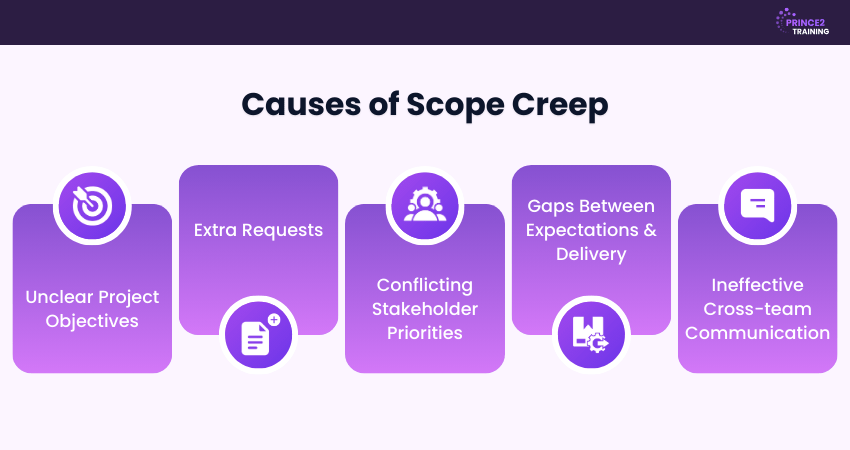
1) Unclear Project Objectives
When project goals are unclear or poorly defined, extra work can easily be added without being noticed. Revisiting the strategic objectives and aligning the team around clear goals helps create a solid plan and limits unnecessary expansion.
2) Extra Requests
Project Managers may feel pressured to accept extra requests, especially from high-value clients or when future opportunities are at stake. However, even small additions can cause delays and budget overruns if strict change controls are not enforced.
3) Conflicting Stakeholder Priorities
Projects often involve multiple stakeholders with varying priorities. While their concerns must be considered, Project Managers need to stay focused on the core objectives and balance the input carefully to avoid distractions that dilute productivity.
4) Gaps Between Expectations and Delivery
Scope Creep can occur when expectations exceed available resources or capabilities. Poor planning, unsuitable tools and inefficient processes contribute to the gaps between what management expects and what teams can realistically deliver.
5) Ineffective Cross-team Communication
Ineffective communication is a major contributor to Scope Creep. Without clear and consistent coordination, teams may duplicate work, miss deadlines or increase costs, all of which negatively impact project outcomes.
Master project structure, control and clarity with our range of PRINCE2® Courses - Sign up now!
How Scope Creep Impacts Projects?
When project changes are not controlled, they can create serious problems for both clients and contractors. Here's how Scope Creep affects projects:
1) Budget and Schedule Impact:
Scope Creep frequently leads to budget overruns and project delays, resulting in reduced quality and unsatisfactory outcomes.
2) Decision-making Challenges:
Continuous changes to the scope force Project Managers to make quick compromises, increasing the risk of poor decision-making.
3) Increased Team Pressure:
Ongoing scope changes place heavy pressure on project teams, raising stress levels and increasing the likelihood of burnout.
4) Quality Risks: Tight deadlines and constant adjustments often cause rushed work, where quality standards may be compromised.
How to Avoid Scope Creep?
Here are some practical and proven ways Product Managers can prevent Scope Creep, based on industry best practices:
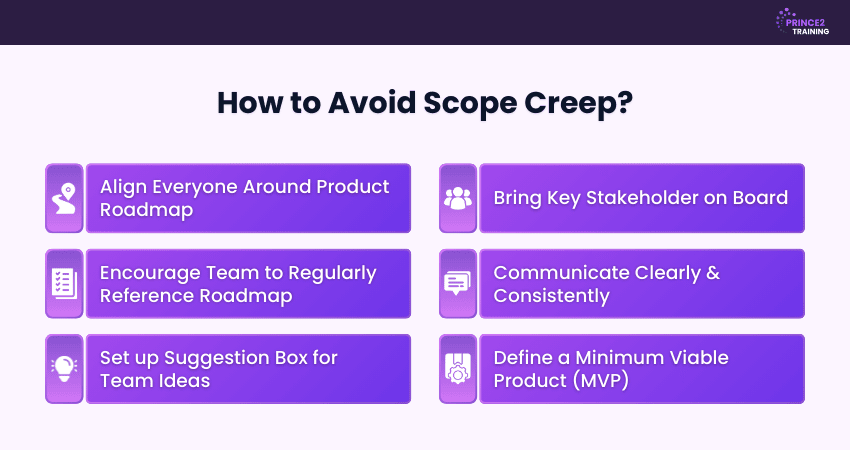
1) Align Everyone Around the Product Roadmap
Share the product roadmap early and regularly with your team and stakeholders. A clear roadmap helps everyone understand priorities, constraints and why extra features may disrupt progress.
2) Encourage the Team to Regularly Reference the Roadmap
Make reviewing the roadmap a routine habit during planning and execution. Referring back to it keeps work aligned with agreed goals and helps teams spot when changes drift outside the intended scope.
3) Set up a Suggestion Box or Parking Lot for Team Ideas
Create a space where your team members can record new ideas without immediately adding them to the active plan. Review these suggestions later against priorities so that the promising ideas are considered without derailing current work.
4) Bring Key Stakeholders on Board
Get an agreement on scope and expectations from all important stakeholders early. Regular check-ins with them help avoid unplanned changes and ensure everyone understands what is and isn't part of the current plan.
5) Communicate Clearly and Consistently
Maintain frequent communication across the team and with stakeholders about scope, plans and changes. Ongoing dialogue helps prevent misunderstandings and unintentional expansions of project work.
6) Define a Minimum Viable Product (MVP)
Agree on an MVP at the start. An MVP focuses on must-have features that helps teams resist adding "nice-to-have" items early on. This prioritised baseline keeps the product's core goals front and centre.
Harness the power of structured project success in our
Introduction to Project Management Training
- Register now!
Scope Creep Examples
Here are four clear examples that will help you understand What is Scope Creep clearly:
1) Client Requests Extra App Features
A company agrees to build a mobile app based on a fixed brief. The original plan includes user registration, profile creation and basic dashboard features. However, once development begins, the client requests extra options such as payment integration, advanced reports and multiple login methods.
These additions increase the amount of design, coding and testing required. If the project plan is not reviewed before accepting it, the app becomes larger than originally agreed.
2) Expansion of an Internal Software System
A team begins creating an internal reporting system for one department. The approved scope includes monthly reports, user access and simple performance dashboards. Later, other departments request custom charts, automated notifications and advanced filtering options.
As more teams add their requirements, the system becomes more complex. The project then shifts from a simple reporting tool to a wider business intelligence solution.
3) Added Requirements During Wi-Fi Upgrade
An organisation plans a Wi-Fi upgrade to improve internet speed and coverage across the office. The initial work includes replacing routers, checking signal strength and testing connectivity in key areas.
During implementation, different teams ask for guest networks, additional access points, stronger security settings and separate bandwidth controls. These changes turn a basic network upgrade into a much broader infrastructure project.
4) Technology Upgrades Added to Construction Scope
A construction project is approved to build a new office space with a fixed layout, standard electrical fittings and basic network cabling. However, during the build, stakeholders request extra technology upgrades such as smart lighting, access control systems, security cameras, automated meeting rooms and advanced audio-visual equipment.
These additions require extra planning, wiring, vendor coordination and testing. What started as a standard construction project gradually expanded into a technology-enabled workspace project, increasing the workload beyond the original scope.
What are the Benefits of Preventing Scope Creep?
Scope Creep can create confusion, reduce clarity, lower team morale and more. By controlling it properly, you can unlock several key advantages:
a) Reliable Delivery:
Projects are more likely to stay on schedule and deliver exactly what was agreed upon.
b) Improved Focus:
With fewer distractions and unexpected changes, teams can concentrate better and maintain productivity.
c) Higher Customer Satisfaction:
Clear direction and consistent output result in better-quality deliverables and more satisfied clients.
d) Better Resource Management:
Time, budget and team efforts are used efficiently, avoiding unnecessary rework or overspending.
e) Stronger Team Morale: Clear expectations and stable workflows reduce stress, which keeps teams motivated and engaged throughout the project.
Conclusion
Scope Creep rarely happens suddenly. It grows through small changes and unclear boundaries that weaken control over time. Understanding What is Scope Creep, along with clear scope definition, strong communication and disciplined change control, can help Project Managers keep projects focused and on track. This approach reduces risk and supports consistent, successful delivery.
Looking to cultivate future‑ready project skills? Sign up for the PRINCE2 Agile® Foundation Course now!
Frequently Asked Questions
How Does Scope Creep Occur in Projects?
Scope Creep occurs when additional tasks, features or requirements are introduced without proper approval or adjustment to timelines and budgets. It often happens through informal suggestions, unclear requirements, or a lack of a defined scope. Over time, these small changes accumulate and expand the project beyond its original objectives.
What Tools Help in Controlling Scope Creep?
Project Management tools like task tracking software, dashboards and change request systems help with controlling Scope Creep. They help monitor timelines, budgets and resources. Features like KPI dashboards, approval workflows and baseline tracking ensure that the changes are properly evaluated.
What is the Difference Between Scope Creep and Scope Change?
Scope Creep refers to uncontrolled and often informal additions to a project without proper approval. In contrast, scope change is an approved modification to the project scope, which is typically managed through a formal change request process. Scope change is intentional and controlled, while Scope Creep is unplanned and negative.



 Continue Browsing