Contact@prince2training.co.uk
 01344203999




 Back
Back


Table of Content

30-Jul-2026

Hailey Davis
A Project Management Plan is the heartbeat of a successful project. It serves as your blueprint, guiding teams and resources toward a shared goal and keeping everyone in sync from kickoff to completion. Without it, even the best ideas can lose direction. In short, it provides the structure needed to turn ideas into successful outcomes.
This blog explores What is a Project Management Plan, why it matters and how to build one step-by-step. Whether you are launching a bold new idea or managing a complex initiative across multiple teams or changing priorities, this plan becomes your path to predictable success. So read on!
What is a Project Management Plan?
A Project Management Plan is a document that outlines the project's scope, objectives, timeline, resources and processes. It serves as a roadmap for execution, guiding teams and stakeholders from initiation to completion while ensuring alignment throughout the project lifecycle.
It also establishes clear roles, responsibilities and communication channels to support effective collaboration. Additionally, it helps monitor performance, manage risks and make sure that the project stays on track to achieve its intended outcomes.

Why Use a Project Management Plan?
A Project Management Plan is important for securing support and alignment among project leaders, clients, stakeholders and the project team. Before the execution begins, it ensures that everyone clearly understands the project's goals, responsibilities, timelines, milestones and resource allocation.
It also supports effective coordination by setting expectations and improving communication among all parties involved. Combined with a Risk Management plan, it can control scope creep and keep the project focused.
Key Components of Project Management Plan
These are the 12 essential components that make up a successful Project Management Plan:
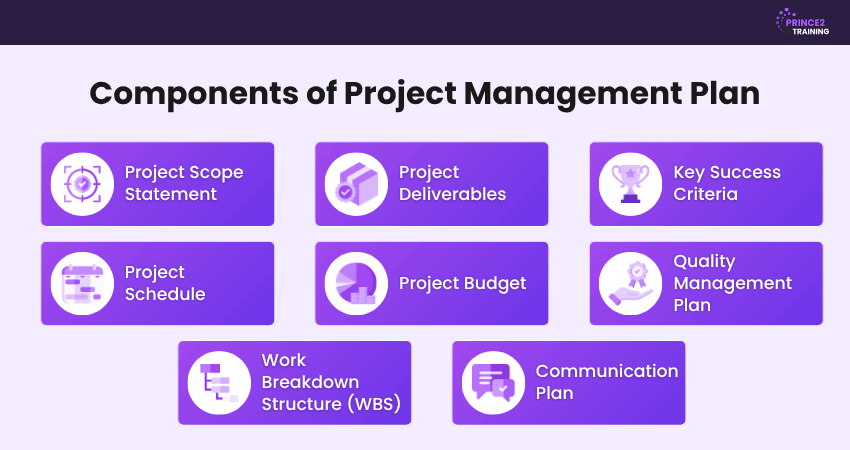
1) Project Scope Statement
The scope statement defines the boundaries of the project by clearly outlining what's included and excluded. It ensures clarity on objectives and prevents misunderstandings during execution. A well-defined scope should be Specific, Measurable, Achievable, Relevant and Time-bound (SMART) to support effective project delivery.
2) Project Deliverables
Deliverables refer to the tangible and intangible outputs that a project is expected to produce. They define what will be handed over to stakeholders upon completion. Clearly outlining deliverables ensures alignment on expectations and quality standards.
3) Key Success Criteria
Key success factors define what determines the success of a project. These may include timelines, budget adherence, quality standards, and stakeholder satisfaction. Clearly identifying these factors helps guide decision-making and measure overall project performance.
4) Project Schedule
The project schedule outlines timelines, milestones, and deadlines for completing tasks. It helps coordinate activities and ensures timely delivery. An effective schedule provides visibility into progress and supports proactive management of delays.
5) Project Budget
The budget defines the financial resources required to complete the project. It includes cost estimates for tasks, resources, and materials. Effective budget planning supports cost control and reduces the risk of overspending.
6) Quality Management Plan
The quality component outlines the standards that project deliverables must meet. It ensures that outputs align with expectations and industry requirements. It also includes processes for quality assurance and quality control throughout the project lifecycle.
7) Work Breakdown Structure (WBS)
The WBS breaks the project into manageable tasks or components. This structured approach allows teams to plan, assign, and track work effectively. It forms the foundation for scheduling, budgeting, and resource allocation.
8) Communication Plan
The communication plan defines how information will be shared among stakeholders. It includes communication methods, frequency, and key updates. Strong communication ensures transparency and reduces the risk of misunderstandings.
9) Stakeholder Register
The stakeholder list identifies all individuals or groups involved in or affected by the project. It helps understand their interests, influence, and expectations. Maintaining this list supports better engagement and decision-making.
10) Human Resource Management Plan
This plan defines the roles, responsibilities and structure of the project team. It outlines how team members are selected, managed, and developed. Effective resource planning ensures the team has the necessary skills and support to deliver the project successfully.
11) Procurement Management Plan
The procurement plan outlines how external products and services will be acquired. It defines sourcing methods, vendor selection, and contract management. This ensures that external dependencies are effectively managed and aligned with project goals.
12) Risk Register
The risk register identifies potential risks that may impact the project. It includes their likelihood, impact, and mitigation strategies. Managing risks proactively helps minimise disruptions and improve project outcomes.
The blend of structured governance and Agility is the key to improving project skills – Sign up for PRINCE2 Agile® Practitioner Course now!
How to Create a Project Plan?
A Project Plan is created by following a structured set of steps; from defining the scope and setting goals and objectives to planning the budget and resources and establishing communication workflows. These are the key steps:
Step 1: Define Project Scope
Clearly outline what the project will include and exclude to establish boundaries. Use insights from previous projects to estimate timelines accurately and ensure alignment with stakeholder expectations.
Step 2: Set Clear Goals and Objectives
Convert the defined scope into clear, measurable objectives. Make sure these goals are realistic and in line with project timelines and desired outcomes.
Step 3: Develop Project Deliverables
Break down objectives into specific, tangible outputs such as reports, features, or completed tasks. Estimate the time and resources required for each deliverable and align them with key milestones.
Step 4: Assign Roles and Responsibilities
Define ownership for each task to ensure accountability across the team. Clearly communicating roles helps streamline collaboration and avoid confusion. Establish clear reporting lines so that the team members understand who to approach for decisions and support.
Step 5: Plan Budget and Resources
Identify the financial, human, and material resources required for the project. Use reliable estimation techniques to control costs and track spending effectively. Regularly review resource allocation to ensure optimal utilisation and prevent budget overruns.
Step 6: Identify Project Risks
Recognise potential risks that could impact the project and define mitigation strategies. Proactive risk management helps minimise disruptions and supports smoother execution. Continuously monitor risks throughout the project to address new challenges as they arise.
Step 7: Create a Project Schedule
Organise tasks in a logical sequence, set dependencies, and define milestones. A well-structured schedule helps monitor progress and manage timelines efficiently. Update the schedule regularly to reflect changes and maintain alignment with project objectives.
Step 8: Set up Communication Processes
Define how information will be shared, including reporting methods and frequency. Effective communication ensures transparency, quick issue resolution, and stakeholder alignment. Standardise communication channels to keep all updates consistent and easily accessible.
What are the Benefits of Project Management Plan?
Here are the main benefits of a good Project Management Plan:
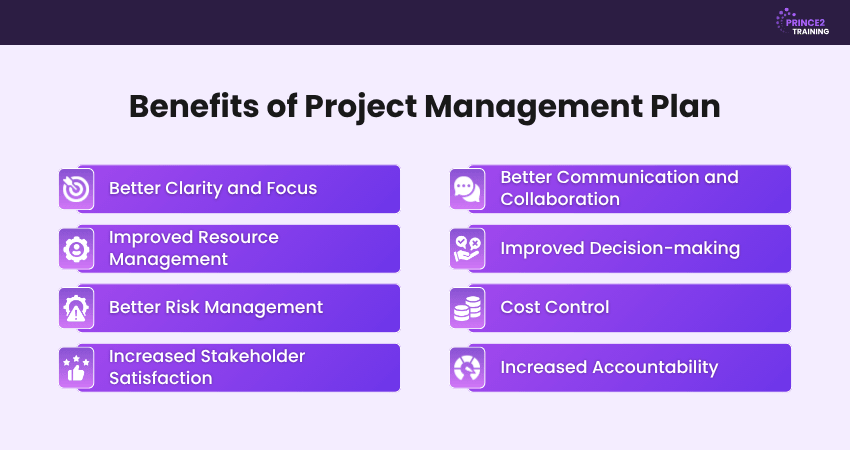
Better Clarity and Focus: A clear plan outlines the project's goals, tasks, and timelines so everyone understands what needs to be done. This helps the team stay focused and avoids confusion or unnecessary changes.
Improved Resource Management: It ensures that people, budget, and materials are used effectively. This helps avoid overuse or shortages and keeps the project running efficiently.
1) Better Risk Management: A Project Plan identifies possible risks and prepares solutions in advance. This allows teams to handle issues quickly and reduce delays or extra costs.
2) Increased Stakeholder Satisfaction: A clear plan keeps stakeholders informed with regular updates and progress tracking. This builds confidence and trust in the project's success.
3) Better Communication and Collaboration: The plan defines how information will be shared among the team and stakeholders. This improves teamwork and reduces misunderstandings.
4) Improved Decision-making: The plan acts as a guide for making decisions throughout the project. It ensures that all decisions remain aligned with project goals and priorities.
5) Cost Control: A clear budget helps track spending and avoid unnecessary costs. This ensures the project stays within its financial limits.
6) Increased Accountability: Clearly defined roles and responsibilities make team members accountable for their work. This encourages ownership and improves overall performance.
7) Easier Project Evaluation and Learning: The plan makes it easier to review project performance after completion. It also helps identify lessons that can improve future projects.
Lay the groundwork for smarter, structured project delivery with our PRINCE2® Foundation Training - Sign up now!
Project Planning Mistakes and How to Avoid Them
Here are the common mistakes associated with Project Management Plans:
1) Unclear Scope: This often occurs due to vague objectives and limited stakeholder input, resulting in scope creep, unmet expectations, and wasted effort. It can be avoided by clearly defining the scope and validating it with stakeholders early.
2) Unrealistic Schedule: This occurs when timelines are estimated without reliable data, resulting in missed deadlines and overworked teams. To avoid this, leverage insights from past projects and include buffer time to improve accuracy.
3) Weak Budgeting: This occurs when hidden costs are overlooked or required resources are underestimated, leading to cost overruns and reduced project value. It can be prevented by aligning budgets with deliverables and consistently tracking spending.
4) Poor Communication: This arises from unclear communication processes or scattered updates, causing misalignment, duplicated work, and stakeholder frustration. Establishing clear communication workflows and centralising updates helps resolve this issue.
Example of a Project Management Plan
Consider the example of a software company developing a mobile banking app. The plan includes:
1) Scope Statement: Design and launch a secure app with login, fund transfer, and transaction tracking features
2) Project Schedule: 16 weeks with defined development phases
3) Budget: £80,000 covering design, development, testing and security
4) Risk Register: Data security risks, integration issues
5) Communication Plan: Weekly stakeholder updates and daily team check-ins
The team assigns tasks using a responsibility matrix and monitors progress through timelines and task boards to ensure smooth execution
Conclusion
A well-crafted Project Management Plan becomes the anchor that keeps goals clear and teams aligned. With faster innovation and greater complexity affecting modern projects, this plan empowers you to navigate challenges with confidence. By understanding What is a Project Management Plan and having the right plan in place, every project becomes an achievable journey toward success.
Step into smarter Project Management with our PRINCE2® Training - Sign up now!
Frequently Asked Questions
What Makes a Good Project Management Plan?
A good Project Management Plan is clear, structured, and easy to follow. It defines the scope, goals, timelines, roles and resources while also addressing risks and communication needs. Most importantly, it keeps all stakeholders aligned and supports smooth execution from start to finish.
What Should a Project Plan Look Like?
A project plan must be well-organised and cover key elements such as scope, objectives, deliverables, schedule, budget, risks and communication methods. It must be simple enough to understand yet detailed enough to guide the execution process. A clear layout helps the teams track progress and stay aligned throughout the project.
What are the Four Pillars of Project Management?
The four pillars of Project Management are scope, time, cost and quality. These elements define what needs to be delivered, when it should be completed, how much it will cost, and the standards it must meet. Balancing these pillars is essential for successful project delivery.



 Continue Browsing