Contact@prince2training.co.uk
 01344203999




 Back
Back


Table of Content

21-Sep-2026

Grace Mitchell
Behind every successful project is one simple habit of breaking big goals into measurable checkpoints. No project becomes successful by chance; every project requires clearly defined stages to stay on track. This is where Project Milestones play a crucial role. They act as strategic checkpoints that help teams track progress, monitor performance, and stay aligned with deadlines while quickly identifying risks or delays.
In this blog, we will explore what are Project Milestones, why they are important, their examples and practical ways to create and manage milestones for successful project completion. Let's get started!
What are Project Milestones?
Project Milestones are checkpoints or achievements that mark the completion of major phases, activities, or deliverables within a project. They are used to measure progress and indicate that a major stage of the project has been completed successfully. They help teams stay focused on important goals and deadlines throughout the project lifecycle.
Project Managers use milestones to divide projects into manageable stages and track whether the project is moving according to schedule. Milestones are commonly displayed on project timelines or Gantt charts to provide a clear visual representation of progress.

Project Milestones vs Tasks vs Deliverables
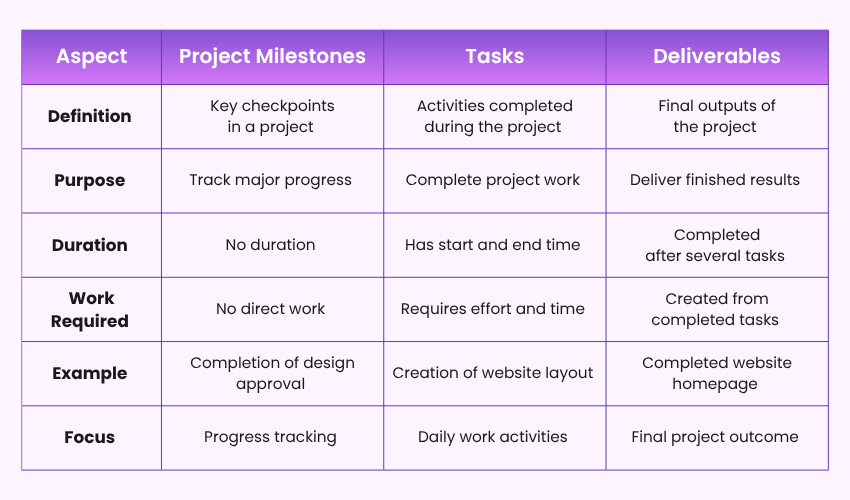
Many people often confuse Project Milestones with tasks and deliverables. Although they are connected, they serve different purposes in Project Management.
Milestones
Milestones indicate progress and major achievements in a project lifecycle. They do not consume resources or time directly. Instead, they represent the completion of important project phases.
Tasks
Tasks are the actual activities team members perform during the project. These may include writing code, conducting research, or preparing reports. Tasks require time, effort, and resources.
Deliverables
Deliverables are the final outputs produced after completing tasks. These may include reports, software applications, presentations, or products delivered to stakeholders or customers.
Understanding their differences is important because it helps you organise schedules effectively and track progress accurately. Here is a table that explains the differences in detail:
Why Tracking Project Milestones is Important?
Tracking Project Milestones is essential because it helps ensure that the project remains aligned with objectives, timelines, and stakeholder expectations. Without milestones, projects can easily lose direction and become harder to monitor.
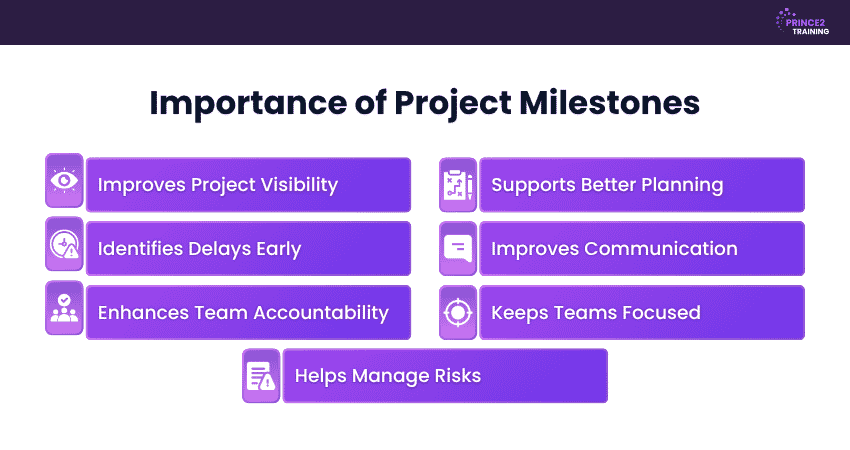
Let's check why Project Milestones are important:
1) Improves Project Visibility
Tracking milestones helps teams clearly understand how much progress has been made and which stages are still pending. It gives managers a better overview of the project timeline. This makes it easier to monitor project performance and overall progress.
2) Identifies Delays Early
Milestones help detect project delays before they become major issues. Managers can quickly take corrective action if a milestone is missed. Early identification of delays helps reduce the impact on project deadlines, budgets, and resource planning.
3) Enhances Team Accountability
Clear milestones help team members understand their responsibilities and deadlines, improving ownership and accountability within the project. This encourages teams to stay committed to achieving project goals on time.
4) Supports Better Planning
Milestone tracking allows Project Managers to plan resources, schedules, and budgets more effectively throughout the project lifecycle. It also helps managers make informed decisions when project changes occur.
5) Improves Communication
Milestones provide clear progress updates for stakeholders, clients, and management, making communication more organised and transparent. This helps everyone stay informed about important project developments.
6) Keeps Teams Focused
Project Milestones help teams stay aligned with project goals and maintain focus on completing important stages on time. Achieving milestones also gives teams a sense of accomplishment. This can improve team motivation and productivity throughout the project.
7) Helps Manage Risks
Tracking milestones allows teams to review project risks at important stages and solve problems before they affect the entire project. It also helps organisations respond more effectively to unexpected challenges.
Manage complex projects by combining Agile delivery techniques with PRINCE2 Agile® Foundation and Practitioner Training – Register today!
How to Set Milestones in Project Management?
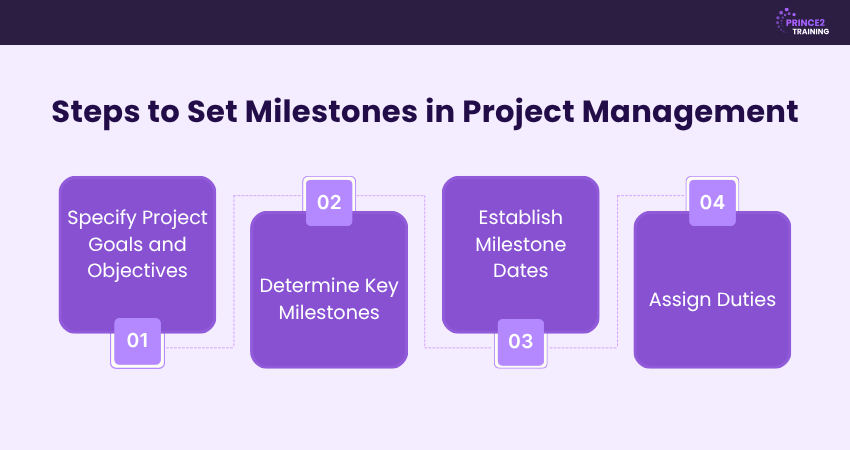
Setting correct Project Milestones is important for tracking progress and managing projects. Let’s check the steps involved in setting your Project Milestones:
1) Specify Project Goals and Objectives
The first step is to clearly define the goals and objectives of the project. Project Managers should understand what the project aims to achieve and what outcomes are expected. Clear goals make it easier to identify meaningful milestones that support the overall success of the project.
2) Determine Key Milestones
Once the project goals are defined, the next step is to identify the major checkpoints within the project lifecycle. These milestones may include approvals, completed phases, testing stages or final deliverables. Choosing the right milestones helps teams monitor important project progress effectively.
3) Establish Milestone Dates
Each Milestone should have a clear deadline or target date. Setting realistic dates helps teams stay organised and ensures the project moves according to schedule. Proper scheduling also helps managers identify delays early and make necessary adjustments when required. This improves time management and keeps teams focused on achieving important project goals.
4) Assign Duties
Every Milestone should have assigned responsibilities, so team members know who is responsible for completing and monitoring each stage. Clear role allocation improves accountability, reduces confusion and helps ensure milestones are achieved on time. It also encourages collaboration and communication among project team members.
Gain a clear understanding of project roles, processes and controls with PRINCE2® Foundation Training – Begin immediately!
Examples of Project Milestones
Project Milestones can vary depending on the type, size and goals of a project. They are usually connected to important achievements, approvals or completed phases within the project lifecycle. Below are some common examples of Project Milestones used across different phases of Project Management:
1) Milestones in Project Initiation
The initiation phase focuses on defining the project and obtaining approval to proceed. Common initiation milestones include:
1) Business case approval
2) Project charter approval
3) Stakeholder identification completion
4) Assigning Project Manager
5) Initial budget approval
Example:
Imagine a company planning to develop a new mobile banking application. During the project initiation phase, the management team first approves the business case after reviewing the expected costs, benefits and market demand.
Once approved, a Project Manager is assigned, key stakeholders are identified and the initial project budget is finalised. These completed activities act as Project Milestones before the development work begins.
2) Milestones in Project Planning
During the planning stage, the project team develops schedules, budgets and strategies. Common planning milestones include:
1) Finalising the project scope
2) Completing the Work Breakdown Structure (WBS)
3) Receiving budget approval
4) Completing the risk assessment
5) Approving the project schedule
6) Finalising resource allocation
Example:
During this stage, the scope of the mobile banking application project is finalised to define the app’s features and objectives.
The team then completes the risk assessment, receives budget approval and finalises the project schedule and resource allocation. These achievements act as milestones before the development phase begins.
3) Milestones in Project Execution
Execution is where the actual project work takes place. Milestones in this phase help monitor progress and ensure deliverables are completed on time. The milestones used in this stage involve:
1) Completing the prototype
2) Completing system development
3) Completing User Acceptance Testing (UAT)
4) Achieving Quality Assurance (QA) approval
5) Completing employee training sessions
6) Launching the product successfully
Example:
Here, the development team begins building the actual mobile application based on the approved plan. They create a prototype, which acts as a basic version of the app and shows how the design, features and user interface will work.
Once the team finishes and reviews this sample version, it becomes a Project Milestone because an important stage of the project has been completed.
4) Milestones in Project Closure
Closure milestones confirm that the project has been completed successfully. They ensure that all project requirements have been fulfilled before completion. The milestones of this stage include:
1) Submitting the final deliverables
2) Receiving client approval
3) Completing project documentation
4) Completing the final budget review
5) Conducting the lessons learned meeting
6) Officially closing the project
Example:
In the final stage of the mobile banking application project, the company submits the completed application and related deliverables to the client for final approval. After receiving approval, the team completes all project documentation and reviews the final project budget.
Later, the team conducts a lesson learned meeting to discuss successes and challenges faced during the project. Once all activities are completed, the project is officially closed, marking the final Project Milestone.
Strengthen your ability to control project risks and timelines with PRINCE2® Practitioner Training – Sign up soon!
Common Mistakes in Project Milestone Planning
Although milestones are valuable, many organisations make mistakes when planning or managing them. These mistakes can reduce their effectiveness and create unnecessary complications. Below are some of the common mistakes that you need to avoid:
1) Setting Too Many Milestones
Adding excessive milestones can make the project timeline confusing and difficult to manage. Milestones should focus only on major achievements and important checkpoints.
2) Creating Unclear Milestones
Vague milestones can create misunderstandings among team members and stakeholders. Every milestone should be specific, measurable and easy to understand.
3) Treating Milestones Like Tasks
Milestones are checkpoints, not actual work activities. Confusing milestones with project tasks can make project tracking inaccurate and complicated.
4) Ignoring Stakeholder Input
Failing to involve stakeholders during Milestone planning may lead to unrealistic expectations or approval delays. Stakeholder feedback helps create more practical milestones.
5) Not Updating Milestones
Projects often change due to risks, delays or new requirements. If milestones are not updated regularly, the project schedule may become inaccurate and harder to control.
6) Skipping Risk Reviews at Milestones
Some teams focus only on completing milestones without reviewing possible risks or issues. Regular risk reviews at Milestone stages help prevent future project problems.
7) Poor Communication
Even well-planned milestones may fail if they are not communicated properly. Teams should clearly understand Milestone deadlines, responsibilities and expectations.
8) Not Linking Milestones to Project Goals
Milestones should support the overall objectives of the project. If they are not connected to project goals, they may not provide meaningful value or progress tracking.
Best Practices for Using Milestone Charts
Milestone charts are useful tools that help Project Managers track progress, monitor deadlines and visualise important project stages. Here are the best practices you can follow to create effective milestones:
a) Keep Milestones Clear and Specific: Each Milestone should clearly represent an important project achievement or checkpoint. Specific milestones make progress easier to track and understand.
b) Focus on Major Project Stages: Milestone charts should highlight only significant phases, approvals or deliverables instead of small daily tasks. This keeps the chart simple and organised.
c) Update Charts Regularly: Milestone charts should be reviewed and updated frequently to reflect project changes, delays or completed stages. This improves project accuracy and visibility.
d) Use Visual Project Management Tools: Using tools such as Gantt charts, dashboards or Project Management software makes Milestone tracking easier and gives teams a clearer view of deadlines, dependencies and progress.
e) Share Milestone Updates with Stakeholders: Regular Milestone updates help stakeholders stay informed about project progress, upcoming deadlines and important achievements. This improves communication and transparency.
f) Avoid Overloading the Chart: Adding too many milestones can make the chart confusing and difficult to manage. Focus only on meaningful checkpoints that represent major progress.
Conclusion
Project Milestones keep projects organised, focused and aligned with deadlines. They act as clear checkpoints that help teams measure progress, improve planning and ensure projects move smoothly towards the goals. Whether managing a small business project or a large-scale operation, effective Milestone planning can significantly improve project success and team productivity.
Improve your ability to manage projects across different industries with PRINCE2 Training– Join now!
Frequently Asked Questions
What are the Key Milestones of a Project?
The key milestones of a project usually align with the major phases of the project lifecycle. These often include project approval, planning completion, design approval, development completion, testing completion, final delivery and project closure. These milestones depend on the type and complexity of the project.
What is the Project Milestone Checklist?
A Project Milestone checklist is a structured list of key milestones along with criteria, deadlines, and responsibilities. It helps teams track progress, verify completion of important stages and maintain consistency. This checklist ensures no critical step is missed during project execution.
How to Show Milestones in a Project?
Project Milestones are commonly displayed using Project Management tools such as Gantt charts, project timelines, dashboards or calendars. They are represented as key points or markers on the timeline, highlighting major events. Clear labels, dates and status indicators help stakeholders easily understand project progress.



 Continue Browsing