01344203999




 Back
Back


Table of Content


19-Oct-2026

Maria Thompson
Every successful project begins with clarity. Before timelines, budgets, or tools come into play, project teams need a shared understanding of what they are actually trying to deliver. This clarity can come from a well-defined Project Scope, which sets clear boundaries and direction for the work ahead. But What is a Project Scope, and what is necessary?
In this blog, we will break down What is Project Scope, why it matters, and how to define it to support effective planning and smooth project delivery. We will also share some examples to make the concept easier to understand. Let's get started!
What is Project Scope?
Project Scope refers to the detailed outline of all the work required to complete a project successfully. It explains the project's objectives, deliverables, tasks, constraints, and exclusions. In simple terms, it answers what is included and what is not included in a project, and tools like SIPOC can help visualise the high-level process boundaries and stakeholders involved.
A well-defined Project Scope helps teams stay focused and aligned throughout the project lifecycle. It prevents misunderstandings, reduces the risk of scope creep, and ensures that resources are used efficiently. By clearly outlining expectations from the start, project managers can deliver outcomes on time and within budget while meeting stakeholder requirements.

Why is Project Scope Important?
Project Scope is important because it gives everyone a clear understanding of what the project will deliver. It helps teams stay focused on the right tasks and ensures that work aligns with the agreed goals. When scope is clearly defined, teams can plan timelines, budgets, and resources more accurately, often supported by Scrum Artifacts that track work and progress in Agile projects.
A well-defined Project Scope also improves communication between stakeholders, project managers, and team members.
It reduces confusion, supports better decision-making, and builds trust across the project. Overall, it plays a key role in delivering projects smoothly and achieving successful outcomes.
Key Components of a Project Scope Statement
A well-defined Project Scope statement serves as a roadmap throughout the project lifecycle. While its structure may differ depending on project complexity, an effective scope statement typically includes these key elements:
a) Project Goals and Objectives: Outline what the project aims to achieve and why it matters.
b) Deliverables: Specify the tangible outcomes or outputs to be produced upon completion.
c) Scope Boundaries: Clearly define what is included in the project, as well as what falls outside its scope.
d) Constraints: Identify limitations such as budget, timelines, or resource availability.
e) Acceptance Criteria: Establish the standards and conditions that deliverables must meet for stakeholder approval.
Eight Steps to Define Your Project Scope
Defining a clear Project Scope is essential for successful Project Management. A well-defined scope sets boundaries, aligns expectations, and ensures the project stays focused from start to finish. Below are eight practical steps to define your Project Scope effectively:
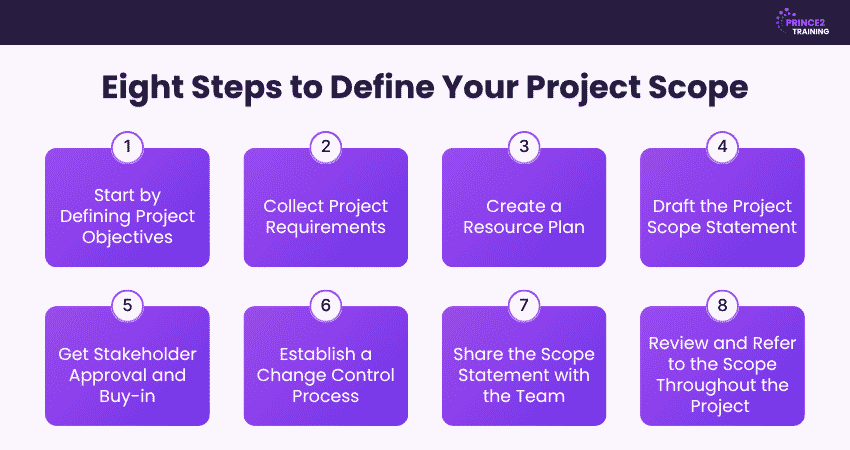
1) Start by Defining Project Objectives
Begin by clearly outlining what the project aims to achieve. Define specific, measurable objectives that align with business goals. This ensures all stakeholders understand the purpose, direction, and expected outcomes from the very beginning.
2) Collect Project Requirements
Gather detailed requirements from stakeholders, clients, and team members. This includes expectations, features, and constraints. Well-documented requirements reduce misunderstandings, improve clarity, and ensure the project delivers exactly what is needed.
3) Create a Resource Plan
Identify the resources required to complete the project, including team members, tools, budget, and time. A clear resource plan supports efficient allocation, prevents bottlenecks, and reduces the risk of delays caused by shortages or mismanagement.
4) Draft the Project Scope Statement
Develop a comprehensive scope statement that includes Project timelines, objectives, deliverables, constraints, and exclusions. This document serves as a central reference point, guiding decision-making and maintaining clarity throughout the project lifecycle.
5) Get Stakeholder Approval and Buy-in
Present the scope statement to stakeholders for review and approval. Gaining their agreement ensures alignment, minimises conflicts, and confirms that expectations are clearly understood by all parties involved.
6) Establish a Change Control Process
Define a structured process for handling scope changes. This includes evaluating, approving, and documenting any modifications. A strong change control process helps prevent scope creep, maintains project stability, and ensures all changes are properly managed.
7) Share the Scope Statement with the Team
Communicate the approved scope clearly with the entire project team. This ensures everyone understands their roles, responsibilities, and project boundaries, promoting better collaboration and execution.
8) Review and Refer to the Scope Throughout the Project
Continuously revisit the scope during the project lifecycle to ensure alignment with objectives. Regular reviews help identify deviations early and keep the project focused, controlled, and successful.
Benefits of Clear Project Scope
A clearly defined Project Scope provides direction, reduces uncertainty, and improves overall project performance. It ensures that teams, stakeholders, and resources remain aligned throughout the project lifecycle. Below are the key benefits:
a) Enhances Team Productivity: When teams understand their responsibilities and project boundaries clearly, they can complete tasks more efficiently with reduced confusion and delays.
b) Builds Stakeholder Confidence: A well-documented scope provides transparency about project goals, timelines, and deliverables, helping stakeholders feel more confident about project progress.
c) Supports Accurate Budget Estimation: Clear scope identification helps organisations estimate costs more precisely and minimise unexpected financial challenges during execution.
d) Improves Quality Control: Clearly defined requirements and deliverables help teams maintain consistency and ensure the project output meets expected quality standards.
Improve collaboration, delivery speed, and project control through PRINCE2 Agile® Practitioner Training – Join now!
Example of a Project Scope Statement
Here is a simple example of a Project Scope statement for a website redesign project:
Project Goals
Redesign the company website to improve usability and mobile accessibility, with the aim of increasing customer enquiries by 15% within six months.
Deliverables
1) New website design
2) Mobile-friendly layout
3) Updated website content
4) Website testing and launch
5) User handover documents
Inclusions
1) Design and development of up to 25 pages
2) Basic Search Engine Optimisation (SEO) improvements
3) Browser compatibility testing
Exclusions
1) Ongoing website maintenance
2) Additional content beyond the agreed pages
3) Online advertising campaigns
Constraints
1) Fixed budget of £40,000
2) Launch deadline of 30 September
3) Limited availability of internal reviewers
This example shows how a clear Project Scope reduces confusion and supports project success.
Effectively manage change while maintaining project control with PRINCE2 Agile® Foundation and Practitioner Training – Sign up soon!
Project Scope Templates to Get You Started
Using the right templates can simplify the process of defining and managing Project Scope. They provide structure, improve consistency, and help teams stay aligned with objectives from the outset. Below are some useful Project Scope templates to get started:
1) Jira Project Reporting Template
The Jira Project Reporting Template helps you track progress, performance, and key project metrics in one place. It provides visibility into tasks, timelines, and outcomes, making it easier to communicate updates with stakeholders and ensure the project stays aligned with defined scope and objectives.
2) Jira Project Timeline Template
This template allows you to map out project activities across a clear timeline. It helps define start and end dates, track dependencies, and manage deadlines effectively. By visualising the schedule, teams can stay organised, identify potential delays early, and ensure all scope elements are delivered on time.
3) Jira Top-Level Planning Template
The Jira Top-Level Planning Template is designed for high-level project organisation. It helps outline goals, major deliverables, and key Project Milestones before execution begins. This ensures alignment across teams and provides a clear overview of the Project Scope, supporting better planning and decision-making from the start.
Who is Responsible for Project Scope?
The Project Manager is typically responsible for creating and managing the Project Scope. They lead discussions, document decisions, and ensure the scope is followed throughout the project lifecycle. However, Project Scope Management is a collaborative effort involving multiple stakeholders. Sponsors and stakeholders play a critical role in defining, reviewing, and approving the scope to ensure it aligns with business objectives.
Project team members also contribute by providing technical insights and effort estimates. Their input improves accuracy, reduces risks, and ensures the scope is realistic and achievable. Ultimately, successful scope management depends on strong teamwork, clear communication, and a shared understanding of project goals and boundaries.
Benefits of Defining Project Scope Early
Defining Project Scope early delivers significant benefits that extend across the entire project lifecycle. It sets a strong foundation, reduces uncertainty, and ensures better alignment between teams and stakeholders. The key benefits are outlined below:
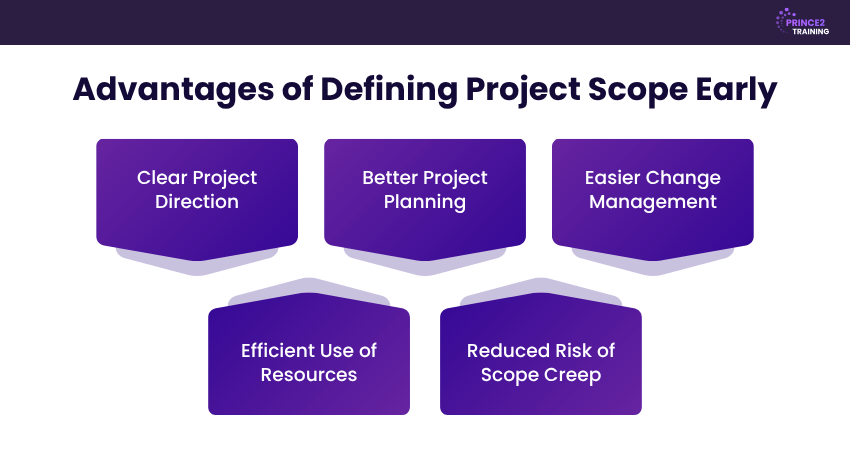
1) Clear Project Direction: Defining the Project Scope early helps everyone understand what the project is about and what needs to be delivered.
2) Better Project Planning: When the scope is clear, it becomes easier to plan timelines, budgets, and resources accurately.
3) Shared Expectations: Early scope definition ensures that all stakeholders have the same expectations about the project outcomes.
4) Easier Change Management: When changes are requested, the defined Project Scope helps decide whether they should be approved or not.
5) Efficient Use of Resources: Knowing the scope early helps teams use time, money, and people more effectively.
6) Reduced Risk of Scope Creep: A clear Project Scope explains what is included and excluded, helping prevent unexpected changes during the project.
Common Techniques for Project Scope
Defining Project Scope requires structured techniques that help break down work, clarify requirements, and ensure alignment with objectives. These techniques provide a systematic approach to managing scope effectively.
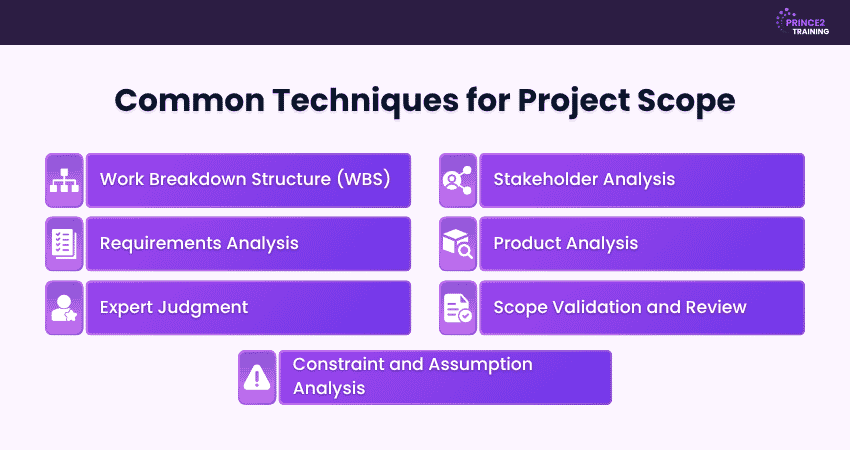
1) Work Breakdown Structure (WBS)
A Work Breakdown Structure divides the entire project into smaller, manageable components. This hierarchical approach ensures that all deliverables are identified and organised, making it easier to plan, assign responsibilities, and control scope effectively.
2) Requirements Analysis
This technique involves gathering and analysing stakeholder needs to clearly define what the project must deliver. It ensures that all expectations are documented and reduces the risk of scope changes later in the project.
3) Expert Judgment
Project Managers often rely on insights from experienced professionals or subject matter experts. Their expertise helps define realistic scope boundaries, identify risks, and ensure feasibility based on past project experience.
4) Stakeholder Analysis
Understanding stakeholder expectations is essential for defining scope accurately. This technique helps identify key stakeholders, their needs, and their influence, ensuring the Project Scope aligns with business and user requirements.
5) Product Analysis
Product analysis focuses on defining the features and functions of the final deliverable. Techniques such as brainstorming, prototyping, or product breakdown help clarify what needs to be created within the Project Scope.
6) Scope Validation and Review
Regular validation ensures that the defined scope meets stakeholder expectations. This technique involves reviewing deliverables against agreed criteria to confirm they align with project objectives and prevent scope creep.
7) Constraint and Assumption Analysis
Projects operate within constraints such as time, cost, and resources. Identifying these limitations, along with assumptions, helps create a realistic and achievable scope while reducing uncertainty during execution.
Together, these techniques provide a structured approach to defining and managing Project Scope, ensuring clarity, control, and successful project delivery.
Conclusion
Project Scope plays a significant role in the success of any project. Being one of the most important parts of Project Management, it helps define goals, deliverables, tasks and create a valid foundation for project success. With proper knowledge of What is Project Scope, organisations can improve efficiency, reduce risks, and increase the possibility of completing projects on time and within budget.
Upskill your project planning and control skills with PRINCE2 Training – Begin your journey!
Frequently Asked Questions
What are the Types of Scope?
Project scope is mainly divided into two types: product scope and Project Scope. Product scope defines the features and functions of the final deliverable, while Project Scope outlines the work required to deliver it. Together, they ensure clarity on outcomes and the effort needed.
What Tools are Used for Project Scope Management?
Project Scope Management uses tools like Work Breakdown Structure (WBS), scope statements, requirement documentation, Gantt charts, and project management software such as Jira or Microsoft Project. These tools help define, organise, track, and control Project Scope to ensure successful delivery.
What is the Difference Between Project Scope and Project Objectives?
Project objectives define what the project aims to achieve, focusing on goals and desired outcomes. Project Scope, however, defines the work required to achieve those objectives, including deliverables, tasks, and boundaries, ensuring the project stays focused and controlled.



 Continue Browsing