Contact@prince2training.co.uk
 01344203999




 Back
Back


Table of Content


08-Aug-2026

Maria Thompson
What truly sets high-performing Agile teams apart? It's not just tools or processes; it's the values they live by every day. Scrum Values inject clarity, trust and purpose into the chaos of fast-paced project development. They help teams stay grounded while adapting to change and delivering real impact. In this blog, we'll explore these powerful values and how they drive collaboration, innovation and success in every sprint. So read on!
What are Scrum Values?
Scrum Values are the core principles that guide how a team works together. They are commitment, focus, respect, openness and courage. These values help teams collaborate, make decisions and approach complex work with a shared mindset. In Scrum, teams work in short, time-boxed cycles called Sprints, which last one month or less.
After each sprint, they review the work and improve it step by step before delivering the final product to the client. The Scrum Values keep the team motivated and give everyone a common mindset, helping them work together smoothly and make better decisions.

The Five Core Scrum Values
Here's a detailed breakdown of all five Scrum Values that keep Agile teams focused and aligned with their goals to deliver projects successfully:
1) Courage
In a Scrum team, courage means being ready to face challenges and tough situations. Team members support each other and aren't afraid to try new things, even if there's some risk involved. It also means being honest about problems, asking for help and sharing unfinished work to get early feedback. Since project needs can change, courage helps the team adapt, discuss ideas openly and find better solutions together.
2) Commitment
Commitment is all about being dedicated to team goals. Instead of focusing only on personal success, everyone works together to achieve the sprint goals.
Each role shows commitment in different ways:
a) The Scrum Master ensures the team follows Scrum properly and removes any blockers.
b) The Product Owner makes smart decisions to increase the product's value.
c) The Developers focus on finishing tasks on time and delivering complete work.
d) This shared commitment builds trust, teamwork, and helps the team stay on track.
3) Focus
Scrum teams work in short time periods called sprints, so staying focused is key. Each sprint has a clear goal, and team members concentrate on completing those tasks within the given time. There can be distractions, but the idea is to handle them and get back to work quickly. With clear priorities and responsibilities, everyone knows what to focus on. The short deadlines also create a sense of urgency, helping the team stay productive.
4) Respect
Respect means valuing everyone's ideas, skills, and contributions. In a Scrum team, no one's role is considered more important than another. Team members trust each other, listen carefully, and work together toward a common goal. Respect also extends to stakeholders and users. Teams should build products that truly matter to them. This avoids wastage of time and resources on things people don't need.
5) Openness
Openness is about being transparent and honest. Everyone on the team should openly share their progress, challenges and feedback. Daily Scrum meetings are meant to identify issues, but that can only work if people are honest about what's really happening. Sharing feedback helps everyone improve and stay accountable. It also creates a culture where problems are discussed openly and solved together.
Transform Agile principles into project success stories with PRINCE2 Agile® Practitioner (Version 2) Course - Sign up today!
What are the Benefits of Using Scrum Values?
The five Scrum Values bring a lot of practical benefits to teams, especially in fast-paced environments. Here's how they make a real difference:
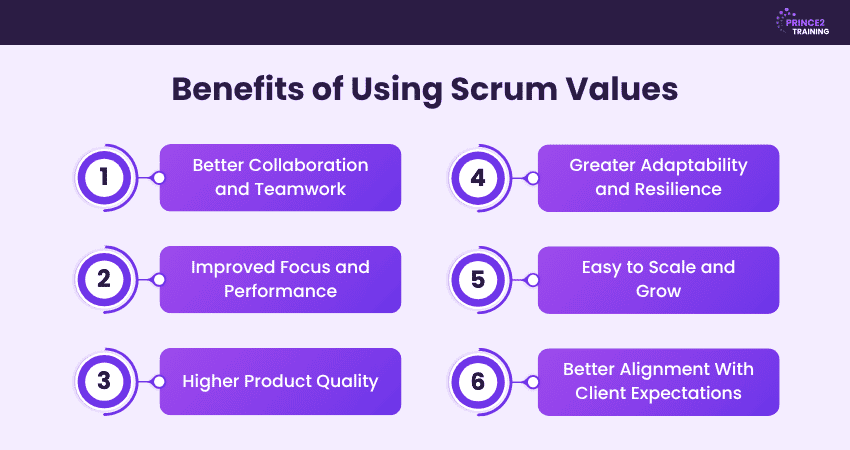
1) Better Collaboration and Teamwork
Scrum Values like openness, courage, and respect encourage team members to share ideas freely, speak up about issues, and listen to each other's perspectives. This creates a positive work environment where everyone feels valued, making it easier to solve problems together and come up with the best solutions.
2) Improved Focus and Performance
With strong commitment and focus, teams avoid unnecessary distractions and stay aligned with their sprint goals. This helps them complete tasks on time, identify blockers early, and maintain steady progress. As a result, overall productivity and team performance can improve significantly.
3) Higher Product Quality
When team members have the courage to raise concerns and give honest feedback, issues get addressed early. Combined with better collaboration and focus, this leads to better decision-making and higher-quality outcomes like keeping customers and stakeholders happy.
4) Greater Adaptability and Resilience
Teams that follow Scrum Values can quickly adjust to change, whether it's shifting customer requirements or market conditions. Instead of blaming each other when things go wrong, they take ownership and work together to fix issues. This makes the team more flexible, resilient, and ready to handle complex projects.
5) Easy to Scale and Grow
Scrum Values make it easier for new team members to join and adapt. Since there's a culture of support, respect, and clear processes, newcomers can quickly understand how things work. Teams can also manage workloads and expectations more effectively as they grow.
6) Better Alignment With Client Expectations
Scrum Values promote transparency and open communication, which helps teams work closely with clients and stakeholders. Teams can clearly understand expectations, plan tasks effectively, and deliver products that truly meet user needs.
Join the highest ranks of Project Management professionals by registering for PRINCE2® Courses today!
Five Effective Ways to Successfully Implement Scrum Values
If you want Scrum Values to actually work in your team, it takes a bit of planning and effort. Here's a simple step-by-step way to make them part of your everyday work:
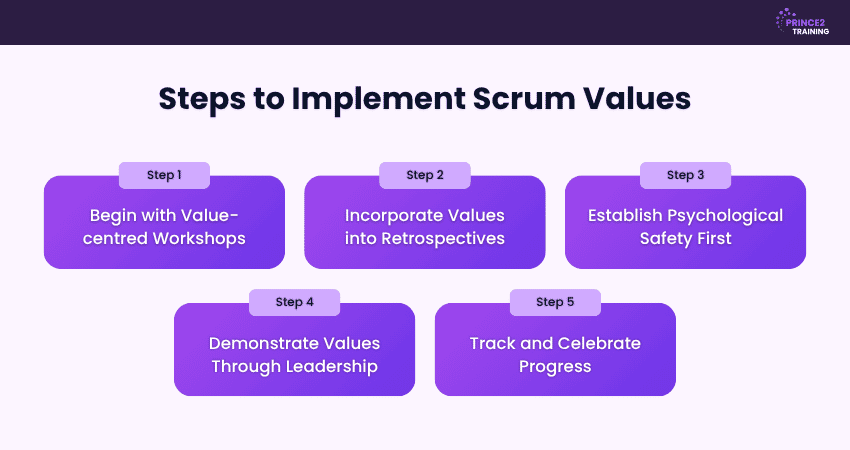
Step 1: Begin with Value-centred Workshops
Begin by having interactive sessions with your team to talk about what these values really mean in your day-to-day work. Use real examples from your projects so it feels practical, not theoretical. By the end, everyone should agree on how each value will show up in their work. This shared understanding becomes your starting point.
Step 2: Incorporate Values into Retrospectives
Make Scrum Values a regular part of your sprint retrospectives. Talk about how well the team lived these values during the sprint. You can ask simple reflective questions like "Where did we show courage?", "How could we be more open?" and "When did we lose focus?" These kinds of questions help the team learn and improve continuously.
Step 3: Establish Psychological Safety First
For Scrum Values to work, people need to feel safe speaking up. Team members should be comfortable making mistakes, asking questions, and challenging ideas. Leaders can help by admitting their own mistakes and reacting positively when others raise concerns. When people feel safe, the other values naturally follow.
Step 4: Demonstrate Values Through Leadership
Scrum Masters and Product Owners should show these values in their everyday actions. When leaders practise what they preach, it sets the tone for the whole team. Over time, these values become habits, not just guidelines.
Step 5: Track and Celebrate Progress
Pay attention to how well your team is adopting these values. Look for signs like better participation, open discussions, and healthy conflict resolution. Also, celebrate when team members demonstrate these values. Recognising these moments reinforces their importance and encourages everyone to keep improving. Make Scrum Values a regular part of team discussions, lead by example, create a safe environment, and celebrate progress. This is how they truly stick.
Build every project skill from the ground up and the right way. Register for PRINCE2® Foundation Course today!
Practical Examples of Scrum Values
Here are some easy-to-relate examples of how Scrum Values show up in real situations:
a) Courage: In a marketing project, the team showed courage by speaking up when they felt a strategy wasn't working. They challenged the current approach and suggested new ideas. This helped them change direction and achieve better results, even exceeding the client's expectations.
b) Commitment: A software team showed commitment by setting clear sprint goals. Even when unexpected technical issues popped up, they stayed dedicated to their goals and worked together to solve the problems. In the end, they delivered a high-quality product within the sprint timeline.
c) Focus: In a manufacturing project, the team spent a sprint improving their assembly line process. They focused on reducing the cycle time and improving the product quality. By putting all their effort into this one goal, they identified inefficiencies, improved workflows and boosted productivity while cutting costs.
d) Respect: In a healthcare project, the team improved patient care by respecting everyone's ideas and experiences. By valuing diverse perspectives, they developed well-rounded, patient-focused solutions that worked better for everyone involved.
e) Openness: In a software project, the team members shared ideas and feedback openly during the sprint planning. Since there was full transparency, they were able to spot risks early on and deal with them quickly. This helped the project run smoothly and improved the quality of the final deliverables.
Common Challenges and How to Overcome Them?
Here are some common issues teams face with Scrum and the simple ways to manage them:
1) Staying Focused With Lots of Interruptions
Sometimes, it's hard to stay on track when there are constant distractions or multiple priorities. Use techniques like the Pomodoro Technique (working in short, focused bursts) to manage time better. This helps reduce distractions and keeps productivity high during sprints.
2) Resistance to Change
Some team members may be used to old ways of working and might hesitate to adopt Scrum Values. Have open discussions and workshops to explain why Scrum Values matter. Address concerns, clear up misunderstandings, and provide proper training so everyone feels comfortable with the change.
3) Managing Short-term vs Long-term Goals
Teams may struggle to balance immediate sprint tasks with larger project goals. Prioritise work based on overall project objectives and revisit priorities regularly. Keep communication open between the team and stakeholders so everyone stays aligned.
4) Scope Creep During Sprints
Requirements sometimes change mid-sprint, which can disrupt progress. Set up a clear process for handling changes. Make sure any updates are well-justified and discussed as a team. Stay flexible, but also protect the agreed sprint scope as much as possible.
5) Communication in Remote or Distributed Teams
Working across locations can make collaboration harder. Use tools like video calls, chat apps, and shared documents to stay connected. Regular check-ins and virtual stand-ups help keep everyone aligned. Also, make sure everyone feels included and encouraged to participate.
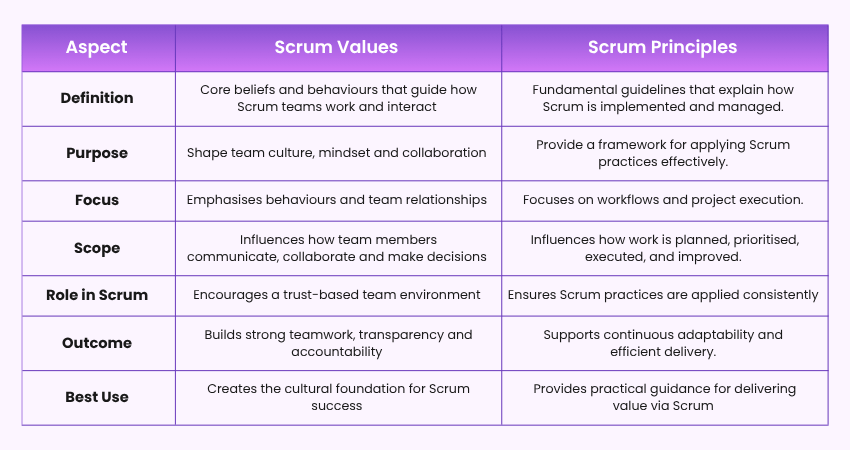
Scrum Values vs Scrum Principles
Here are the key differences between Scrum Values and Scrum Principles:
Conclusion
Scrum Values form the glue that holds Agile teams together. When fully embraced, they turn everyday work into meaningful collaboration, continuous learning, and shared success. By practising commitment, focus, openness, respect and courage, teams adapt faster and create outcomes that truly make an impact.
Level up your project game with PRINCE2 Agile® Foundation (Version 2) Training. Sign up now and stay flexible and future-ready!
Frequently Asked Questions
Why are Scrum Values Essential in Agile Development?
Scrum Values are important because they create a strong foundation for how Agile teams work together. They guide behaviour and help teams stay aligned with Agile principles. Without these values, it becomes harder for teams to adapt quickly or collaborate effectively.
How Do Scrum Values Support Project Success?
Scrum Values help projects succeed by improving teamwork and transparency. They encourage team members to communicate openly, solve problems early on, and stay committed to shared goals. This leads to higher-quality outputs and timely delivery of work.
How Do Scrum Values Influence the Role of a Scrum Master?
Scrum Values play a big role in shaping how a Scrum Master works. A Scrum Master leads by example, promoting openness and building a respectful environment. They also help the team stay focused, remove obstacles and ensure everyone follows Scrum practices, making it easier for the team to perform at their best.



 Continue Browsing