Contact@prince2training.co.uk
 01344203999




 Back
Back


Table of Content


21-Sep-2026

Maria Thompson
Every team has experienced a Sprint where some things went exactly as planned while others created stress, delays, or confusion. Maybe communication was unclear, priorities kept changing, or deadlines suddenly felt overwhelming. After a busy Sprint, teams often ask themselves, “How can we work better next time?” This is where Sprint Retrospectives make a real difference.
Sprint Retrospectives give Agile teams a chance to pause, reflect, and discuss what worked and what needs improvement. They help teams learn from mistakes, celebrate successes, and strengthen collaboration for future Sprints. In this blog, you’ll explore their purpose, techniques, and practical examples in detail. Read to know more!
What is a Sprint Retrospective?
A Sprint Retrospective is a final Scrum event or meeting held at the end of a Sprint in the Agile Software Development framework. During this session, the Scrum Team reviews how the Sprint went by discussing what worked well, what did not go as planned, and what improvements can be made for the next Sprint. The main goal is to help the team learn from their experiences and continuously improve the way they work together.
The Sprint Retrospective takes place after the Sprint Review and before the next Sprint planning session. During this meeting, team members discuss communication. Teams may also review progress indicators such as a Burndown Chart to understand how work progressed during the Sprint. Techniques like Start-Stop-Continue, Mad-Sad-Glad, and the Sailboat Retrospective help teams identify improvements, solve challenges, and improve productivity, collaboration, and teamwork over time.

What is the Purpose of a Sprint Retrospective Meeting?
The main purpose of a Sprint Retrospective meeting is to help Agile teams review the completed Sprint, discuss successes and challenges, and identify improvements for future performance. Some important purposes include:
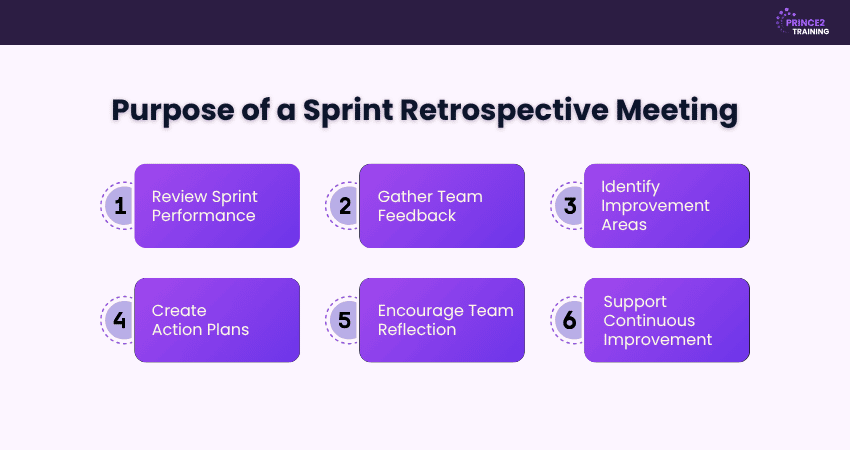
1) Review Sprint Performance: Teams evaluate what went well and what challenges affected the Sprint outcome.
2) Gather Team Feedback: Team members openly share opinions, experiences, and suggestions for improvement.
3) Identify Improvement Areas: The team identifies process gaps, communication issues, and workflow inefficiencies.
4) Create Action Plans: Teams decide on practical steps to improve future Sprint execution and collaboration.
5) Encourage Team Reflection: Retrospectives help teams learn from experiences and adapt their working methods.
6) Support Continuous Improvement: The meeting promotes ongoing learning and process optimisation within Agile teams.
Who Participates in a Sprint Retrospective?
The entire Scrum Team typically participates in a Sprint Retrospective. Each member plays a key role in reflecting the Sprint, sharing feedback, and identifying opportunities for improvement.
1) Scrum Master
The Scrum Master facilitates the meeting and ensures everyone has an opportunity to contribute. They guide discussions, maintain focus, and encourage constructive communication. They also encourage participation, ensure all voices are heard, and help the team identify actionable improvements.
2) Product Owner
The Product Owner contributes by sharing insights related to product goals, priorities, and stakeholder expectations. Their perspective helps connect team feedback with business needs. They play an important role in aligning improvement actions with overall product strategy and customer value.
3) Development Team
The Development Team includes developers, designers, testers, and other technical contributors. They share their experiences, challenges, and successes from the Sprint. Their feedback is essential for identifying practical improvements, resolving issues, and enhancing collaboration within the team.
4) Stakeholders
In rare cases, stakeholders may join if their input is valuable for future project improvements and planning discussions. However, many teams prefer keeping Retrospectives limited to the Scrum Team to encourage honest, open, and transparent discussions.
Gain essential Agile Project Management expertise with industry-recognised PRINCE2 Agile® Foundation Training – Register today!
Why are Sprint Retrospectives Important?
Sprint Retrospectives are important because they help teams learn, improve continuously, and avoid repeating the same mistakes. Some key reasons why Sprint Retrospectives are essential include:
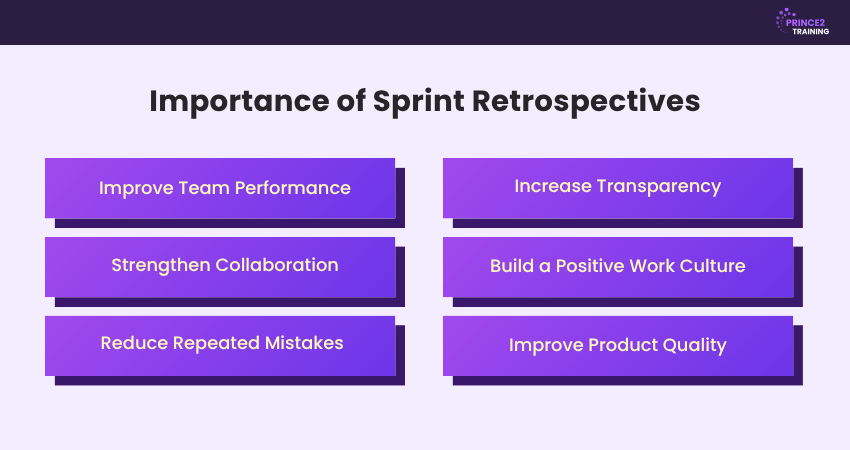
1) Improve Team Performance: Teams can identify inefficiencies and make adjustments that improve overall performance.
2) Strengthen Collaboration: Regular discussions encourage teamwork, trust, and mutual understanding among team members.
3) Reduce Repeated Mistakes: Teams can identify patterns and prevent similar issues in future Sprints.
4) Increase Transparency: Retrospectives promote openness and accountability within the team.
5) Build a Positive Work Culture: Encouraging feedback and appreciation creates a supportive and healthy working environment.
6) Improve Product Quality: Continuous improvements in processes often result in higher-quality products and better customer satisfaction.
Sprint Retrospective Meeting Agenda
A clear agenda helps Sprint Retrospectives stay organised and productive. While teams may customise the format, most Retrospectives follow a structured and goal-driven approach to ensure meaningful outcomes.
1) Define the Meeting Objective
The first step in a Sprint Retrospective is to set a clear goal for the meeting. This helps the Scrum Team stay focused and ensures everyone understands the purpose of the discussion. The objective is usually to improve future Sprints by identifying successes, challenges, and areas for improvement rather than blaming team members for mistakes.
2) Gather Team Feedback
Team members share feedback about the completed Sprint, including what went well, what challenges they faced, and what they learned. Questions such as “What should we improve next time?” help encourage open discussion. Some teams also use techniques like Start-Stop-Continue to make feedback easier and more structured.
3) Analyse Insights
Once feedback is collected, the team reviews the information to identify patterns, recurring problems, and successful practices. This helps the team understand the root causes of issues and recognise processes that improved productivity, collaboration, and overall team performance during the Sprint.
4) Identify Action Items
After analysing the discussion, the team creates action items to improve future Sprints. These actions should be practical, clear, and assigned to specific team members when necessary. For example, the team may decide to improve backlog refinement or increase communication during daily meetings.
5) Conclude the Meeting
The meeting ends with a summary of the key discussions, lessons learned, and agreed action items. Team members confirm the next steps and understand how improvements will be implemented in the upcoming Sprint. This closing step ensures everyone leaves the meeting aligned and focused on ongoing improvement.
Develop practical Agile project leadership skills with professional PRINCE2 Agile® Foundation and Practitioner Training – Join now!
Sprint Retrospective Techniques with Examples
Sprint Retrospective techniques help Scrum Teams review Sprint performance, identify challenges, and continuously improve workflows. Using structured techniques makes discussions more engaging, focused, and actionable.
The Three Little Pigs
Inspired by the famous children’s story, this technique helps teams evaluate the strength of their work practices. The team divides a board into three sections: House of Straw, House of Sticks, and House of Bricks. Team members write feedback on sticky notes and place them in the relevant section.
Example:
House of Straw: “Sprint planning lacked clear requirements.”
House of Sticks: “Daily Scrums were useful but too long.”
House of Bricks: “Team collaboration during testing was excellent.”
This activity helps teams identify weak, improving, and strong practices within the Sprint.
Who Said it?
In this activity, team members anonymously submit comments or feedback about the Sprint. The comments are read aloud during the meeting, and the team guesses who wrote them. This creates a fun environment while encouraging honest communication.
Example:
“The backlog tasks were not prioritised clearly.”
“The new testing tool improved our workflow.”
The team discusses each statement and explores ways to improve future Sprints.
Mad, Sad, Glad
This technique focuses on team emotions during the Sprint. The board is divided into three sections: Mad, Sad, and Glad. Team members add feedback based on how they felt during the Sprint.
Example:
Mad: “Frequent requirement changes delayed development.”
Sad: “Some tasks were left unfinished.”
Glad: “The team completed all critical user stories.”
This method helps teams understand emotional challenges and achievements.
Start-Stop-Continue
This is one of the most common Sprint Retrospective techniques. Team members discuss activities the team should start doing, stop doing, and continue doing in future Sprints.
Example:
Start: “Provide clearer task documentation.”
Stop: “Scheduling unnecessary meetings.”
Continue: “Daily collaboration between developers and testers.”
This technique creates clear and actionable improvements for the next Sprint.
Round of Appreciation
This activity encourages team members to appreciate each other’s efforts and contributions during the Sprint. Each person shares positive feedback about another team member or the team as a whole.
Example:
“Thank you for helping resolve deployment issues quickly.”
“Your support during testing improved the Sprint outcome.”
This technique improves team morale and strengthens collaboration.
The 4Ls: Liked, Learned, Lacked, Longed For
In this Retrospective, the team discusses what they liked, learned, lacked, and wished for during the Sprint. It encourages balanced feedback and learning.
Example:
Liked: “The Sprint goals were clearly defined.”
Learned: “Automated testing reduced manual effort.”
Lacked: “Better communication with stakeholders.”
Longed For: “More time for backlog refinement.”
This method helps teams identify strengths and improvement areas.
Sailboat Retrospective
The Sailboat Retrospective uses a sailboat as a visual representation of the Sprint journey. The wind represents factors helping the team move forward, while anchors symbolise obstacles slowing progress. Rocks may represent future risks or challenges.
Example:
Wind: “Strong teamwork improved task completion.”
Anchor: “Delayed client feedback slowed development.”
Rocks: “Upcoming deadlines may create pressure.”
This visual technique makes Retrospective discussions more engaging and easier to understand.
Develop practical project leadership capabilities with the PRINCE2® Practitioner Training – Register today!
Tips to Maximise Your Sprint Retrospective
Effective Sprint Retrospectives encourage open communication and continuous improvement. By applying the right approach, teams can turn feedback into meaningful actions that improve future Sprints. Below are some useful tips to make your Retrospectives more productive and valuable:
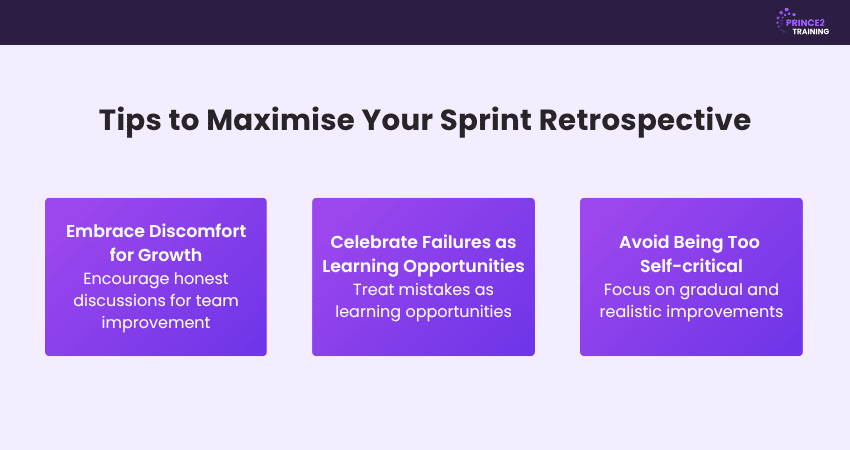
1) Embrace Discomfort for Growth
Constructive feedback and difficult discussions are important for team improvement. Instead of avoiding disagreements, teams should handle them respectfully and focus on finding better solutions. Open communication and healthy conflict resolution help Scrum Teams grow stronger and more collaborative over time.
2) Celebrate Failures as Learning Opportunities
Failures should be treated as valuable learning experiences rather than reasons for blame. Encouraging teams to experiment, take risks, and openly discuss mistakes helps create a positive learning culture. Sharing failures and lessons learned can improve future Sprint performance and team confidence.
3) Avoid Being Too Self-critical
Teams should focus on gradual and realistic improvements instead of trying to fix everything at once. Taking too many changes in a single Sprint can lead to unnecessary pressure and reduced productivity. Prioritising a few high-impact improvements helps maintain motivation and support sustainable, long-term team growth.
Common Sprint Retrospective Pitfalls and How to Overcome Them
Sprint Retrospectives support continuous improvement, but some challenges can reduce their effectiveness. Below are some common pitfalls teams may face:
1) Time Constraints
Retrospectives may become rushed when teams have limited time or tight Sprint schedules. To overcome this, teams should set a clear agenda, prioritise key discussion points, and allocate enough time for meaningful conversations.
2) Low Team Engagement
Some team members may hesitate to participate or share honest feedback. This can limit the effectiveness of the Retrospective. Creating a safe, inclusive, and judgement-free environment encourages open communication and active participation from all team members.
3) Unclear Action Steps
Retrospectives become less effective when discussions do not lead to practical improvements. Teams should create clear action items, assign responsibilities, and track progress in future Sprints to ensure continuous improvement.
Build strong Project Management foundations with globally recognised PRINCE2® Foundation Training – Sign up now!
Sprint Retrospective vs Sprint Review Meeting
Sprint Retrospectives and Sprint Review Meetings are both important Scrum events in Agile Software Development, but they have different goals. A Sprint Review focuses on completed product work and stakeholder feedback, while a Sprint Retrospective focuses on improving team collaboration, workflows, and Sprint performance.
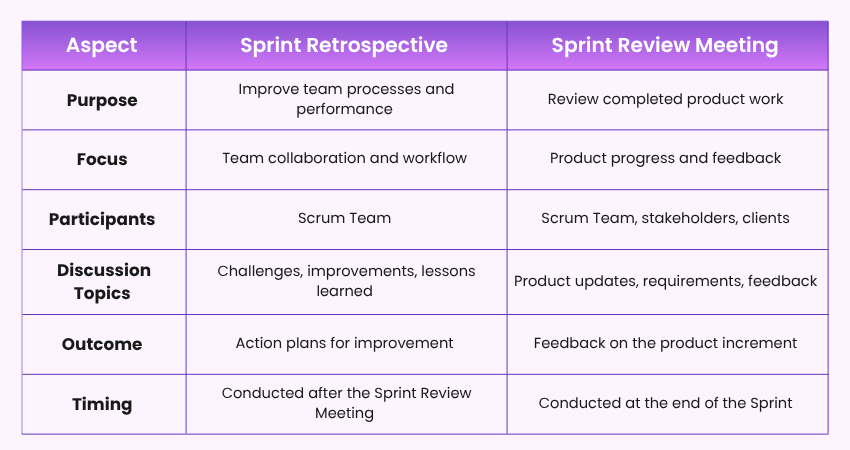
Sprint Reviews usually include stakeholders, clients, and the Scrum Team to discuss product progress and future requirements. In contrast, Sprint Retrospectives are internal team meetings focused on challenges, successes, and improvement opportunities for future Sprints.
Conclusion
Sprint Retrospectives play an important role in helping Agile teams improve collaboration, workflows, and overall Sprint performance. By encouraging honest feedback, identifying challenges, and creating actionable improvements, teams can continuously learn and deliver better results. Effective Sprint Retrospectives also support stronger communication, higher productivity, and long-term Agile success.
Build successful project delivery skills with the comprehensive PRINCE2® Training - Join now!
Frequently Asked Questions
What Questions to Ask in a Sprint Retrospective?
Common Sprint Retrospective questions include:
1) What went well during the Sprint?
2) What challenges did we face?
3) What should we improve?
4) What should we continue doing?
5) How can teamwork improve?
These questions encourage reflection and continuous improvement.
What is the Golden Rule of Sprint Retrospectives?
The golden rule of Sprint Retrospectives, also known as the Prime Directive, states that team members should assume everyone did their best with the knowledge and resources available. This encourages respectful discussions, reduces blame, and supports honest feedback and continuous improvement.
How Long Should Sprint Retrospectives Be?
Sprint Retrospectives are usually time-boxed based on the Sprint length. A common guideline is around 45 minutes for a one-week Sprint and up to three hours for a one-month Sprint. The meeting should be long enough for meaningful discussion while remaining focused and productive.



 Continue Browsing