01344203999




 Back
Back


Table of Content


13-Oct-2026

David Walter
Agile Project Management thrives on adaptability and speed, but those do not come from chaos. At its core, Agile uses a simple but powerful concept: the Sprint. You have likely heard the term if you have worked in any tech-forward or product-driven team. But What is a Sprint, really? And what makes it more than just a short work cycle?
Why are they essential to Agile, and how do you make sure your Sprint is not just a ticked box on a Jira board? Whether you are a beginner navigating Scrum ceremonies or a manager refining delivery methods, understanding Sprints can help you deliver better, faster, and with greater clarity. Let us explore the ins and outs of Sprints, from planning and execution to who is responsible and how to get it right.
Table of Contents
1) What is a Sprint?
2) Importance of a Sprint
3) How to Plan and Execute Agile Sprints?
4) Key Roles in a Sprint Team
5) The Benefits of Sprints
6) How to Complete a Sprint?
7) Tips for Managing a Sprint
8) Conclusion
What is a Sprint?
A Sprint is an important part of both Scrum and Agile frameworks. It is a short, focused period (usually 1 to 4 weeks) during which a cross-functional team commits to completing specific tasks or delivering a working product increment. These tasks are selected from the product backlog, which is a prioritised list of features, fixes, and improvements desired for the product.
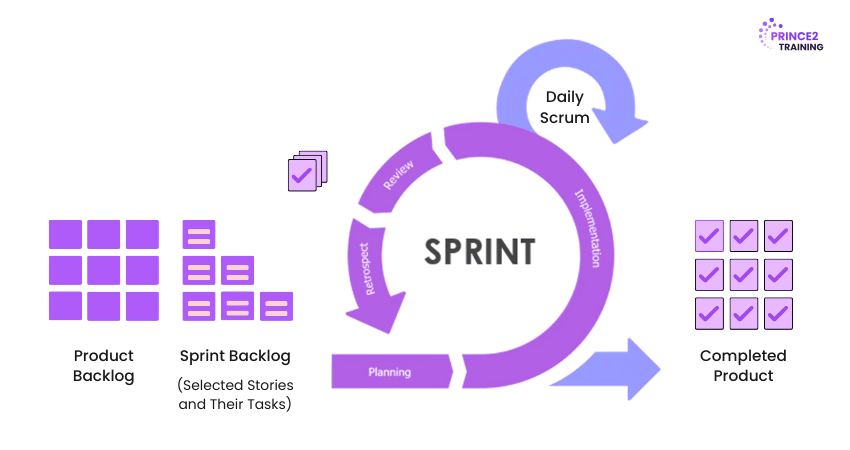
At its heart, a Sprint is about focus and commitment. It's about making a promise to do a reasonable amount of work and doing it consistently in short, organised cycles. For example, a mobile development team may dedicate a two-week Sprint to designing and implementing a new onboarding flow. They plan the tasks in advance, review their work with stakeholders, and then reflect on how to improve next time.

Importance of a Sprint
Sprints bring structure to Agile workflows, preventing chaos and disorganisation. While Agile values adaptability, Sprints provide the control needed to stay focused and aligned. Here's why they’re vital for modern Agile teams:
1) Shorter Feedback Loops
With traditional waterfall methods, feedback often arrives too late, after a feature is built or a product is released. Sprints fix this by delivering work in short cycles, allowing teams to review progress, receive before too much effort is wasted. Agile testing can also support early identification of issues within these short cycles.
2) Risk Reduction
The shorter the iteration, the smaller the risk. A Sprint keeps you from wasting too much time going the wrong way. It encourages experimentation, helps identify issues early, and reduces the likelihood of costly late-stage errors.
3) Improved Forecasting and Planning
Teams learn their velocity, like how much work they finish in each Sprint over time. This predictable pace helps with long-term planning, better workload estimation, and realistic timelines for delivery.
4) Empowered Teams
Sprints encourage self-organising teams. Rather than top-down management assigning tasks daily, the team collaborates to decide what they can realistically deliver. This not only increases accountability but also improves motivation, creativity, and team ownership.
5) Clear Prioritisation
For a Sprint, only the most important items in the backlog are chosen. This ensures that the team stays focused on delivering high-value work first, aligning everyone on what matters most in the current phase.
How to Plan and Execute Agile Sprints?
While Sprints follow a structured approach, their success depends on effective preparation, focused execution, and thoughtful review. Let’s break the process into three key phases:
Before the Sprint: Planning Phase
The Sprint begins with a Sprint Planning Meeting involving the Scrum Team, Product Owner, and Scrum Master.
During this session:
1) The Product Owner presents prioritised items from the backlog
2) The team estimates effort using story points or T-shirt sizing
3) A clear Sprint Goal is defined to align the team
4) Tasks are selected and broken into actionable sub-tasks
5) Sprint planning should be thorough. For a two-week Sprint, planning may last up to two hours. Tools like Jira, Trello, and Azure DevOps help teams visualise work and manage capacity.
During the Sprint: Execution Phase
This is where the team focuses on delivering the committed items with minimal distractions. Key activities include:
1) Daily Stand-ups (15-minute meetings): Share progress, blockers, and plans
2) Task Boards (e.g., Kanban): Track “To Do”, “In Progress”, and “Done” items
3) Sprint Burndown Charts: Monitor progress toward Sprint completion
The Scrum Master plays a crucial role in removing impediments, whether related to approvals, unclear tasks, or technical challenges. Scope changes during a Sprint are discouraged, except in rare, justified cases, to preserve focus.
After the Sprint: Review and Retrospective
Two important meetings conclude the Sprint cycle:
1) Sprint Review
a) The team demonstrates completed work to stakeholders
b) Feedback is gathered, and incomplete tasks are returned to the backlog
c) This session ensures the product remains aligned with user needs
2) Sprint Retrospective
a) The team reflects on what went well and what didn’t
b) Actionable improvements are noted for future Sprints
c) Helps uncover recurring blockers, technical debt, or workflow gaps
This habit of reflection and adjustment is what makes Agile an evolving and continuously improving process.
Key Roles in a Sprint Team
Each Sprint involves multiple key roles, each with distinct responsibilities:
Product Owner
The Product Owner (PO) owns the product backlog. Their primary role is to define what is most valuable for the business and to ensure clarity on requirements.
Their key responsibilities include:
1) Prioritising backlog items based on business value
2) Writing clear and actionable user stories
3) Collaborating with stakeholders for continuous feedback
4) Being readily available to clarify requirements during the Sprint
A skilled PO balances business goals with technical possibilities, ensuring both value and feasibility.
Scrum Master
The Scrum Master is a servant-leader who facilitates the process and supports the team.
They:

1) Ensure all Sprint ceremonies run efficiently
2) Coach the team on Scrum values and Agile principles
3) Protect the team from outside distractions
4) Help resolve conflicts and remove workflow obstacles
5) They are not traditional managers but enable the team to function at their best.
Scrum Team
A cross-functional team of typically 5 to 9 professionals, responsible for delivering the Sprint goal.
They:
1) Plan, design, develop, test, and deliver user stories collaboratively
2) Self-organise and manage their work without micromanagement
3) Share accountability for Sprint outcomes
4) Participate fully in all Scrum events
Having a diverse mix of skills within the team ensures they can complete end-to-end work without unnecessary dependencies.
Master Agile delivery with our Agile Project Management Foundation & Practitioner (AgilePM®) Course.
The Benefits of Sprints
Teams that adopt Sprints tend to become more focused, efficient, and collaborative. Here is why:
1) Structured Goals Keep Everyone Aligned
A clear Sprint Goal ensures that the entire team is working toward the same outcome. It reduces scattered efforts and ensures that all decisions align with product and business priorities.
2) Visibility into Progress and Bottlenecks
Burndown charts, task boards, and daily stand-ups keep the team aligned and transparent. Stakeholders receive frequent updates and live demos, reducing uncertainty and last-minute surprises.
3) Better Cross-Department Communication
Sprints often bring together teams like marketing, UX, QA, and development. This collaboration fosters better understanding across departments and leads to more user-centric outcomes.
4) Sustainable Workload
Sprints promote a consistent pace of work, helping teams avoid last-minute crunches and burnout. A well-balanced workload reduces stress and enhances output quality.
5) Data-Driven Improvement
Sprints generate valuable metrics such as velocity, throughput, and defect rates. These insights support continuous improvement, accurate forecasting, and smarter backlog management.
How to Complete a Sprint?
Completing a Sprint involves wrapping up work, reviewing progress, and learning from the experience. Here’s how to do it step by step:
1) Finalise All Committed Work
Ensure that all tasks planned for the Sprint are either completed or clearly marked as unfinished. Avoid adding new work at the last minute.
2) Conduct the Sprint Review
Meet with stakeholders to demonstrate what was completed. Gather feedback, discuss what went well, and identify any gaps. Unfinished work is returned to the backlog for future planning.
3) Host the Sprint Retrospective
The team meets internally to reflect on the Sprint. Discuss what worked, what didn’t, and agree on improvements to try in the next Sprint.
4) Update Metrics and Documentation
Update burndown charts, velocity reports, and team notes. This helps with forecasting, accountability, and continuous improvement.
5) Prepare for the Next Sprint
Once the current Sprint is officially closed, begin planning the next one. Use insights from the retrospective to refine your process and workflow.
Tips for Managing a Sprint
Effective Sprint management keeps your Agile team on track while maintaining focus, quality, and morale. Below are practical tips to improve how you run each Sprint:
Set Clear Goals
Define a specific and measurable Sprint goal, such as “Integrate payment gateway with mobile checkout,” to align the team’s direction.
Set Realistic Goals
Avoid overcommitting. Use past Sprint velocity and current capacity to choose how much work to take on and leave a buffer for the unexpected.
Keep Your Backlog Organised
An untidy backlog causes confusion and delays. Regular backlog refinement ensures that stories are prioritised, sized, and ready for planning.
Plan in Detail
Break stories into granular tasks. Clarify dependencies, blockers, and requirements up front to avoid slowdowns during execution.
Remember the Technical Tasks
Include refactoring, testing, security updates, and Continuous Integration and Continuous Delivery (CI/CD) work. These foundational tasks ensure smoother delivery and scalability.
Document Your Decisions
Whether it’s agreed trade-offs or new feature priorities, write them down. This helps the team stay aligned and avoids repeated discussions.
Address Your Team's Concerns
Encourage open dialogue. Create a safe space for team members to voice blockers or frustrations, and resolve issues early to keep momentum strong.
Advance your Agile career – register now in the
Agile Project Management Practitioner Upgrade (Agile PM®) Course
and unlock expert-level strategies.
Conclusion
Sprints are not just timelines. They are a mindset shift. They enable teams to stay focused, reduce waste, and continuously improve both product and process. From planning and execution to reflection and delivery, every phase of a Sprint reinforces agility and accountability. True agility begins with one question: “What is a Sprint?” and ends with teams that deliver value with focus, purpose, and confidence.
Kickstart your Project Management career with globally recognised CAPM® Certification Training.



 Continue Browsing