Contact@prince2training.co.uk
 01344203999




 Back
Back


Table of Content

08-Aug-2026

David Walter
A project can have the best strategy, the biggest budget, and the most talented team, yet still fail if the right resources are unavailable at the right time. This is where Capacity Planning in Project Management becomes a game-changer. It helps organisations balance workloads, allocate resources effectively, and ensure projects progress without delays, bottlenecks, or costly resource shortages.
Whether you're managing a single project or an entire portfolio, understanding Capacity Planning enables smart project decisions. In this blog, you'll discover what is Capacity Planning in Project Management, why it matters, the different types, best practices, and how it helps deliver projects successfully while maximising productivity and resource utilisation. So, read on!
What is Capacity Planning?
Capacity Planning is the process of assessing an organisation's available resources and determining the capacity needed to meet current and future project or business demands. It helps ensure that people, technology, equipment, and budgets are aligned with anticipated workloads to deliver work efficiently.
Effective Capacity Planning helps organisations optimise resource allocation, avoid excess capacity or resource shortages, identify potential bottlenecks, and adapt to changing business needs. This improves operational efficiency, supports informed decision-making, and enables sustainable growth.

Types of Capacity Planning
Before choosing the right approach, it is important to understand the different types of Capacity Planning. Below are its most common types:
1) Workforce Capacity Planning
Workforce Capacity Planning is designed to ensure an organisation has the right number of skilled employees available to meet current and future project or customer demands. It involves forecasting workload and business demand to adjust team capacity, identify skill gaps, plan recruitment or training, to maximise productivity while preventing employee burnout.
2) Product Capacity Planning
Product Capacity Planning focuses on ensuring the organisation has sufficient physical products and materials to meet the service demand. For manufacturers, this means securing enough raw materials, while retailers focus on maintaining appropriate inventory stock levels. Effective Product Capacity Planning also accounts for potential supply chain disruptions that could impact delivery.
3) Tool Capacity Planning
Tool Capacity Planning ensures that all the equipment, technology, and tools required to deliver products or services are available and properly maintained. This includes machinery, computers, vehicles, networking devices, cloud resources, and IT infrastructure for delivering digital services. By monitoring the availability of these tools, organisations can minimise downtime and improve operational efficiency.
Gain the essential skills and knowledge to manage projects with PRINCE2® Foundation Training – Join now!
Steps in the Capacity Planning Process
A structured Capacity Planning process helps organisations ensure they have the right resources available to meet current and future business demands. The following are the key steps involved:
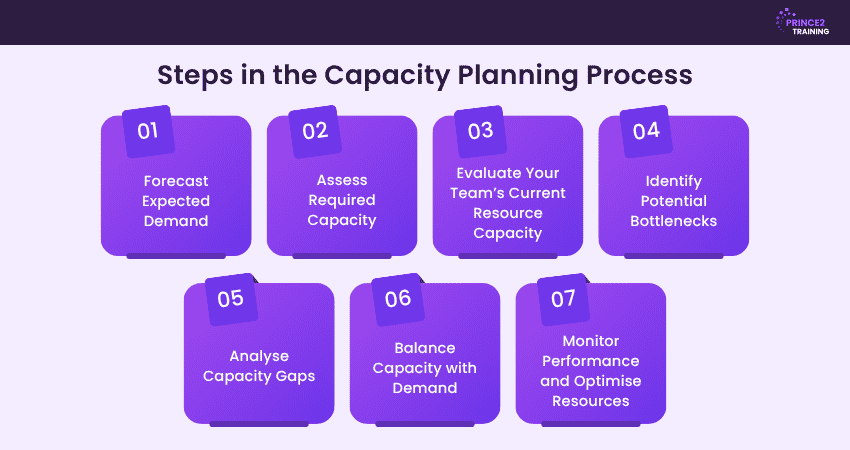
1) Forecast Expected Demand
Begin by estimating future project workloads based on historical data, market trends, and customer demand. This helps organisations prepare the right level of resources before demand increases.
2) Assess Required Capacity
Based on the demand forecast, determine the people, technology, equipment, and other resources needed to complete upcoming projects successfully. This provides a clear picture of the resources required to meet expected demand.
3) Evaluate Your Team's Current Resource Capacity
Review your team's current availability, skills, workloads, and existing commitments. This helps ensure that workloads and resources are allocated according to each team member's capacity. It also helps prevent employee burnout.
4) Identify Potential Bottlenecks
Before finalising the capacity plan, identify constraints that could slow project delivery. These can be skill shortages, overloaded employees, limited equipment, or process inefficiencies. Identifying bottlenecks early allows organisations to address them before they impact performance.
5) Analyse Capacity Gaps
Compare the required capacity with the resources currently available to identify shortages or excess capacity. This analysis helps organisations determine where additional hiring, training, or resource adjustments are needed.
6) Balance Capacity with Demand
Based on the gap analysis, adjust workloads, reassign resources, revise project timelines, recruit additional staff, or reschedule work as needed. These actions help ensure resources are used effectively while maintaining productivity and project quality.
7) Monitor Performance and Optimise Resources
Capacity Planning is an ongoing process. Therefore, continuously monitor resource utilisation, project progress, and changing business needs. This helps organisations make adjustments whenever necessary. It also helps identify problems early and resolve them before they affect project performance.
Capacity Planning Strategies
Selecting the right Capacity Planning strategy helps organisations balance resources with project demand. Those strategies include the following.
1) Lag Capacity Strategy
A lag capacity strategy involves increasing the capacity only after demand has already risen. This conservative approach helps to minimise unnecessary costs by avoiding excess capacity. However, it can result in temporary resource shortages or delays during periods of rapid demand growth.
2) Match Capacity Strategy
A match capacity strategy is a more balanced approach that gradually increases capacity as demand changes. This enables organisations to adjust capacity in line with forecast demand, reducing the risk of excess capacity or resource shortages.
3) Lead Capacity Strategy
A lead capacity strategy expands capacity in anticipation of increased future demand. This helps organisations prepare resources in advance to respond quickly to market changes. However, this strategy carries a higher financial risk if the expected demand does not materialise.
Prepare to lead projects with confidence, control, and flexibility with PRINCE2® Practitioner Training - Register now!
Benefits of Capacity Planning
Effective Capacity Planning helps organisations balance available resources with business demand, ensuring projects and operations run efficiently. The following are the key benefits of implementing it:
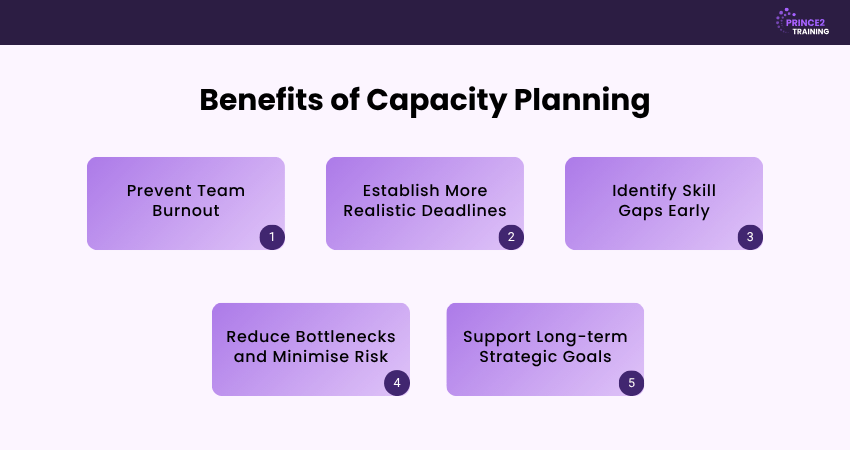
1) Prevent Team Burnout
Capacity Planning provides a clear view of team availability, helping managers distribute work according to employees' actual capacity rather than assumptions. This prevents individuals from becoming overloaded with unrealistic workloads.
Even more, balanced workloads allow employees to focus on high-value tasks without constant pressure. As a result, organisations experience higher productivity, better morale, lower absenteeism, and improved employee retention.
2) Establish More Realistic Deadlines
Understanding available resources before a project begins enables Project Managers to create schedules based on existing capacity. This leads to more achievable timelines and better planning across project phases.
Realistic deadlines reduce the likelihood of missed milestones, rushed work, and last-minute changes. They also improve stakeholder confidence by setting expectations that teams can consistently deliver.
3) Identify Skill Gaps Early
Capacity Planning helps organisations assess whether existing teams have the skills required to meet upcoming project demands. This makes it easier to identify capability gaps before work begins.
Moreover, recognising these gaps early gives businesses time to recruit new talent, provide targeted training, or reassign skilled employees. This reduces project delays while strengthening the organisation's long-term workforce capabilities.
4) Reduce Bottlenecks and Minimise Risk
By analysing workloads and resource availability, Capacity Planning helps identify potential constraints that could disrupt project execution and operational efficiency. These may include limited staffing, equipment shortages, or competing priorities.
Addressing these bottlenecks before they affect delivery helps maintain consistent project delivery and operational efficiency. It also improves collaboration between teams by ensuring resources are available when they are needed most.
5) Support Long-term Strategic Goals
Capacity Planning provides valuable insight into future resource requirements, allowing organisations to make informed decisions about hiring, investment, and business expansion. This ensures resources remain aligned with long-term organisational objectives.
It also enables leaders to respond confidently to changing market conditions and growth opportunities. With a clear understanding of future capacity needs, organisations can scale operations sustainably while maintaining consistent project performance.
Lead Agile teams and deliver successful project outcomes with PRINCE2 Agile® Foundation and Practitioner (Version 2) Training - Join now!
Common Capacity Planning Challenges
While Capacity Planning offers significant benefits, understanding its common challenges can help you prepare for resource constraints, improve planning accuracy, and keep projects on track. Here are the challenges organisations face:
1) Difficulty Understanding Team Bandwidth
It can be challenging to accurately assess how much work employees can realistically handle. The team's bandwidth keeps changing with time. And without a clear visibility into workloads and resource availability, organisations can risk overloading teams or underutilising valuable resources.
2) Managing Unexpected Changes
Projects can be affected by sudden changes such as shifting priorities, new customer requirements, or employee absences. These unexpected events can disrupt project schedules, resource allocation, and overall project delivery.
3) Navigating Difficult Resource Discussions
Balancing limited resources across multiple teams or projects may lead to difficult conversations about priorities, budgets, staffing, or project timelines. In some cases, organisations may need to delay, reschedule, or decline projects because of limited resource availability.
4) Inaccurate Demand Predictions
Forecasting future demand is not always precise. Changes in customer behaviour, market conditions, or business priorities can make demand estimates inaccurate. This may further lead to resource shortages or excess capacity.
5) Adapting to Rapid Market Changes
Market conditions, technology, and customer expectations evolve rapidly, making it challenging for organisations to adjust their capacity plans. Responding quickly while maintaining efficient resource allocation can be difficult.
Conclusion
Successful projects rely on having the right resources available at the right time. Capacity Planning helps organisations align people, equipment, and technology with project demands, improving productivity, reducing risks, and supporting consistent project delivery. By making informed resource decisions, organisations can achieve sustainable growth and long-term project success.
Strengthen your project leadership skills and improve project outcomes with PRINCE2 Training – Join now!
Frequently Asked Questions
What is an Example of a Capacity Plan?
An example of a Capacity Plan is a software company forecasting the need for five additional developers before launching a new product. By assessing current workloads, hiring requirements, and project timelines in advance, the company ensures sufficient resources are available to deliver the project on schedule.
What is the Best Tool for Capacity Planning?
There is no single best Capacity Planning tool, as the right choice depends on an organisation's needs. Popular options include Microsoft Project, Jira, Asana, Smartsheet, Monday.com, and Enterprise Resource Planning (ERP) systems, which help forecast workloads, allocate resources, and monitor capacity efficiently.
How Often Should You Update Your Capacity Plan?
Update your capacity plan at least every two to four weeks, with weekly reviews for fast-moving teams. It should also be revised whenever project scope changes, new work is introduced, or resource availability shifts to ensure accurate planning and effective resource allocation.



 Continue Browsing