01344203999




 Back
Back


Table of Content


17-Sep-2026

Hailey Davis
Let’s say you order a pizza. You make your request (scope), someone takes your order (planning), the kitchen gets to work (execution), and soon, it’s at your door. That, in a fun way, is Project Delivery. It’s how something imagined becomes something real.
In this blog, we explain Project Delivery using everyday examples and clear steps. Whether it’s a pizza, a new app, or a bridge, the delivery process follows a path. We'll walk you through the stages, the people involved, and the best ways to get from start to success. Read on!
Table of Contents
1) What is Project Delivery?
2) Phases of the Project Delivery Process
3) Different Project Delivery Approaches
4) Key Project Management Tips for Effective Delivery
5) Common Challenges in Project Execution
6) Conclusion
What is Project Delivery?
Project Delivery refers to the complete journey of transforming a project idea into a tangible result. It involves the careful coordination of people, processes, and resources to ensure that the project aligns with business goals and stakeholder expectations.
This process spans from initial planning and design through implementation and final handover, encompassing all stages of the project lifecycle. Effective Project Delivery demands clear communication, proactive Risk Management, and continuous performance tracking to keep everything on track.
While its structure can vary depending on the chosen methodology such as Agile, Waterfall, or PRINCE2. The core aim remains the same: to deliver value efficiently, within scope, on time, and on budget.
Key Takeaways:
1) It is the process of turning plans into completed outcomes
2) It covers all phases like initiation, planning, execution, and closure
3) Choosing the right delivery method affects time, cost, and collaboration
4) Common methods include Design-Bid-Build, Design-Build, and IPD
5) Success depends on planning, teamwork, and clear communication

Phases of the Project Delivery Process
The Project Delivery process follows a structured framework designed to guide teams from initial concept to final handover. Each phase plays a critical role in ensuring the project stays aligned with its goals, timeline, and budget. Here's a breakdown of the six key stages:
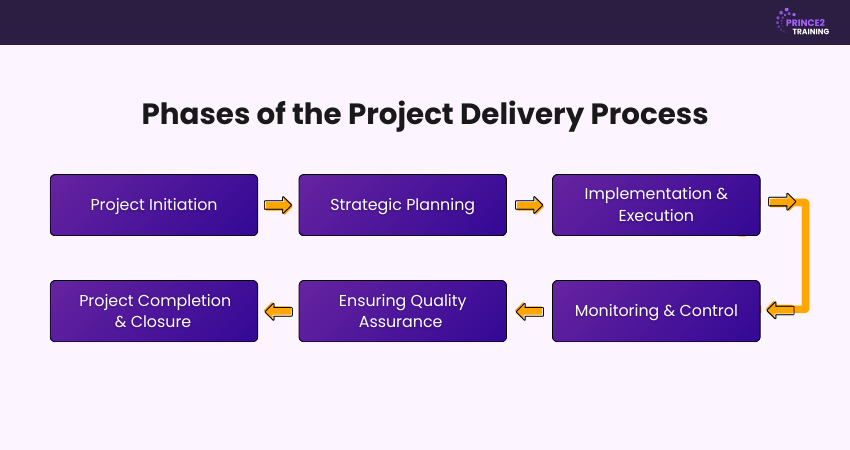
Step 1: Project Initiation
The initiation stage sets the foundation for your project. It's where you define your project's purpose and its business value. Getting this step right ensures alignment and focus from the start.
1) Define Your Project’s Scope: Clearly outline what’s in and out of scope. This helps prevent scope issues. Use insights from past projects to guide expectations.
2) Create a Project Charter: Develop a document outlining goals, stakeholders, objectives, and the purpose. It acts as your project’s guiding document.
Step 2: Strategic Planning
Planning transforms your project vision into a practical roadmap. This phase involves breaking work into manageable tasks, assigning resources, and budgeting.
1) Task Breakdown: List and divide all necessary tasks into smaller components to create a clear task hierarchy.
2) Set Milestones: Identify key progress points to track performance and stay aligned with timelines.
3) Resource Allocation: Match resources to task needs while balancing workload and team availability.
4) Budgeting: Create a detailed budget covering labour, materials, risks, and contingencies.
Step 3: Implementation & Execution
This is where your plan turns into action. Execution requires teamwork, coordination, and consistent communication to keep everything moving.
1) Task Assignments: Delegate responsibilities to the right team members with clear expectations.
2) Regular Check-ins: Hold meetings to monitor progress, solve problems, and maintain alignment.
3) Documentation: Record updates, changes, and decisions to keep stakeholders informed and maintain transparency.
4) Quality Control: Carry out checks and reviews to ensure deliverables meet set standards.
Step 4: Monitoring & Control
Monitoring and controlling run in parallel to execution. This phase keeps the project on track, ensuring any issues are caught and corrected quickly.
1) Key Metrics: Set and track Key Performance Index (KPI) to assess performance, timelines, and budget adherence.
2) Change Management: Use a formal change control process to evaluate and manage scope or timeline changes.
3) Risk Mitigation: Regularly review potential risks and have contingency plans ready.
Step 5: Ensuring Quality Assurance
Delivering quality work is non-negotiable. This phase focuses on maintaining high standards across all deliverables.
1) Quality Standards: Set clear quality criteria and make sure the team follows them.
2) Testing and Inspection: Review and test deliverables to verify they meet requirements.
3) Feedback Loop: Keep communication open across all teams to identify and fix quality issues quickly.
Step 6: Project Completion & Closure
The final stage wraps up the project. It involves handing over deliverables, reviewing outcomes, and documenting lessons learned.
1) Handover: Transfer final deliverables to the client or stakeholders and ensure all objectives are completed.
2) Project Review: Conduct a post-project review to assess successes, challenges, and lessons for future improvement.
3) Documentation and Reporting: Collect all reports, data, and project files to formally close the project and support future initiatives.
Train with the best - Accelerate your Project Management career with the PMP® Exam Prep Boot Camp Course now!
Different Project Delivery Approaches
Choosing the right Project Delivery method can define the success of your project. Each method offers different levels of control, collaboration, cost-efficiency, and speed. Here’s a breakdown of the most used Project Delivery approaches:
1) Construction Manager-at-Risk (CMR)
The CMR approach is like Design, Bid, Build (DBB) but includes a Construction Manager (CM) who oversees the project and guarantees the price won't exceed a pre-agreed maximum.
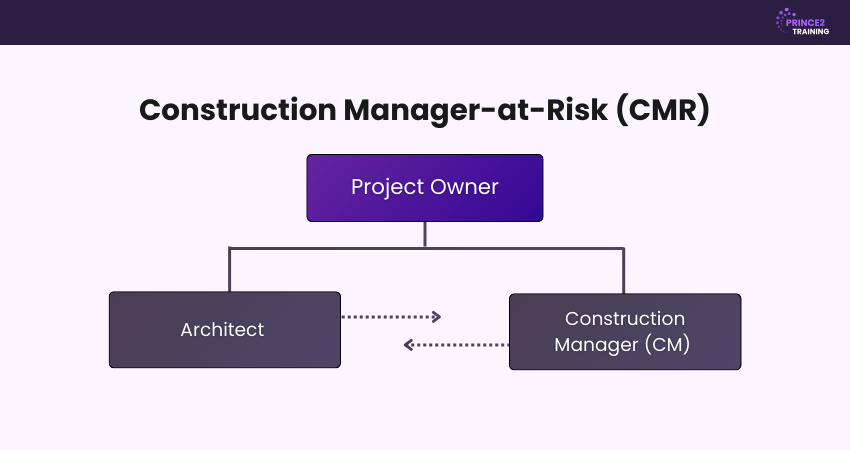
How it Works: The CM is hired early in the project and provides preconstruction advice, cost estimates, and risk assessments. They later manage construction and are responsible for delivering within the Guaranteed Maximum Price (GMP).
Pros: Owners benefit from expert input during the design phase and cost control with GMP. It improves quality and budget accuracy.
Cons: The CM assumes financial risk, which can strain relationships. Disagreements between CM and owner may cause delays.
Best for: Projects where the owner wants expert guidance but has limited internal management resources.
2) Integrated Project Delivery (IPD)
IPD is a collaborative approach that unites all key participants like the owner, designer, contractor, and others in the project lifecycle under a shared contract.
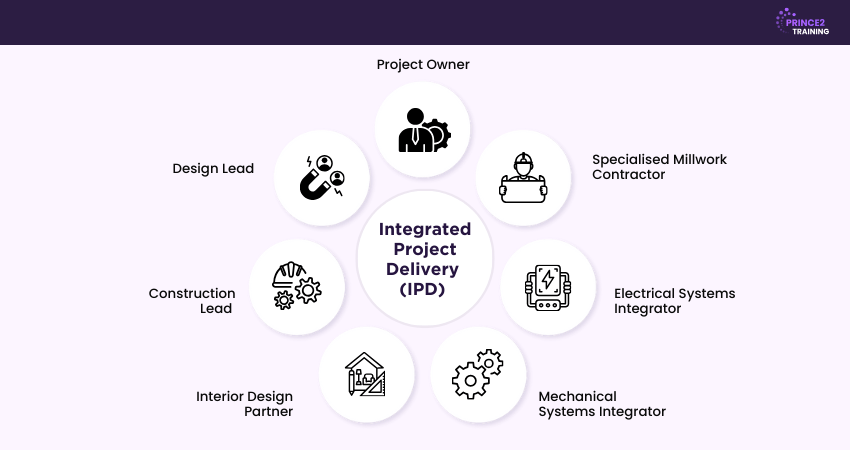
How it Works: Teams work jointly from the start, sharing responsibilities, risks, rewards, and data across the entire project lifecycle.
Pros: Enhances collaboration, increases efficiency, reduces waste, and ensures all parties are aligned. Often paired with Lean principles.
Cons: Requires active owner engagement and strict metrics for success. As a newer model, not all stakeholders may be familiar with its structure.
Best for: Large, complex projects requiring tight coordination and multi-disciplinary teamwork.
3) Design-Build (DB)
The Design-Build model merges design and construction under a single contract. One entity, known as the design-builder, manages the entire process from concept to completion.
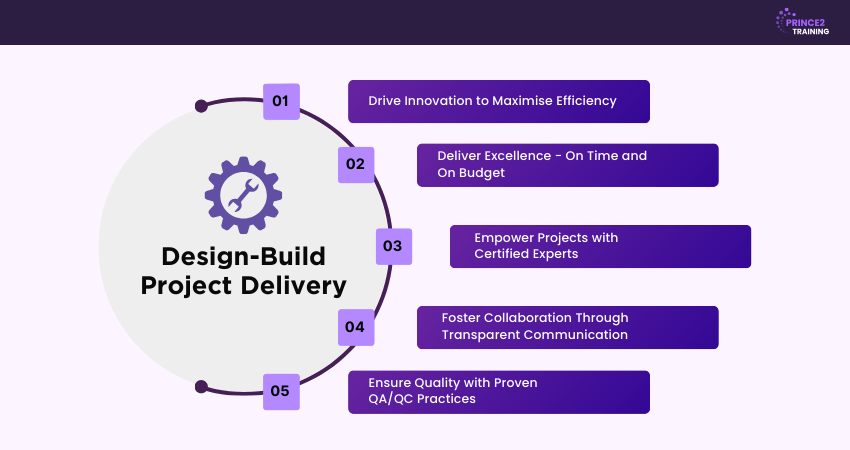
How it Works: One firm handles both the design and construction, allowing overlapping phases and faster turnaround.
Pros: Accelerates timelines, reduces costs, and improves communication with a single point of accountability.
Cons: The owner has less control during the design phase. Choosing the right design-builder is critical to success.
Best for: Time-sensitive projects that need to be fast-tracked without sacrificing quality.
Understand projects from start to finish – Register for our
Introduction to Project Management
today!
4) Multi-Prime (MP)
In the Multi-Prime model, the owner acts as the general contractor and signs separate agreements with different specialty contractors and design firms.
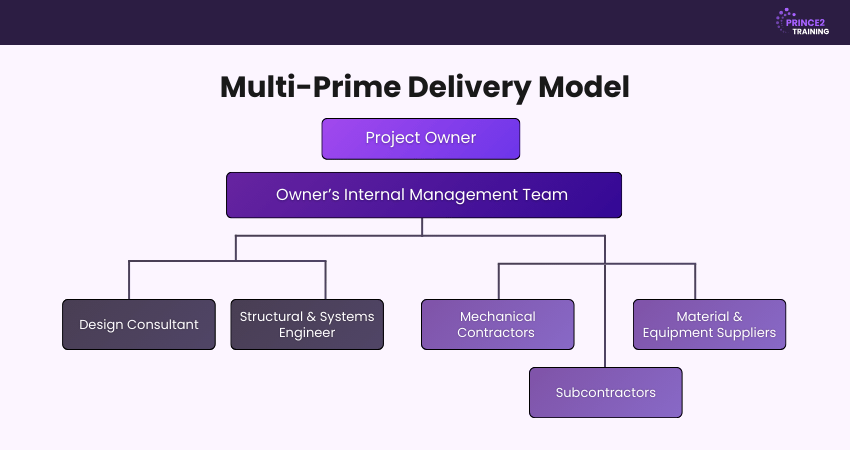
How it Works: The owner directly manages multiple contractors and oversees the project’s coordination and scheduling.
Pros: Offers experienced owners maximum control and the opportunity to cut costs by purchasing materials directly.
Cons: Requires hands-on coordination. Mismanagement or poor communication can lead to costly delays and confusion.
Best for: Projects needing urgent delivery or those managed by highly experienced owners.
5) Design-Bid-Build (DBB)
The Design-Build model merges design and construction under a single contract. One entity, known as the design-builder, manages the entire process from concept to completion.
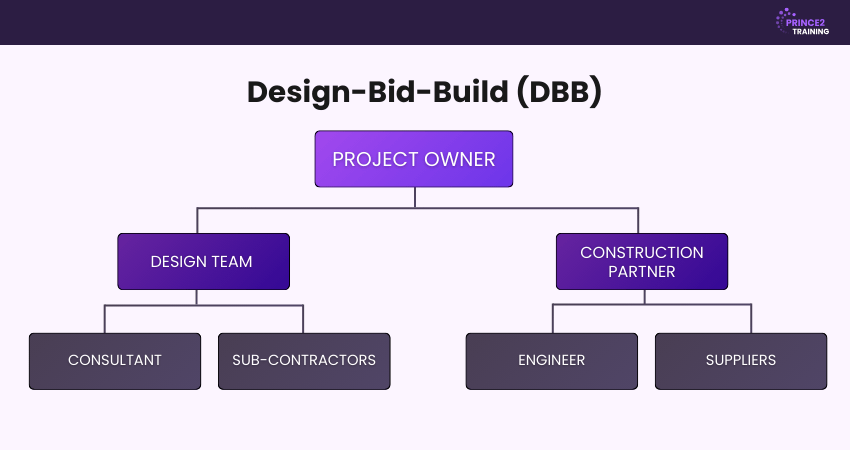
How it Works: One firm handles both the design and construction, allowing overlapping phases and faster turnaround.
Pros: Accelerates timelines, reduces costs, and improves communication with a single point of accountability.
Cons: The owner has less control during the design phase. Choosing the right design-builder is critical to success.
Best for: Time-sensitive projects that need to be fast-tracked without sacrificing quality.
Key Project Management Tips for Effective Delivery
Here are seven essential tips to ensure your project stays on track and delivers the expected value:
1) Develop a Well-defined Scope Statement
a) Start with a clear definition of what the project will deliver and what it won't.
b) Outline project objectives, boundaries, assumptions, and constraints.
c) Prevent scope creep by setting clear expectations early.
d) Use it as a reference point throughout the project lifecycle.
2) Conduct Stakeholder Analysis
a) Identifying and understanding stakeholders early supports better engagement and communication.
b) Map out key stakeholders based on interest and influence.
c) Tailor communication strategies to address their specific concern.
d) Foster strong relationships and early buy-in.
3) Establish & Communicate the Project Plan
A well-structured plan keeps the team aligned and focused on delivery.
a) Include scope, timeline, resources, risks, and quality measures.
b) Share the plan with stakeholders during the kickoff and updates.
c) Use the plan to manage progress and expectations.
Advance your path to project success - Start Learning with our Project Management Courses now!
4) Analyse the Work Breakdown Structure (WBS)
Break the project into manageable parts to improve organisation and tracking.
a) Create a WBS to visualise all tasks and deliverables.
b) Assign responsibilities and estimate time/cost per task.
c) Ensure no work is missed and dependencies are understood.
5) Track Actions, Risks, and Issues Regularly
Consistent monitoring prevents delays and helps resolve issues quickly.
a) Maintain a live register for actions, risks, and issues.
b) Review regularly in team meetings and escalate when needed.
c) Enable early intervention and better decision-making.
6) Maintain Effective Meeting Minutes
Good documentation keeps everyone accountable and informed.
a) Capture key decisions, assigned tasks, and follow-ups.
b) Distribute minutes promptly after each meeting.
c) Keep a clear record of project progress and communication.
7) Adjust Project Schedules & Evaluate the Critical Path
Flexibility is essential, especially when priorities shift or issues arise.
a) Monitor the critical path for delays and bottlenecks.
b) Update schedules regularly and reallocate resources as needed.
c) Maintain agility to keep the project on track.
Common Challenges in Project Execution
Project execution is where planning turns into action, but it’s also where many projects face hurdles. Below are some of the most common challenges encountered during this phase:
1) Scope Creep: Uncontrolled changes or continuous expansion of the project scope can derail timelines and budgets.
2) Poor Communication: Lack of clear, timely communication among team members or stakeholders leads to misunderstandings and delays.
3) Inadequate Resource Allocation: Not having the right people, tools, or materials at the right time can stall progress and reduce quality.
4) Unclear Roles and Responsibilities: When team members are unsure of what’s expected, accountability and efficiency suffer.
5) Weak Risk Management: Failure to identify and mitigate risks early can lead to costly surprises during execution.
6) Timeline Overruns: Delays in task completion, especially on the critical path, often snowball into missed deadlines.
7) Budget Overruns: Unplanned expenses or inaccurate cost estimates can exceed allocated budgets.
8) Low Team Engagement or Morale: Burnout, unclear direction, or lack of motivation can reduce productivity and performance.
9) Vendor or Contractor Delays: External dependencies not delivering on time can stall the entire project.
10) Inefficient Change Control: Frequent or poorly managed change requests can disrupt workflow and create confusion.
Conclusion
Project Delivery is all about turning plans into results through structured execution. Whether it's designing a building or launching software, choosing the right approach and managing it well ensures success. By understanding key phases, methods, and best practices, teams can deliver projects on time, within budget, and to expectations, every time.
Unlock global project opportunities - Get your Project Management Professional (PMP) Training today!



 Continue Browsing