Contact@prince2training.co.uk
 01344203999




 Back
Back


Table of Content

08-Aug-2026

Gary Moore
Projects require clear direction, effective decision-making, and consistent control from start to finish. PRINCE2 Processes provide a structured framework that helps organisations manage every stage of a project with confidence, reducing uncertainty while improving efficiency, accountability, and project success.
Whether you're new to Project Management or looking to strengthen your existing approach, understanding PRINCE2 Processes is essential. In this blog, you will explore its seven processes, explaining how each one contributes to better planning, governance, Risk Management, and the successful delivery of projects. Let’s get started!
Table of Contents
1) What are PRINCE2 Processes?
2) Starting up a Project
3) Directing a Project
4) Initiating a Project
5) Controlling a Stage
6) Managing Product Delivery
7) Managing Stage Boundaries
8) Closing the Project
9) Conclusion
What are PRINCE2 Processes?
PRINCE2 Processes are the seven structured stages that guide a project from its initial idea through to completion. Each process defines specific activities, responsibilities, and decision points, ensuring projects remain controlled, aligned with business objectives, and delivered within agreed constraints. Let’s learn more about it below:
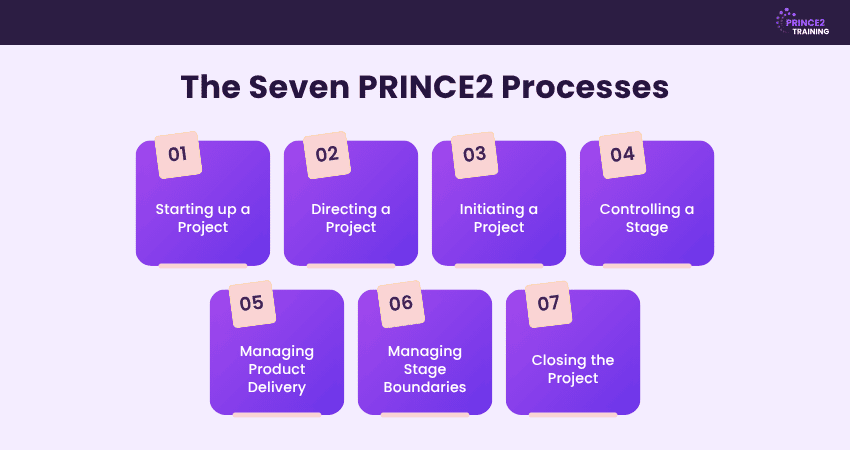
1) Starting up a Project
The Starting Up a Project process determines whether the project is feasible and worthwhile before significant resources are invested. It establishes the project's purpose, identifies key roles, and provides enough information for the Project Board to decide whether the project should proceed. This process includes:
a) Creating a project mandate that outlines the project's purpose, objectives, and high-level approach.
b) Preparing a project brief using the mandate, lessons learned, and stakeholder discussions.
c) Appointing the Project Manager and assigning the project team the information needed to begin planning.

2) Directing a Project
The Directing a Project process is led by the Project Board, which provides strategic direction and governance throughout the project lifecycle. Rather than managing daily activities, the Project Board makes key decisions, authorises major milestones, and ensures the project continues to deliver business value. Its responsibilities include:
a) Authorising project initiation.
b) Making major project decisions.
c) Ensuring the project remains commercially viable.
d) Approving project closure when objectives have been achieved.
3) Initiating a Project
The Initiating a Project process establishes the project's management and governance framework before delivery begins. It defines how the project will be controlled, monitored, and reported, ensuring everyone understands how success will be measured. It sets out the approach for managing:
a) Time: Defines the project schedule and key milestones.
b) Cost: Establishes the project budget and cost controls.
c) Quality: Sets the standards and criteria for project deliverables.
d) Scope: Defines what is included and excluded from the project.
e) Benefits: Identifies the expected business value and how it will be measured.
f) Risk: Outlines how potential risks will be identified, assessed, and managed.
4) Controlling a Stage
The Controlling a Stage process enables the Project Manager to manage the daily work within each stage while ensuring progress remains within agreed constraints. It focuses on coordinating teams, monitoring performance, resolving issues, and keeping the Project Board informed through regular reporting. Here, the key activities include:
a) Assigning work through approved work packages.
b) Monitoring progress and reviewing checkpoint reports.
c) Managing risks, issues, and proposed changes.
d) Reporting progress to the Project Board through highlight reports.
e) Escalating significant deviations using exception reports when tolerances are exceeded.
5) Managing Product Delivery
The Managing Product Delivery process ensures that project products are delivered according to the agreed quality standards, scope, cost, and schedule. Led by the Team Manager, it defines how work packages are accepted, completed, and reported, helping maintain clear communication between delivery teams and the Project Manager. This process involves:
a) Accepting and completing authorised work packages.
b) Delivering products within agreed time, cost, and quality tolerances.
c) Providing regular progress updates to the Project Manager through checkpoint reports.
d) Reporting issues if delivery is likely to exceed agreed tolerances.
Build strong Project Management foundations by joining the
PRINCE2® Foundation Training
now!
6) Managing Stage Boundaries
The Managing Stage Boundaries process takes place at the end of each project stage to review performance and prepare for the next phase. The Project Manager provides updated plans and performance information, while the Project Board decides whether the project should continue based on its ongoing business justification. This process includes:
a) Assessing progress against the stage plan.
b) Reviewing the project's continued business justification.
c) Capturing lessons learned for future stages.
d) Approving the next stage or stopping the project if it is no longer viable.
7) Closing the Project
The Closing a Project process ensures the project is completed in a controlled and organised manner. It confirms that all planned products have been delivered, outstanding activities have been addressed, and lessons learned have been documented before the project is formally closed. Here, the Project Manager will:
a) Hand over the completed products to the customer.
b) Finalise project documentation.
c) Evaluate project performance and record lessons learned.
d) Recommend project closure to the Project Board for final approval. Once approved, the project is formally completed.
Conclusion
Successful projects rely on clear processes, effective governance, and consistent decision-making at every stage. By understanding PRINCE2 Processes, organisations can improve project planning, manage risks, maintain control, and deliver projects on time, within budget, and in line with business objectives.
Learn how to turn project challenges into success stories consistently with the PRINCE2® Training – Sign up now!
Frequently Asked Questions
Who is Responsible for Executing the Seven Processes?
The responsibility for executing the PRINCE2 Processes is shared across key roles. The Project Board provides governance and makes strategic decisions, the Project Manager oversees daily project delivery, and the Team Manager coordinates and delivers authorised work packages.
Which Process Takes up the Most Time?
Usually, the Controlling a Stage process takes up most of a Project Manager's time, as it involves monitoring progress, managing risks, assigning work, and reporting to the Project Board.
How do PRINCE2 Processes Differ from Themes?
PRINCE2 Processes define the structured sequence of activities that guide a project from initiation to closure. In contrast, PRINCE2 themes are the ongoing management disciplines, such as risk, quality, and planning, that are applied throughout every stage to ensure effective project governance.



 Continue Browsing