Contact@prince2training.co.uk
 01344203999




 Back
Back


Table of Content

08-Aug-2026

Maria Thompson
Have you ever had a great idea or project that didn't go as planned because the right people weren't involved? Whether it's delayed approvals, unexpected objections, or poor communication, many project challenges stem from overlooking key stakeholders. This is where Stakeholder Mapping comes in, helping you identify those who can influence your project and engage them effectively from the very beginning.
Whether you're managing a project, launching a product, or leading organisational change, understanding your stakeholders is essential to achieving successful outcomes. In this blog, we'll explore Stakeholder Mapping, its benefits, common models, how to create a Stakeholder Map, and best practices for effective stakeholder engagement.
What is Stakeholder Mapping?
Stakeholder Mapping is the process of identifying and categorising individuals, groups, or organisations that can influence or are affected by a project, business initiative, or organisational change. It evaluates stakeholders based on factors such as their influence, interest, authority, and level of impact, helping teams understand who should be engaged and prioritised throughout the project lifecycle.
By creating a visual Stakeholder Map, organisations can develop effective communication strategies, manage expectations, build stronger relationships, and reduce potential risks. This structured approach supports informed decision-making, improves collaboration, and contributes to successful project outcomes.

Key Benefits of Stakeholder Mapping
Stakeholder Mapping offers much more than an organised list of project participants. It enables teams to build stronger relationships, anticipate challenges, and improve collaboration. It also helps align stakeholder expectations with project goals and supports smoother project execution. Some of the key benefits include:
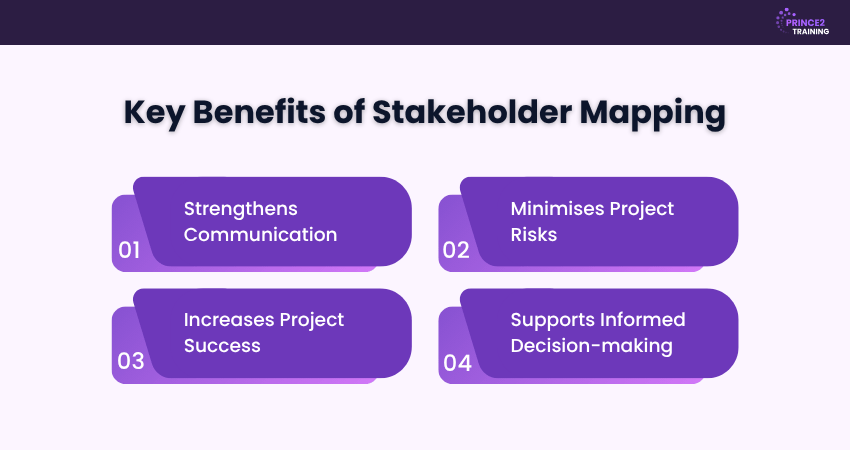
1) Strengthens Communication
Stakeholder Mapping helps teams tailor communication based on each stakeholder's level of influence, interest, and responsibilities. Providing relevant updates at the right time keeps stakeholders informed, improves transparency, reduces misunderstandings, and encourages stronger collaboration throughout the project lifecycle.
2) Minimises Project Risks
Identifying stakeholders early allows project teams to recognise potential concerns, conflicts, or resistance before they affect progress. Engaging key stakeholders proactively helps address issues quickly, reduces uncertainty, and prevents delays, resulting in a more resilient and well-managed project. Early stakeholder engagement also helps mitigate risks related to misalignment and lack of support.
3) Increases Project Success
Projects are more likely to be successful when stakeholders feel involved and valued. Stakeholder Mapping strengthens engagement, builds trust, and aligns stakeholder expectations with project objectives. This encourages collaboration, secures ongoing support, and helps teams achieve desired outcomes more efficiently.
4) Supports Informed Decision-making
Stakeholder Mapping highlights key decision-makers and influential individuals whose input can shape project outcomes. Understanding different stakeholder perspectives enables teams to make well-informed decisions that align with organisational goals, balance competing priorities, and contribute to long-term project success.
Common Stakeholder Mapping Models
Different Stakeholder Mapping models help organisations identify, prioritise, and manage stakeholders based on factors such as influence, interest, and relationships. The most commonly used models include:
1) Salience Model
The Salience Model categorises stakeholders based on three attributes: power, legitimacy, and urgency. Stakeholders possessing one, two, or all three attributes are prioritised accordingly, helping project teams identify who requires the most attention while ensuring communication efforts focus on the most influential stakeholders.
2) Power-Predictability Matrix
The Power-Predictability Matrix evaluates stakeholders based on their level of influence and the predictability of their behaviour or responses. It helps Project Managers identify stakeholders who require closer monitoring and proactive engagement to reduce uncertainty and support smoother project delivery. It is especially helpful in managing stakeholders whose actions may be uncertain or difficult to anticipate.
3) Power/Interest Grid
The Power/Interest Grid classifies stakeholders based on their level of power and interest in a project. It helps teams determine appropriate engagement strategies, such as managing key stakeholders closely, keeping influential stakeholders satisfied, informing interested parties, and monitoring those with minimal involvement.
4) Stakeholder Knowledge Base Chart
The Stakeholder Knowledge Base Chart maps stakeholders according to their level of project knowledge and their attitude towards it. By identifying whether stakeholders are supportive or opposed, and well-informed or less informed, teams can tailor communication strategies to improve engagement and address potential concerns.
5) Stakeholder Relationship Mapping
Stakeholder Relationship Mapping visually illustrates how stakeholders are connected and influence one another. Understanding these relationships helps project teams identify key influencers, strengthen collaboration, improve communication planning, and anticipate how decisions may affect different stakeholder groups throughout the project.
6) Stakeholder Mapping Spreadsheets
Stakeholder Mapping spreadsheets organise stakeholder information, including roles, influence, contact details, communication preferences, and engagement status in a structured format. Although they are flexible and easy to maintain, spreadsheets provide fewer visual insights than graphical mapping models.
Strengthen your project leadership with industry-recognised PRINCE2® Practitioner Training – Register today!
When Should You Use a Stakeholder Map?
A Stakeholder Map is most useful when planning a new initiative or managing change. It helps identify key stakeholders, understand their expectations, and plan effective engagement. Creating a Stakeholder Map early improves collaboration, supports informed decision-making, and increases the chances of project success. Common situations include:
1) Developing a Product
When developing a new product, Stakeholder Mapping helps identify key groups such as customers, suppliers, investors, and internal teams. Understanding their needs, expectations, and influence enables organisations to make better product decisions, improve collaboration, and create solutions that meet both business and customer requirements.
2) Entering a New Market
Expanding into a new market involves engaging a wide range of stakeholders, including potential customers, business partners, retailers, and local communities. Stakeholder Mapping helps organisations understand market expectations, build strong relationships, and develop strategies that support successful market entry and sustainable growth.
3) Launching a Project from Scratch
Starting a project from the beginning requires support from internal stakeholders such as project sponsors, managers, leadership teams, and functional departments. Stakeholder Mapping helps identify decision-makers, allocate responsibilities, secure resources, and establish clear communication channels before project activities begin.
How to Create a Stakeholder Map in 4 Steps?
Creating a Stakeholder Map involves identifying key stakeholders, assessing their influence, and planning effective engagement. Following these four steps helps improve communication, strengthen relationships, and keep stakeholders aligned throughout the project:
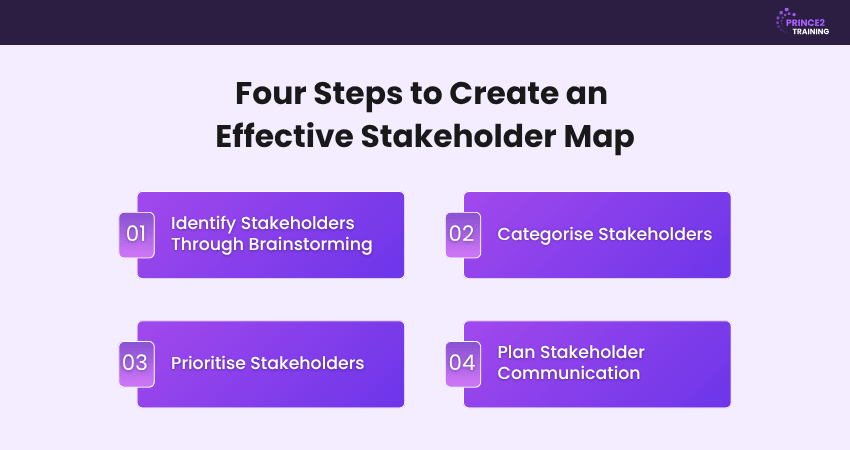
1) Identify Stakeholders Through Brainstorming
Start by listing everyone who may influence or be affected by the project, including internal teams, customers, suppliers, investors, and regulatory bodies. Brainstorming with your project team helps create a comprehensive stakeholder list, ensuring no important individuals or groups are overlooked.
2) Categorise Stakeholders
Once stakeholders have been identified, group them according to shared characteristics such as influence, interest, authority, or role in the project. Categorising stakeholders provides a clearer understanding of their expectations and helps determine the most suitable engagement and communication approach for each group. Proper categorisation improves clarity and enables more structured stakeholder management.
3) Prioritise Stakeholders
Assess stakeholders based on their influence and interest to prioritise engagement efforts. Tools such as the Power/Interest Grid, also known as Mendelow's Matrix, can help classify stakeholders into categories, allowing teams to focus their efforts on those with the greatest impact on project success. This ensures that high-impact stakeholders receive appropriate attention and involvement.
4) Plan Stakeholder Communication
Develop a communication strategy that defines what information each stakeholder needs, how it will be shared, and how frequently updates should be provided. Tailoring communication to stakeholder priorities promotes transparency, builds trust, and keeps everyone engaged throughout the project lifecycle. A well-defined communication plan helps maintain alignment and prevents misunderstandings.
Gain a strong Project Management foundation with the PRINCE2® Foundation Training – Register now!
Best Practices for Stakeholder Mapping
Effective Stakeholder Mapping is not a one-time activity but an ongoing process that evolves as projects progress. Following best practices helps organisations maintain strong stakeholder relationships, improve communication, and respond proactively to changing priorities. Some key practices include:
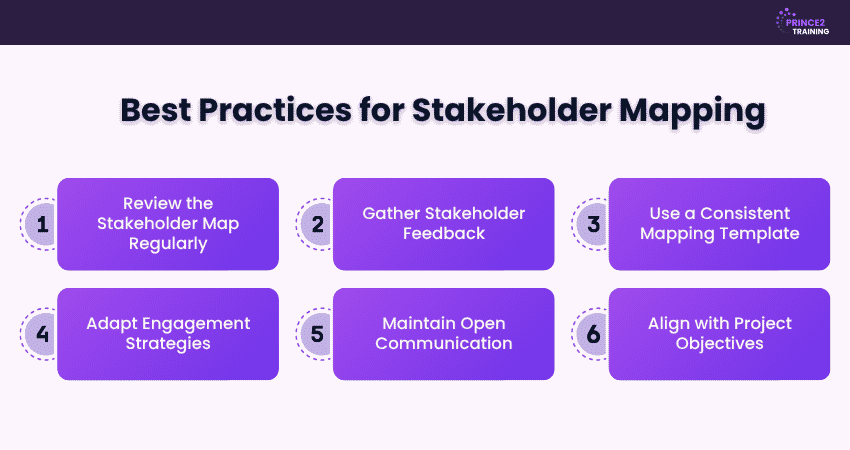
1) Review the Stakeholder Map Regularly: Update your Stakeholder Map as the project progresses or when new stakeholders, priorities, or risks emerge.
2) Gather Stakeholder Feedback: Regularly seek input from stakeholders to understand changing expectations and ensure your engagement approach remains effective.
3) Use a Consistent Mapping Template: Standardised templates make stakeholder information easier to organise, update, and share across project teams.
4) Adapt Engagement Strategies: Adjust communication plans and engagement methods whenever stakeholder influence, interest, or project responsibilities change.
5) Maintain Open Communication: Keep stakeholders informed through timely updates to build trust, address concerns early, and strengthen long-term relationships.
6) Align with Project Objectives: Ensure your Stakeholder Mapping process supports overall project goals, helping teams make informed decisions and achieve successful outcomes.
Conclusion
Stakeholder Mapping is a valuable practice that helps organisations identify key stakeholders, prioritise engagement, and strengthen communication throughout a project. By selecting the right mapping model, following a structured approach, and updating stakeholder information regularly, teams can reduce risks, improve collaboration, and increase the likelihood of achieving successful project outcomes.
Become a confident Project Leader with globally recognised PRINCE2® Training – Join now!
Frequently Asked Questions
Who Should Carry Out Stakeholder Mapping?
Stakeholder Mapping is best carried out by a cross-functional team rather than by an individual. Project Managers typically lead the process, while executives, Product Managers, and communication teams contribute strategic insights, stakeholder knowledge, and effective engagement plans.
What are the Seven Types of Stakeholders?
The seven stakeholder types are:
a) Dormant Stakeholders
b) Discretionary Stakeholders
c) Demanding Stakeholders
d) Dominant Stakeholders
e) Dangerous Stakeholders
f) Dependent Stakeholders
g) Definitive Stakeholders
How Does Stakeholder Mapping Differ from Stakeholder Analysis?
Stakeholder Mapping visually groups stakeholders based on factors such as influence and interest to prioritise engagement. Stakeholder Analysis goes further by assessing their needs, expectations, attitudes, and potential impact, helping teams develop effective communication and management strategies.



 Continue Browsing