Contact@prince2training.co.uk
 01344203999




 Back
Back


Table of Content

08-Aug-2026

David Walter
Successful projects are driven by both effective planning and the people involved. Even the best strategy can face delays if key stakeholders are overlooked. This is where Stakeholder Analysis comes in. It helps organisations identify the people who matter most, understand their priorities, and assess their influence from the very beginning.
With a clear understanding of stakeholder expectations, teams can communicate effectively, reduce risks, and build stronger relationships. This blog explores what is Stakeholder Analysis, the steps involved, its key benefits, types and real-world examples. Let's dive in!
What is Stakeholder Analysis?
Stakeholder Analysis is a structured approach that helps organisations identify key stakeholders and evaluate their influence, interests, and potential impact on a project. It enables Project Managers to understand who should be involved, how different stakeholders may affect project outcomes, and what level of engagement is needed throughout the project lifecycle.
Rather than treating every stakeholder the same, Stakeholder Analysis helps teams prioritise stakeholders with the greatest influence and impact. It identifies supporters, addresses concerns early, and reduces potential risks. This improves collaboration, supports better decision-making, and increases the chances of successful project delivery. It also provides a strong foundation for effective stakeholder engagement throughout the project lifecycle.

Steps in Stakeholder Analysis
Conducting a Stakeholder Analysis involves understanding who the stakeholders are, how they may influence a project, and the best way to engage with them. Let's check the steps involved in this process:
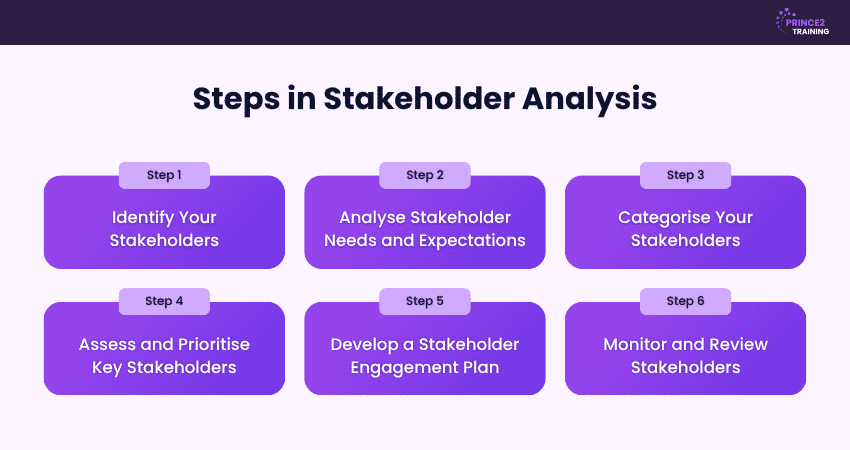
Step 1: Identify Your Stakeholders
The first step is to identify people who influence the project or are affected by its outcomes. This includes internal stakeholders such as project sponsors, team members, managers, and employees, as well as external stakeholders, including customers, suppliers, investors, and local communities. Identifying them early helps ensure that no important group is missed.
Use different methods to build a complete stakeholder list. Brainstorm with the project team, review organisational charts, and examine previous projects. Stakeholder registers, interviews, and discussions with key personnel can also identify less obvious stakeholders.
Step 2: Analyse Stakeholder Needs and Expectations
After identifying stakeholders, understand their interests, expectations, concerns, and objectives. Different stakeholders have different priorities and levels of influence. Understanding these expectations helps teams manage risks, address concerns proactively, and improve stakeholder engagement.
For this, organisations can gather stakeholder information through interviews, surveys, workshops, meetings, and direct observation. Feedback from previous projects can also provide useful insights. These actions help organisations understand stakeholder needs and respond effectively to them.
Step 3: Categorise Your Stakeholders
Once stakeholder information is collected, categorise stakeholders based on their influence, interest, or impact on the project. This step helps teams decide who needs close involvement and who requires regular updates. This makes communication more organised and effective.
The Power-Interest Grid is one of the most widely used stakeholder mapping tools. It places stakeholders into groups based on their level of power and interest. This helps Project Managers prioritise engagement and focus their efforts where they matter most.
Step 4: Assess and Prioritise Key Stakeholders
Once stakeholders have been grouped, the next step is to assess their influence and prioritise those who require the greatest attention. High-priority stakeholders often have strong decision-making authority or a significant interest in the project's success. Engaging them regularly supports better collaboration and informed decision-making.
Also, document stakeholder priorities in a stakeholder engagement plan. Project teams need to review and update the plan as the project progresses because stakeholder influence can change over time. Regular assessments help maintain effective communication and strong stakeholder relationships.
Step 5: Develop a Stakeholder Engagement Plan
Create a communication and engagement strategy tailored to each stakeholder group. Define how often stakeholders should receive updates, the preferred communication channels, and the level of involvement required throughout the project.
An effective engagement plan also outlines responsibilities for stakeholder communication and establishes clear objectives for each interaction. By providing timely, relevant information and encouraging feedback, organisations can build trust, strengthen collaboration, and ensure stakeholders remain informed and engaged throughout the project lifecycle.
Step 6: Monitor and Review Stakeholders
Stakeholder priorities, influence, and expectations may change as the project progresses. Regularly reviewing the Stakeholder Analysis helps Project Managers adapt engagement strategies, address emerging concerns, and maintain positive stakeholder relationships until project completion.
Continuous monitoring enables organisations to identify changes in stakeholder influence, emerging risks, or new expectations before they affect project performance. Updating the Stakeholder Analysis at key project milestones ensures communication remains relevant and helps maintain stakeholder confidence.
Strengthen your project delivery skills with PRINCE2® Foundation Training – Join now!
Benefits of Conducting Stakeholder Analysis
A well-executed Stakeholder Analysis lays the foundation for effective stakeholder engagement and informed decision-making. When carried out effectively, it offers the following benefits:
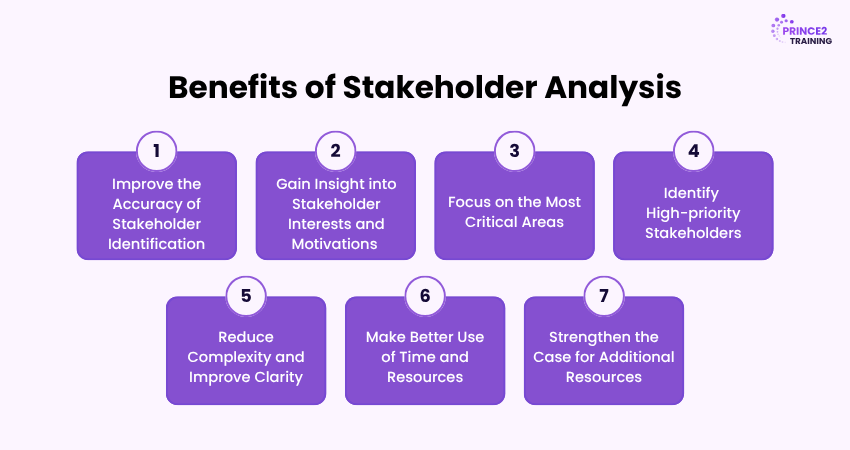
1) Improve the Accuracy of Stakeholder Identification
Stakeholder Analysis helps organisations identify all individuals and groups who may influence or be affected by a project. This reduces the risk of overlooking important stakeholders and ensures that engagement efforts begin with a complete and accurate understanding of everyone involved.
2) Gain Insight into Stakeholder Interests and Motivations
Every stakeholder has unique expectations, concerns, and objectives. Stakeholder Analysis helps Project Managers understand these interests, enabling them to address potential issues early, align communication with stakeholder needs, and build stronger working relationships throughout the project.
3) Focus on the Most Critical Areas
Not all aspects of a project require the same level of attention. Stakeholder Analysis helps organisations identify the areas where stakeholder influence, expectations, or potential risks are greatest. This enables teams to focus their efforts on critical issues, allocate resources, and address challenges before they affect project progress.
4) Identify High-priority Stakeholders
Some stakeholders have greater authority or influence over project decisions than others. Stakeholder Analysis helps project teams recognise these high-priority stakeholders early, ensuring they remain actively engaged and involved in key decisions that affect project success.
5) Reduce Complexity and Improve Clarity
Large projects often involve numerous stakeholders with different expectations and levels of influence. Stakeholder Analysis organises this information into a structured framework, making it easier to understand stakeholder relationships, define priorities, and develop appropriate engagement strategies.
6) Make Better Use of Time and Resources
By identifying which stakeholders require the most attention, organisations can focus their communication and engagement efforts where they deliver the greatest value. This improves resource allocation, avoids unnecessary effort, and supports more efficient project management.
7) Strengthen the Case for Additional Resources
Stakeholder Analysis provides evidence of stakeholder needs, project risks, and engagement requirements, helping Project Managers justify requests for additional budget, personnel, or specialist support. This enables organisations to secure the resources needed to achieve successful project outcomes.
Types of Stakeholders
Stakeholders can be classified using different criteria, including their relationship with the organisation, their influence on decisions, and their interest in organisational activities. Here are the different types of stakeholders:
1) Internal vs External Stakeholders
Internal stakeholders are part of the organisation, such as employees, managers, executives, and project teams. They are directly involved in project delivery and decision-making. External stakeholders include customers, suppliers, investors, regulators, and local communities. Although they operate outside the organisation, they can significantly influence project outcomes.
2) Primary vs Secondary Stakeholders
Primary stakeholders are directly affected by the project's success or failure. They include customers, employees, and investors who have a direct interest in the results. Secondary stakeholders are indirectly affected, such as industry associations, media, or community groups. While their involvement is less direct, they can still influence public perception and project success.
3) Influential vs Non-influential Stakeholders
Influential stakeholders have the authority or ability to shape project decisions and outcomes. They often include senior leaders, sponsors, regulators, or major clients. Non-influential stakeholders have less decision-making power but should still be informed and engaged appropriately to maintain positive relationships.
4) Supportive vs Non-supportive (or Adversarial) Stakeholders
Supportive stakeholders actively encourage the project and help achieve its objectives. They may provide resources, guidance, or advocacy throughout the project. Non-supportive or adversarial stakeholders may oppose certain decisions or raise concerns. Identifying these stakeholders early allows teams to address issues, reduce resistance, and build stronger support.
Enhance your project leadership skills with the PRINCE2® Practitioner Training – Register now!
Common Stakeholder Analysis Mistakes to Avoid
Stakeholder Analysis is most effective when carried out systematically and reviewed regularly. Avoiding common mistakes helps organisations build stronger stakeholder relationships, make better decisions, and reduce the likelihood of misunderstandings or project delays. Below are some of the common mistakes to avoid:
1) Failing to Allocate Adequate Resources
Stakeholder Analysis requires sufficient time, people, and planning. Rushing the process can lead to missed stakeholders or incomplete insights. Allocating the right resources helps create a more accurate analysis.
2) Not Acting on Stakeholder Insights
Gathering stakeholder information is only valuable if it is put into practice. Teams should use these insights to shape communication, engagement, and decision-making. Ignoring feedback can weaken stakeholder relationships and increase project risks.
3) Treating Stakeholder Analysis as a One-time Activity
Stakeholder priorities and influence can change throughout a project. Reviewing and updating the analysis regularly keeps stakeholder information relevant. This helps organisations respond to changing expectations and project needs.
4) Conducting Stakeholder Analysis Without Team Collaboration
Stakeholder Analysis should involve representatives from different teams and departments. Diverse perspectives improve stakeholder identification and reduce the chance of missing important groups. Collaboration also leads to better engagement strategies.
5) Relying on a Single Stakeholder Mapping Technique
No single mapping method works for every project. Combining different stakeholder mapping techniques and analysis tools provides a broader understanding of stakeholder influence, interest, and priorities. This results in more informed planning and better stakeholder management.
Real-world Examples of Stakeholder Analysis
Practical examples help bring Stakeholder Analysis to life. Here are three examples that illustrate how organisations use it in different industries:
1) Infrastructure Project
Before launching a major road development project, the project team identifies local residents, logistics companies, and government authorities as key stakeholders. Residents are consulted through public meetings, logistics companies are involved in planning discussions, and government agencies are engaged for approvals. This targeted approach improves collaboration and supports smoother project delivery.
2) Renewable Energy Project
A renewable energy company planning an offshore wind farm identifies local fishing communities as important stakeholders. Although these groups have limited decision-making power, they have legitimate concerns about the project's impact. Early engagement helps address their concerns, build trust, and reduce the risk of delays or legal disputes.
3) Healthcare Service Implementation
A healthcare organisation introducing a new patient service analyses stakeholders, including patient groups, healthcare providers, and regional commissioners. The analysis reveals that local healthcare professionals have a greater influence on patient adoption than initially expected. As a result, the organisation increases communication and collaboration with these groups, leading to stronger stakeholder support and a more successful rollout.
Conclusion
Stakeholder Analysis is an essential part of successful project planning and delivery. By identifying stakeholders, understanding their interests, and prioritising engagement efforts, organisations can improve communication, reduce risks, and make more informed decisions. Applying this analysis throughout the project lifecycle helps build stronger relationships, manage expectations, and increase the likelihood of achieving successful project outcomes.
Learn to deliver projects more successfully with PRINCE2 Training – Join now!
Frequently Asked Questions
What are the Four Cs of Stakeholder Management?
The Four C's of Stakeholder Management are Communication, Collaboration, Commitment, and Credibility. These principles help Project Managers build trust, strengthen stakeholder relationships, encourage active engagement, and support effective decision-making throughout the project lifecycle, contributing to successful project outcomes.
What are the Ten Key Principles of Stakeholder Engagement?
The ten key principles of stakeholder engagement include communicating effectively, consulting regularly, understanding stakeholder behaviour, planning engagement, building relationships, keeping approaches simple, managing stakeholder risks, compromising where needed, adapting to change, and ensuring responsibility for engagement.
What Skills are Needed for Stakeholder Management?
Stakeholder Management requires a combination of interpersonal and strategic skills to build trust, manage expectations, and align stakeholder interests. Key skills include effective communication, negotiation, conflict resolution, relationship building, decision-making, and ability to influence and collaborate with diverse stakeholders.



 Continue Browsing