Contact@prince2training.co.uk
 01344203999




 Back
Back


Table of Content


21-Sep-2026

Gary Moore
What if your team could respond to change faster, deliver better results, and stay aligned without chaos? That is the promise of Scrum, a proven Agile methodology built around collaboration, flexibility, and incremental progress.
It is more than a process; it is a mindset shift that transforms how work gets done. By understanding What is Scrum, teams can adopt a lightweight framework that delivers value through short, focused iterations called Sprints. Let's get started!
Table of Contents
1) What is Scrum?
2) What is Scrum Methodology?
3) Scrum Values for Project Teams
4) How Does Scrum Work?
5) The Scrum Framework
6) The Scrum Artefacts
7) What are Scrum Roles?
8) Scrum Events
9) Pros and Cons of Using Scrum
10) Scrum vs Kanban: Key Differences
11) Conclusion
What is Scrum?
Scrum is a straightforward and efficient Agile system that assists teams in planning and finishing complicated projects. It divides work into brief and actionable cycles known as Sprints. It typically lasts two to four weeks. In every Sprint, the team works on a group of tasks and tries to deliver a functional product feature by the end.
Scrum functions with transparent roles, such as the Product Owner, who gives priorities. The Scrum Master assists the team, and the Development Team develops the product. Standard meetings like Sprint Planning and Daily Standups keep everyone aligned and on target in their own workflows.
What is Scrum Methodology?
Scrum Methodology is an Agile framework that aids teams to work together to deliver projects in short and focused cycles called sprints. It promotes collaboration, adaptability and continuous improvement. Let us now explore the core principles and values that make Scrum Methodology effective for high-performing project teams:
Core Principles Behind Scrum Success
The success of Scrum lies in a few key principles that guide how teams work, make decisions, and improve over time. These principles create a foundation for agility, accountability, and growth.
Transparency
a) All team members have access to shared project goals and progress
b) Work artefacts (e.g., Product Backlog, Sprint Backlog) are visible to all
c) Daily stand-ups foster open communication
d) Definitions of "Done" are clearly understood and consistent
e) Issues and impediments are reported honestly and promptly
Reflection
a) Sprint Retrospectives are held to review team performance
b) Teams identify what went well and what needs improvement
c) Feedback from stakeholders is actively gathered and considered
d) Individuals assess their own contributions and growth
e) Reflection is used to guide future team practices and behaviours
Adaptation
a) Product Backlogs are continuously refined and reprioritized
b) Teams respond quickly to feedback and changes in requirement
c) Process adjustments are made based on retrospective insights
d) Time-boxed iterations allow for frequent reassessment
e) Teams embrace change as a path to improvement, not disruption
Scrum Values for Project Teams
Scrum is built on a set of core values that shape team culture and behaviour. These values help teams stay aligned, motivated, and productive throughout every phase of a project.
Commitment
a) The Team supports shared ownership of outcomes
b) Personal accountability is encouraged and practiced
c) The team commits to high-quality deliverables
d) Efforts are aligned with long-term project and organizational goals
Courage
a) Team members speak up about challenges and risks
b) Difficult conversations are welcomed for the sake of improvement
c) Innovation is encouraged, even with potential risk
d) Mistakes are admitted and treated as learning opportunities
Focus
a) The team concentrates on the Sprint Goal above all
b) Distractions are minimized during Sprint execution
c) Each Sprint is structured to maximize value delivery
d) Prioritized tasks receive full attention until completion
Openness
a) Communication is clear, honest and frequent
b) Impediments are shared openly without blame
c) Progress and plans are visible to all stakeholders
d) Transparency leads to trust within the team
Respect
a) Everyone's ideas and contributions are acknowledge
b) Team members value each other's skills and expertise
c) Constructive feedback is delivered with kindness
d) Diversity of thought and background is embraced
Gain skills to lead and deliver with impact with our Project Management Course – Register!
How Does Scrum Work?
Scrum is an Agile framework that supports development teams to deliver high-quality results quickly by breaking work into short, manageable cycles called Sprints. Each Sprint typically lasts between 1-4 weeks and starts with a planning session to define what will be delivered.
During the Sprint, teams hold daily stand-up meetings to track progress and address issues. At the end, they review what was completed and discuss how to improve in the next cycle. Scrum is a framework that is simple to understand but challenging to master.
Its co-creators, Jeff Sutherland and Ken Schwaber, have outlined its core principles in The Scrum Guide, which provides a detailed explanation of Scrum practices and how to apply them effectively.
The Scrum Framework
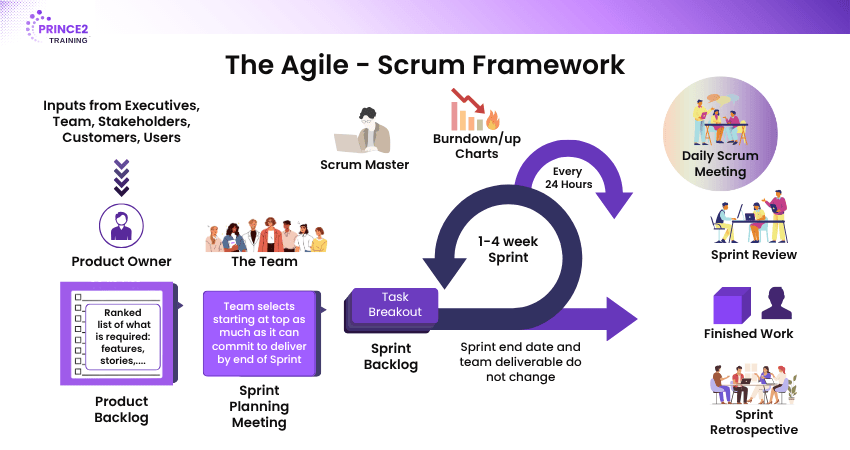
Scrum follows a structured yet flexible cycle made up of key steps that guide teams from idea collection to product delivery. Here's a breakdown of each stage in the Scrum framework:
1) Gathering Inputs and Building the Product Backlog
The Scrum process begins when the Product Owner collects ideas and requirements from executives, customers, users and stakeholders. These inputs are added to the Product Backlog, which is a prioritised list of everything the team might work on. The list includes features, fixes, improvements and user stories. It is regularly updated based on feedback and changing needs.
2) Planning the Sprint
The Scrum Team organises a Sprint Planning Meeting. The team along with the Product Owner and Scrum Master are responsible for reviewing the top views in the Product Backlog. They agree on which tasks are taken to complete in the next sprint. The sprint typically lasts between 1-4 weeks. The goal is to set the expectations and choose the right amount of work.
3) Creating the Sprint Backlog and Breaking Down Tasks
Once after the teams select the sprint items, the tasks become a Sprint Backlog. The team later breaks each item into a smaller and more manageable tasks. This helps everyone understand the work clearly and allows the team to start without confusion or delays.
4) Executing the Sprint
The team works on the tasks which are present in the Sprint Backlog during the sprint. Their focus is upon delivering the managed tasks within the set timeframe. It allows the teams to focus and avoid disruptions which hamper the work progress.
5) Staying on Track with Daily Scrum
The team schedules Daily Scrums, which are short, focused check-ins where team members discuss completed tasks, ongoing work, and any blockers they are facing. The Scrum Master helps remove obstacles and keeps the team moving forward. Teams can use Burndown Charts to track progress and visualise remaining tasks.
6) Reviewing the Work Done
At the end of the Sprint, the team presents a Sprint Review. This is where they demonstrate the completed work to the stakeholders and the Product Owner. The review helps gather feedback and confirm whether the product is heading in the right direction. It is a key opportunity to adjust plans based on real results.
7) Reflecting and Improving with a Sprint Retrospective
After the review, the team focuses on a Sprint Retrospective. This is a time to reflect on the Sprint. They discuss what went well, what could have gone better, and how they can improve in the next Sprint. The goal is to build stronger teamwork and achieve better results in future work.
8) Delivering Value and Starting the Next Cycle
When the Sprint ends, the team delivers finished work that is ready for use or release. This could be a feature, an improvement, or any usable product update. Then, the cycle repeats. The team returns to the Product Backlog, plans the next Sprint, and continues building with consistent focus and improvement.
Boost project success through Agile Project Management Practitioner Upgrade (Agile PM®) Course - Join now!
The Scrum Artefacts
Scrum uses a few key elements, known as artefacts, to help teams stay focused, organised, and aligned. These artefacts guide the work and ensure transparency throughout the development process:
Product Backlog
The Product Backlog is a to-do list of everything the product might need. It includes features, bug fixes, improvements and user requests. This list is always evolving based on new ideas and feedback. The Product Owner keeps it updated and makes sure the most important items are at the top.
Sprint Backlog
The Sprint Backlog comprises a list of tasks the team commits to during a sprint. It's taken from the top of the Product Backlog and broken into smaller tasks. This helps the team focus only on what's needed for the current sprint, making their work more organised and manageable.
Product Increment
The Product Increment is the usable result of the team's work at the end of a sprint. It includes everything completed during the sprint, added to whatever was already done. Each increment should be ready for release and meet the agreed quality standards.
What are Scrum Roles?
Scrum defines three key roles that work together to deliver value. Each role has a unique responsibility, but all three must collaborate closely to make the process work effectively:
Product Owner
The Product Owner is considered as the voice of the customer. They prioritise the Product Backlog and decide what features or tasks are most important. They ensure the team is always working on the highest-value items. They also cumulate feedback from users and stakeholders and keep the team focused on business goals.
Scrum Leader
Also known as the Scrum Master, this role supports the team by removing obstacles and coaching them in proper Scrum practices. They help ensure the process runs smoothly, facilitate Daily Scrums, and protect the team from distractions. Their role is to enable, not to manage.
Scrum Development Team
The Development Team is made up of professionals who build the product. They decide how to do the work and complete tasks in the Sprint Backlog. This team is cross-functional, and it means it includes all the skills needed to deliver a working product increment. They are self-organising and work together without being micromanaged.
Scrum Events
Scrum uses a set of time-boxed events to create rhythm and structure in the workflow. These events help the team plan, track progress, review results, and improve continuously:
Sprint
A Sprint is a short, fixed period of focused work, usually lasting between one and four weeks. During the Sprint, the team works on the selected tasks from the Sprint Backlog. Once the Sprint begins, no changes are made that would endanger the Sprint Goal. The aim is to deliver a usable Product Increment by the end.
Sprint Planning
Sprint Planning starts the Sprint. The whole team comes together to decide what work they will complete in the upcoming Sprint. The Product Owner presents the top priorities from the Product Backlog, and the team selects items they can realistically finish. They also discuss the approach and plan how the work will be accomplished.
Daily Scrum
The Daily Scrum is a quick meeting held every day, usually for 15 minutes. Each team member shares what they did yesterday, what they plan to do today, and if they're facing any obstacles. This helps the team stay aligned and quickly address any issues. The Scrum Master ensures the event happens, but the team is responsible for leading it.
Sprint Review
The team holds a Sprint Review at the end of the Sprint to show what they've completed. They demonstrate the Product Increment to the Product Owner and stakeholders, gather feedback, and discuss what to work on next. This helps keep the product aligned with user needs and expectations. The entire Scrum Team collaborates with stakeholders to adapt the Product Backlog if needed.
Sprint Retrospective
The Sprint Retrospective happens after the Sprint Review. It's a time for the team to reflect on how they worked together during the Sprint. They talk about what went well, what could be improved, and agree on actions to make the next Sprint even better. The aim is continuous improvement in both processes and teamwork.
Pros and Cons of Using Scrum
Scrum is widely used for managing complex projects, especially in Software Development. Let us discern the pros and cons of using Scrum:
Pros
Faster Delivery: Work is done in short sprints, which allows teams to deliver usable product increments regularly.
3) Flexibility to Change: Scrum welcomes changes based on feedback, which means the product stays relevant and user focused.
4) Better Product Quality: Regular reviews and testing during each sprint help catch problems early and maintain high quality.
5) Increased Visibility: Scrum provides transparency through daily Scrums, sprint reviews, and progress charts, so everyone knows what's going on.
Cons
1) Needs Experienced Team Members: Scrum works best when the team understands Agile principles. Inexperienced teams may struggle to self-manage or estimate tasks.
2) Can Be Hard to Scale: Managing multiple Scrum teams or large projects requires extra planning and coordination, which can become complex.
3) Time-consuming Meetings: Daily Scrums, planning, reviews, and retrospectives can feel repetitive if not managed well.
4) Not Ideal for Fixed-scope Projects: Scrum works better when requirements are flexible. For projects with strict scope and deadlines, traditional methods may fit better.
5) Pressure To Deliver Constantly: The sprint cycle can create stress, especially if goals are unrealistic or if team members are overcommitted.
Popular Scrum Tools
Scrum tools help teams stay organised, track tasks, plan sprints, and collaborate in real time. They support Agile workflows and improve team efficiency. Here are some widely used options:
Miro
Miro is a visual collaboration tool that supports Scrum through interactive whiteboards. Teams can use it to run sprint planning, retrospectives, and daily stand-ups in a visual way. It's great for brainstorming and remote collaboration.
ClickUp
ClickUp offers a flexible platform with features for task management, sprint tracking, and team collaboration. It includes templates for Scrum, custom dashboards, and goal-setting tools, making it a strong choice for Agile teams of all sizes.
Jira Software
Jira is one of the most widely used Scrum tools, especially for software development teams. It supports backlog management, sprint planning, and burndown charts. Its powerful integration with other development tools makes it ideal for technical teams.
monday.com
monday.com provides a simple and visual way to manage Scrum workflows. Teams can create boards for sprints, track tasks, and collaborate in real time. Its user-friendly interface and custom automation make it easy to adapt to any team's needs.
Zoho Sprints
Zoho Sprints is a simple Agile Project Management tool designed specifically for Scrum teams. It offers sprint planning, task boards, timesheets, and velocity charts. It's a good fit for small to mid-sized teams looking for an affordable and easy-to-use solution.
Scrum vs Kanban: Key Differences
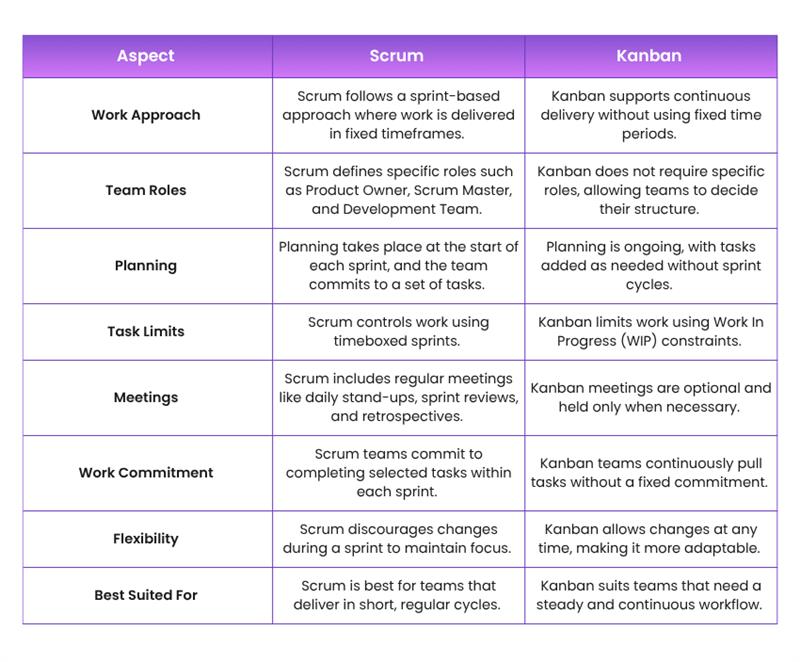
Scrum and Kanban are two popular Agile frameworks, each offering an appropriate approach in managing and delivering work. The table below highlights the key differences between them:
Conclusion
Scrum offers a flexible, structured way to manage complex projects through collaboration and continuous improvement. By understanding What is Scrum, teams can use defined roles, events, and artefacts to stay focused and deliver value in short cycles. Whether in software or business workflows, Scrum improves team performance, enabling faster adaptation and more successful project outcomes.
Lead smarter with Agile Project Management Foundation (Agile PM®) Training today.



 Continue Browsing