Contact@prince2training.co.uk
 01344203999




 Back
Back


Table of Content


21-Sep-2026

Veronica Davis
Consider a scenario: you are mid-project, the clock’s ticking, and suddenly everything feels like a priority. Sound familiar? That’s where knowing What is MoSCoW Prioritisation can make all the difference; this practical approach can help you bring order to the chaos. Instead of guessing what matters most, this method helps you sort tasks into four clear buckets: what must get done, what should, what could, and what won’t.
So, What is MoSCoW Prioritisation, if not a way to cut through the noise and bring clarity to decision-making? In case you are planning a product launch or managing daily workflows, this tool helps you make smart and quick calls. Let’s talk about how it works and how it can change the way you approach priorities for good.
Table of Contents
1) What is MoSCoW Prioritisation?
2) How Does the MoSCoW Prioritisation Method Work?
3) Key Requirements for MoSCoW Prioritisation
4) Steps to Conduct a MoSCoW Analysis
5) How to Apply MoSCoW Prioritisation?
6) When Should You Use MoSCoW Prioritisation?
7) Best Practices for Implementing MoSCoW Prioritisation
8) How is MoSCoW Used in Agile Project Management?
9) Benefits of MoSCoW Prioritisation
10) Limitations and Challenges of MoSCoW Prioritisation
11) Tips for prioritisation using the MoSCoW framework
12) Conclusion
What is MoSCoW Prioritisation?
MoSCoW Prioritisation is a powerful technique used in project management to prioritise tasks and requirements. The acronym stands for Must have, Should have, Could have, and Won't have. This method, similar to the Kano model, helps teams focus on what is truly essential for project success, ensuring that critical tasks are completed first.

How Does the MoSCoW Prioritisation Method Work?
The MoSCoW method is a practical way to help teams organise tasks based on their importance, ensuring time and resources are focused where they matter most. Here’s how it works:
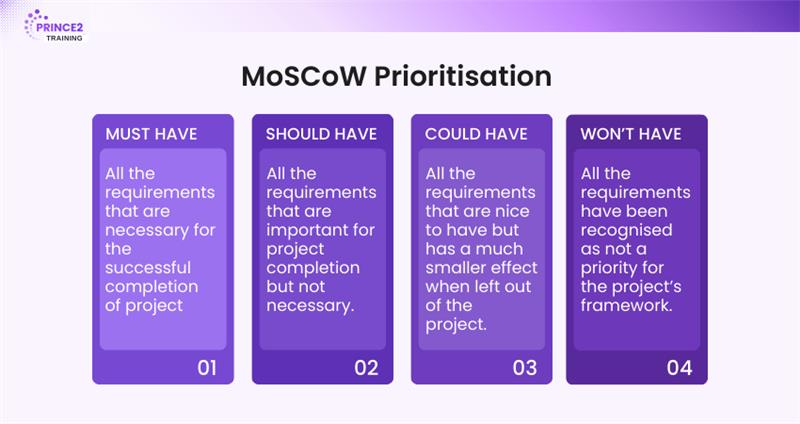
1) Group Tasks into Four Clear Priorities: Start by dividing all project requirements into four categories: Must-Have (non-negotiable), Should-Have (important but not vital), Could-Have (nice to include), and Won’t-Have (not needed this time).
2) Collaborate with Stakeholders: Work closely with stakeholders to agree on what falls into each category. This alignment helps avoid miscommunication and keeps everyone working towards shared goals.
3) Focus Resources on Must-haves First: Time, budget, and effort should go towards the most essential items first, ensuring the project delivers its core value even if timelines tighten.
4) Review and Adapt Along the Way: Priorities can shift as projects evolve, so it’s important to revisit the list regularly and adjust based on new insights or changing needs.
Key Requirements for MoSCoW Prioritisation
Let’s explore the crucial requirements of MoSCow Prioritisation:
Must Have
Must have requirements are the backbone of any project. These are non-negotiable aspects and are essential for the project's success. Without these, the project would fail to meet its core objectives. They are the critical features or functionalities that the project absolutely cannot do without.
Should Have
Should have requirements are important and add significant value to the project. However, if time or resources are constrained, these can be postponed. While they are not as critical as the must-have requirements, they still play a vital role in enhancing the project's overall quality and effectiveness.
Gear up for success – register for our
PMP® Exam Prep Boot Camp Course
now!
Could Have
Could have features fall under the "nice-to-have" category. These are additional functionalities or enhancements that can be included if resources allow. They are not essential for the project's success but can improve user experience and add extra value. Including these features can make the project more appealing and comprehensive.
Won't have
Won't have items are low-priority and will not be included in the current project scope. These are features or requirements that are not necessary for the project's immediate goals. They can be considered for future phases or iterations but are deliberately excluded from the current plan to maintain focus and manage resources effectively.
Steps to Conduct a MoSCoW Analysis
Listed below are some steps to conduct a MoSCow Analysis:
Identify and Engage Key Stakeholders
Ensure all relevant parties are involved in the prioritisation process. This includes project managers, team members, clients, and any other stakeholders who have a vested interest in the project's outcome. Engaging these stakeholders early on helps gather diverse perspectives, ensures alignment on project goals, and fosters a sense of ownership and collaboration.
Establish Decision-making Criteria
Define the criteria for categorising tasks. This involves setting clear guidelines on what constitutes a "must have," "should have," "could have," and "won't have" requirement. Criteria might include factors such as the impact on project success, cost, time, and resource availability. Having well-defined criteria ensures consistency and objectivity in the prioritisation process.
Allocate Resources Wisely
Ensure resources are allocated to the most critical tasks first. This means prioritising tasks that are essential for the project's success and ensuring that the necessary manpower, budget, and tools are available to complete them. Efficient resource allocation helps prevent bottlenecks and ensures that the project progresses smoothly.
Set a Realistic Timeline
Develop a timeline that reflects the prioritisation of tasks. A realistic timeline considers the complexity and dependencies of tasks, as well as the availability of resources. It helps manage expectations and provides a clear roadmap for project execution, ensuring that critical milestones are met on time.
List and Categorise Priorities
Create a comprehensive list of tasks and categorise them using the MoSCoW method (Must have, Should have, Could have, Won't have). This structured approach helps in visualising the project's scope and understanding the relative importance of each task. It also aids in communicating priorities clearly to all stakeholders.
Begin the Prioritisation Process
Start prioritising tasks based on the established criteria. This involves reviewing each task, assessing its importance and urgency, and assigning it to the appropriate category. Regularly revisiting and adjusting priorities as the project progresses ensures that the team remains focused on the most critical tasks and can adapt to any changes or new information.
How to Apply MoSCoW Prioritisation?
Find out how to apply MoSCoW Prioritisation:
Least Aligned Quadrants
Focus on tasks that are least aligned with project goals and deprioritise them. These tasks may not contribute significantly to the project's core objectives or desired outcomes. By identifying and deprioritising these tasks, you can ensure that resources and efforts are directed towards more impactful activities.
This approach helps in maintaining a clear focus on what truly matters and prevents the team from getting sidetracked by less important tasks.
Strong Alignment
Prioritise tasks that strongly align with project objectives and deliver the most value. These tasks are crucial for achieving the project's goals and should be given the highest priority. By focusing on tasks with strong alignment, you can maximise the project's impact and ensure that the most critical aspects are addressed first.
This strategy helps in delivering high-quality results and meeting stakeholder expectations effectively.
Step into Leadership with confidence – get our Project Management Professional (PMP)® Training.
When Should You Use MoSCoW Prioritisation?
MoSCoW Prioritisation is a versatile method that can be applied in various scenarios to ensure that projects are managed efficiently. Here are some situations where using MoSCoW prioritisation can be particularly beneficial:
Developing New Projects
Use the MoSCoW method to prioritise tasks and ensure critical requirements are met. This approach helps in identifying and focusing on the most essential tasks (Must have), while also considering important (Should have), nice-to-have (Could have), and low-priority (Won't have) items. By applying MoSCoW, you can allocate resources effectively, manage time efficiently, and ensure that the project meets its core objectives.
Keeping Expectations in Check
Manage stakeholder expectations by clearly defining priorities. Communicating the prioritisation of tasks helps stakeholders understand what to expect and when. It ensures that everyone is on the same page regarding the project's scope, timelines, and deliverables. Clear prioritisation also helps in addressing any concerns or adjustments needed, fostering transparency and trust among all parties involved.
Best Practices for Implementing MoSCoW Prioritisation
Here are some best practices for implementing MoSCoW Prioritisation:
Define Priorities Clearly
Ensure all team members understand the prioritisation criteria. This involves setting clear guidelines on how tasks are categorised and why certain tasks are prioritised over others. Clear priorities help in aligning the team's efforts and ensuring everyone is working towards the same goals.
Focus on Delivering Value
Prioritise tasks that deliver the most value to the project. This means identifying and focusing on activities that have the highest impact on achieving the project's objectives. By delivering high-value tasks first, you can ensure that the project meets its key goals and provides maximum benefit to stakeholders.
Review and Adjust Priorities Regularly
Continuously review and adjust priorities as the project progresses. This involves regularly assessing the project's status, identifying any changes in scope or requirements, and adjusting priorities accordingly. Regular reviews help in staying on track and adapting to any new challenges or opportunities that arise.
Limit the Number of Must-Have Items
Keep the list of must-have items manageable. This ensures that the team can focus on completing the most critical tasks without being overwhelmed. A manageable list of must-have items helps in maintaining a clear focus and ensuring that essential requirements are met.
Minimum Viable Product (MVP)
Focus on delivering an MVP that meets the essential requirements. The MVP approach helps in delivering a functional product quickly, allowing for early feedback and iterative improvements. By focusing on the MVP, you can ensure that the project delivers value early on and can be refined based on user feedback.
Balance Stakeholder Needs Effectively
Ensure stakeholder needs are balanced and prioritised appropriately. This involves understanding the different needs and expectations of various stakeholders and finding a balance that satisfies the most critical requirements. Effective stakeholder management helps in maintaining support and alignment throughout the project.
Maintain Flexibility in Planning
Be flexible and adjust plans as needed. Flexibility in planning allows the team to adapt to changes and unforeseen challenges. By maintaining a flexible approach, you can ensure that the project remains on track and can respond effectively to any new developments.
Ensure Clear Communication of Priorities
Communicate priorities clearly to all stakeholders. Clear communication helps in ensuring that everyone understands the project's focus and the rationale behind prioritisation decisions. Effective communication fosters transparency, builds trust, and ensures that all stakeholders are aligned with the project's goals and progress.
How is MoSCoW Used in Agile Project Management?
MoSCoW fits perfectly into Agile because it helps teams stay focused on what really matters without getting overwhelmed. Here’s how it’s commonly used in Agile projects:
1) Prioritising the Backlog
Agile teams often use MoSCoW to sort their product backlog; deciding what absolutely needs to be delivered now, and what can wait for later.
2) Planning Sprints with Purpose
During sprint planning, MoSCoW helps teams choose the right mix of tasks, making sure Must-Haves are covered first, without overloading the sprint.
3) Keeping the Scope Under Control
By clearly defining priorities, teams can manage scope more effectively and avoid getting sidetracked by less important features.
4) Aligning With Stakeholders
It’s a great way to make sure everyone; from team members to clients, knows what’s being worked on and what’s being saved for later.
5) Staying Flexible as Things Change
Agile is all about adaptability, and MoSCoW makes it easier to shift priorities mid-sprint without losing track of the big picture.
Pivot, plan and power through projects – join our Agile Project Management Foundation (Agile PM®) Course.
Benefits of MoSCoW Prioritisation
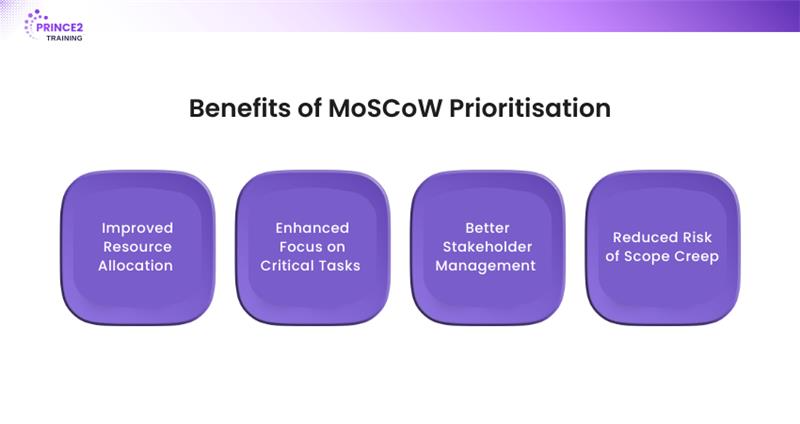
MoSCoW Prioritisation is a simple yet powerful method that helps teams stay focused and deliver real value. Here’s why it matters:
1) Helps Identify What’s Most Critical
By breaking tasks into Must have, Should have, Could have, and Won’t have, it becomes easier to see which elements truly need to be delivered.
2) Makes Better Use of Time and Resources
With priorities clearly defined, teams can work more efficiently, avoiding time spent on less important tasks.
3) Keeps Everyone on the Same Page
It sets clear expectations with stakeholders, so there’s less room for misunderstandings or surprises during delivery.
4) Aids in Quick, Confident Decisions
When things change; as they often do, MoSCoW gives you a clear guide to help decide what stays and what can be adjusted.
5) Supports Flexible, Goal-Focused Work
It’s ideal for Agile environments, helping teams adapt while staying focused on delivering the most valuable outcomes.
Limitations and Challenges of MoSCoW Prioritisation
Let’s discuss some limitations:
1) Requires clear criteria for prioritisation
2) Can be subjective if not well-defined
3) May need frequent adjustments
Tips for Prioritisation Using the MoSCoW Framework
Need some tips for using MoSCoW framework, find them below:
1) Involve all stakeholders in the prioritisation process
2) Use data and metrics to support prioritisation decisions
3) Be prepared to adjust priorities as project needs to change
Conclusion
To wrap up, MoSCoW Prioritisation isn’t just a planning tool; it’s a smart way to cut through the noise and focus on what truly matters. By making priorities clear and decisions easier, it helps teams deliver value without the chaos. It’s simple, practical, and surprisingly effective.
Kick off your Project Management journey the right way – join our
Introduction to Project Management Course.
Frequently Asked Questions
What are MoSCoW and Other Prioritisation Techniques?
MoSCoW is a prioritisation technique that categorises tasks into must-have, should-have, could-have, and won't-have. Other techniques include the Eisenhower Matrix and the Kano Model.
What are the Four Customer-valued Prioritisation Methods in Agile?
The four methods are MoSCoW, Kano Model, Value vs. Effort Matrix, and Weighted Shortest Job First (WSJF).
Is MoSCoW a Methodology?
No, MoSCoW is a prioritisation technique used within various Project Management methodologies.



 Continue Browsing