01344203999



 Back
Back


Table of Content

09-Jun-2026

Veronica Davis
Have you ever been stuck waiting for IT support while your work grinds to a halt? Or watched a small technical issue turn into a major disruption? In today's evolving world, technology should empower progress, not slow it down. This is where IT Service Management (ITSM) makes a real difference, bringing structure, clarity, and accountability to how IT services are delivered and supported.
As organisations grow increasingly dependent on digital systems, the margin for error becomes even smaller. For this reason, ITSM is vital, aligning people, processes, and technology to deliver reliable, business-focused services. It transforms IT into a proactive driver of growth and efficiency, laying the foundation for long-term success.
What is ITSM (IT Service Management)?
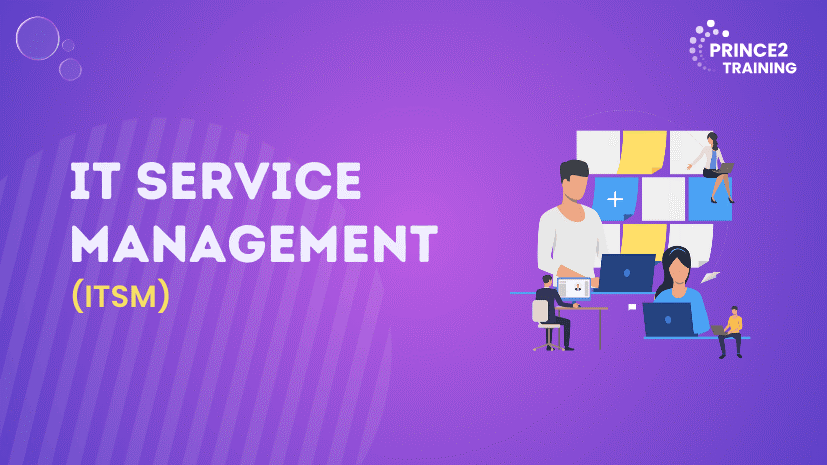
ITSM, or IT Service Management, refers to the end-to-end processes organisations use to design, create, deliver, support, and manage IT services. Instead of treating IT as isolated technical tasks, ITSM views IT as a service that aligns with business needs and delivers measurable value through structured, repeatable, and consistent processes.
These processes cover service requests, incident resolution, system changes, and infrastructure support. The goal is to ensure IT services are reliable, efficient, and easy to manage while reducing disruptions, controlling costs, and improving user experience, helping organisations operate smoothly and achieve their objectives.
Why is ITSM Important?
ITSM delivers value beyond IT by improving overall organisational performance. Through structured Service Management principles, it enhances efficiency, boosts productivity, and aligns IT with business priorities. This standardised approach optimises resources, reduces risks, and improves the customer experience.
Some of the key benefits of ITSM include:
1) Aligning IT teams with business priorities through clear and measurable success metrics
2) Encouraging stronger collaboration between IT, development, and other departments
3) Supporting knowledge sharing and fostering a culture of continuous improvement
4) Improving service request coordination for more efficient and timely responses
5) Promoting customer-centric practices through self-service options and improved processes
6) Enabling faster incident response while helping prevent future disruptions
What are the Key Processes and Practices of ITSM?
While technology plays a critical role in IT processes, it should not always be the main point of focus. ITSM is a broad concept, incorporating business goals and traditional IT goals alike. As a result, IT Service Management enhances overall efficiency and it accomplishes this in the following ways:
1) Incident Management
Manages and tracks incidents (that can disrupt normal operations) as well as requests for new services, hardware or software. ITSM Incident Management oversees the entire process to ensure the quick restoration of service to customers. Incident Management prioritises service requests and incidents according to business impact, enabling staff to focus their efforts where they will be most effective.
2) Problem Management
Streamlines incident investigations from detection to resolution using Information Technology Infrastructure Library (ITIL) subprocesses such as error control, problem control, and proactive problem analysis. Problem Management processes remove defects in the IT infrastructure, prevent recurring incidents and stabilise the environment.
3) Change and Release Management
ITSM keeps track of scheduled and planned infrastructure changes, encompassing planning capabilities and Process Management. With reduced errors and risks, change implementation becomes faster and achieves greater consistency.
This application features a built-in approval process for change and Release Management. The change module is completely integrated with problem, incident and Service-level Management applications.
4) Service-level Management
Service-Level Management monitors agreed service commitments between vendors and customers. It ensures performance meets defined standards, identifies gaps or weaknesses, and enables corrective actions. This structured approach helps maintain service quality, strengthen accountability, and improve overall customer satisfaction.
Turn cyber security into cyber leadership through the CISM Certified Information Security Manager Course - Sign up now!
5) Request Management
Manage and follow up on service requests, such as requests for new workstation installations, password resets, information access or personal data updates. Request Management ensures that important requests progress consistently.
6) Configuration Management
Tracks every configuration item in the IT system. Identifies, verifies, and maintains essential configuration details for software, hardware, personnel and documentation. Configuration Management provides a dependable repository of IT component information for IT teams. This establishes a clear relationship between IT infrastructure components and services.
7) Continual Improvement Management
Identifies improvement opportunities and implements phases and tasks to monitor performance goals and measure success. Continual Improvement Management aligns these improvements with the organisation's overall business strategy to enhance service efficiency.
8) Workflow and Talent Management
Position the right people with the required skills and knowledge in roles that best suit them. Workflow and Talent Management support the business objectives through the strategic placement of talented employees to deliver the best possible service.
9) Knowledge Management
Knowledge Management involves capturing, organising and maintaining any IT-related information across an organisation. Its goal is to make all the essential knowledge easily accessible, shareable and usable by key stakeholders. This helps them collaborate effectively and contribute to the continuous improvement of IT services.
10) IT Asset Management
IT Asset Management, or ITAM, is the process of tracking and managing IT assets throughout their lifecycle. It ensures assets are properly deployed, maintained, upgraded, and disposed of while optimising usage, controlling costs and reducing risks.
Popular ITSM Frameworks?
An IT Service Management framework provides a structured foundation for continual improvement. It standardises practices to enhance efficiency, deliver value across IT operations, and support an effective ITSM strategy.
Next, let us explore some widely used ITSM frameworks:
1) ITIL
ITIL, or Information Technology Infrastructure Library, is a globally recognised framework for ITSM. It provides structured guidance on designing, delivering, managing, and continually improving IT services to ensure they align with business objectives and deliver measurable value.
The latest version, ITIL® 5, was introduced in 2026 as an evolution of ITIL® 4. It builds on the Service Value System with a stronger focus on AI, sustainability, digital-first strategies and Product-centric Management. It also supports automation, DevOps alignment and data-driven decisions to keep organisations competitive.
2) DevOps
This framework integrates and automates the work of Software Development (Dev) and IT operations (Ops). DevOps increases collaboration between Software Development and IT operations teams.
This enables organisations to build, test, and release software faster and more reliably. DevOps strengthens trust, speeds up issue resolution, improves handling of unplanned work, and encourages teams to move beyond traditional silos. It promotes collaboration and supports a positive, blame-free culture.
3) Control Objectives for Information and Related Technologies (COBIT)
COBIT is an IT Governance and management framework created by the Information Systems Audit and Control Association (ISACA) in 1996. It helps organisations optimise the use of IT to minimise risks, ensure regulatory compliance and achieve strategic business goals. COBIT is especially useful for enterprises that need strong governance and risk control in their IT operations.
4) ISO/IEC 20000
Introduced in 2005, ISO/IEC 20000 is the first international standard for IT Service Management. It defines formal requirements covering leadership, planning, terminology, and performance evaluation. It's widely adopted worldwide and serves as a benchmark for ITIL compliance. It enables organisations to demonstrate effective and consistent Service Management practices.
Protect what matters most. Become a certified expert with our CISSP Certified Information Systems Security Professional - Sign up now!
What are the Benefits of ITSM?
ITSM connects IT teams with users who rely on technology daily. Its structured approach improves service delivery and aligns IT with business goals. Let us explore its key benefits:
1) Benefits for Business
a) Increased Agility: ITSM enables organisations to respond swiftly to technological changes and market trends. Its flexible methodologies can help businesses embrace innovation and stay ahead of competitors.
b) Reduced Costs: Visualised workflows and efficient processes help eliminate redundancy, reduce waste and improve resource allocation.
c) Fewer IT Problems and Faster Response: Thanks to proactive monitoring and Incident Management, ITSM minimises disruptions, thus reducing both downtime and operational risks.
d) Simplified Compliance: ITSM frameworks align with industry regulations and standards. This helps organisations maintain compliance with data security and Privacy Management requirements.
e) Enhanced Service Quality: By prioritising user needs and consistency, ITSM elevates service quality. This boosts customer satisfaction and reinforces business credibility.
2) Benefits for Users or Employees
a) Better IT Support: ITSM ensures 24x7 support availability. This helps employees work efficiently with fewer technical barriers.
b) Omnichannel Access: Employees can access support and information anytime, from any device or location. This ensures an uninterrupted workflow.
c) Clear Roles and Accountability: Defined roles and responsibilities go a long way to improve coordination, communication and accountability across teams.
d) Stronger Business Alignment: ITSM helps employees understand how IT services align with business priorities. This cultivates better collaboration and shared purpose.
3) Benefits for the IT Department
a) Improved Productivity: Keeping IT objectives aligned with business goals can create efficient workflows, fewer issues and higher team productivity.
b) Higher User Satisfaction: Delivering IT as a service ensures that the user-centric solutions better meet both internal and external needs.
c) Scalable Processes: ITSM improves process efficiency which allows IT operations to expand seamlessly as business demands grow.
d) Faster Incident Detection and Resolution: Increased visibility enables early issue detection and rapid problem-solving. This reduces downtime and related costs.
ITSM Software and Tools
ITSM software automates and streamlines IT Service Management processes. It supports incidents, requests, changes, and asset tracking while centralising data. This improves efficiency, service quality, and visibility.
Next, let us explore its importance and key tools:
1) Importance of ITSM Software
ITSM tools help IT teams standardise processes and deliver consistent services. They automate manual tasks, improve response times, and provide analytics for better decisions. As a result, organisations reduce costs, minimise disruptions, and keep IT aligned with strategic goals.
2) Popular ITSM Tools
Several widely adopted ITSM solutions are available to meet diverse business needs:
a) ServiceNow: A cloud-based ITSM platform offering comprehensive features, including incident, change and Asset Management, with strong automation capabilities.
b) BMC Helix: Delivers AI-driven insights, automation and Predictive Analytics to optimise IT operations and improve service delivery.
c) Atlassian Jira Service Management: A flexible and customisable solution popular with Agile teams, supporting efficient management of incidents, changes and service requests.
d) Salesforce Service Cloud: A cloud-based platform integrated with Salesforce applications, leveraging AI and analytics to enhance customer-focused Service Management.
e) Ivanti Service Manager: Provides incident, change and Asset Management with strong integration across IT environments.
f) ManageEngine ServiceDesk Plus: A comprehensive solution offering incident, request and Asset Management features suitable for organisations of all sizes.
Strengthen your IT career with practical skills through the ITIL® 4 Foundation Training – Join now!
What Key Factors Should be Considered when Selecting ITSM Software and Tools?
A variety of ITSM tools, from standalone apps to full platforms, are available today. They address traditional limitations with greater flexibility. Choosing the right Service Desk software is vital, as it links customers and IT teams and should meet these key requirements:
1) Easy to Use and Set up
Service desks should come with an intuitive self-service portal that makes it easy to search for information, request help and track issue progress. This improves the user experience and reduces the workload on IT teams by encouraging faster, independent resolutions.
2) Enables Collaboration
A service desk should provide a platform for cross-functional teams and Developers to work together for faster issue resolution. Seamless communication and shared visibility ensure problems are addressed efficiently across departments.
3) Adapts to IT Teams' Needs
Service desks should be adaptable enough to support any resolution, escalation, or change process the IT teams can envision. SuperOps.ai, NinjaOne, Jira Service Management, Salesforce, Zendesk ITSM, Wrike, SysAid and HubSpot are widely used ITSM software tools.
Best Practices for Implementing ITSM
Successful ITSM implementation requires clear planning, structured execution, and ongoing improvement to ensure long-term value. Below are some key best practices that can help guide a successful ITSM implementation journey:
1) Start with a Clear Strategy:
Define business goals, identify key challenges, and create a practical roadmap focused on delivering measurable value.
2) Start Where You Are:
Assess your current ITSM maturity and improve iteratively. Keep processes simple, promote collaboration, adopt Change Management practices, and optimise gradually.
3) Choose the Right Framework:
Select a framework such as ITIL, FITSM, USM, COBIT or ISO/IEC 20000 based on your organisation's size and needs.
4) Invest in the Right Tools:
Use ITSM tools that align with your processes and support automation without adding unnecessary complexity.
5) Measure and Improve Continuously:
Track performance using goals, Critical Success Factors (CSFs), and Key Performance Indicators (KPIs), and refine processes regularly to ensure consistent value delivery.
Conclusion
In a world where technology shapes every business outcome, IT Service Management is no longer optional; it is essential. By aligning people, processes, and tools, ITSM ensures reliable services, reduces risks, and drives continuous improvement. Embracing it today builds resilience, efficiency, and long-term organisational success.
Looking for a stellar career path in IT Service Management? Look no further than our ITIL Certification - Sign up now!
Frequently Asked Questions
What is the Role of an IT Service Manager?
An IT Service Manager oversees IT service delivery to ensure it meets business needs. They manage incident and change processes, monitor service levels, resolve escalations, coordinate teams, and drive continual improvement to maintain reliable, high-quality services.
How to Become an IT Service Manager?
To become an IT Service Manager, earn a degree in IT or Computer Science and gain 3 to 5 years of relevant experience. Obtain ITIL® Certification and develop strong leadership, communication, and problem-solving skills to manage services, vendors and teams effectively.
What is the Scope of Service Management?
Service Management covers the full service lifecycle, from planning and design to delivery and improvement. It manages service quality, performance, risks and costs while ensuring services remain reliable and aligned with business and customer needs.



 Continue Browsing