Contact@prince2training.co.uk
 01344203999




 Back
Back


Table of Content

20-Jun-2026

Veronica Davis
Projects often involve multiple teams, tools, and processes working together. Without proper coordination, communication gaps, delays, and inefficiencies can affect project success. Integrated Project Management addresses these challenges by connecting all project activities within a unified framework.
As organisations manage increasingly complex projects, Integrated Project Management has become essential for creating a more structured and efficient approach to achieving project goals. In this blog, you will learn about its meaning, key components, benefits, implementation steps, and more. Let's begin!
What is Integrated Project Management?
Integrated Project Management (IPM) is a holistic approach that brings together a project's objectives, resources, processes, and stakeholders within a single framework. By ensuring all project elements work in alignment, it improves coordination, communication, and project efficiency.
Integrated Project Management combines structured planning with the flexibility to adapt to changing requirements. This balanced approach helps organisations manage complex projects effectively while maintaining better control over project outcomes.

Why Choose Integrated Project Management Over Traditional Methods?
Traditional Project Management methods manage projects independently, which can create communication gaps, resource conflicts, and delays. As organisations handle increasingly complex projects, this fragmented approach can make it difficult to maintain alignment and efficiency across teams.
Integrated Project Management addresses these challenges by connecting project activities, resources, and stakeholders within a unified framework. This helps organisations improve visibility, coordination, and decision-making while ensuring projects support broader business objectives. It delivers measurable business value through:
a) Strategic Alignment: Ensures all projects support organisational goals and contribute to broader business objectives.
b) Resource Optimisation: Reduces duplicated efforts, avoids conflicting priorities, and improves resource utilisation.
c) Risk Mitigation: Identifies dependencies and potential issues early, allowing teams to address risks proactively.
d) Accelerated Delivery: Improves coordination between teams, reducing delays and enabling faster project completion.
e) Stakeholder Satisfaction: Enhances communication and transparency, helping stakeholders remain informed and engaged throughout the project lifecycle.
Key Components of Integrated Project Management Systems (IPM)
Integrated Project Management Systems provide the structure needed to align projects, resources, and organisational goals. Let's look at its key components below and see how they support successful project outcomes:
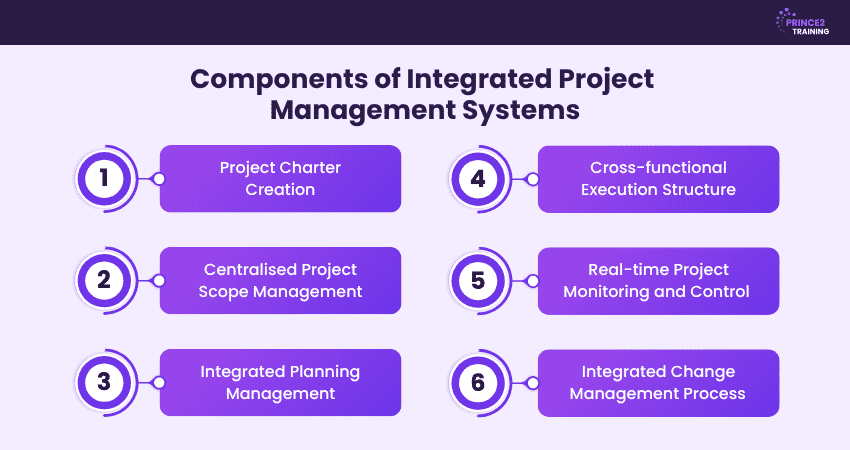
1) Project Charter Creation
A project charter establishes the project's objectives, stakeholders, responsibilities, and success criteria. It connects project goals to broader organisational priorities and provides a clear reference point for decision-making throughout the project lifecycle. This ensures all stakeholders share a common understanding of project direction from the beginning.
2) Centralised Project Scope Management
Centralised project scope management ensures project requirements remain clearly defined and aligned across related initiatives. It helps teams evaluate the impact of scope changes, minimise conflicts, and maintain consistency between interconnected projects. Clear scope control reduces the risk of scope creep and misalignment.
3) Integrated Planning Management
Integrated planning combines schedules, budgets, resources, timelines, and risk management activities into a single framework. This helps identify dependencies early, improve coordination, and ensure all teams work towards shared objectives. Unified planning improves efficiency and reduces project delays.
4) Cross-functional Execution Structure
A cross-functional execution structure encourages continuous collaboration between departments during project delivery. Through shared accountability, regular communication, and coordinated workflows, teams can work efficiently and address challenges proactively. Collaboration across teams enhances productivity and problem-solving capabilities.
5) Real-time Project Monitoring and Control
Real-time monitoring provides continuous visibility into project progress, performance, resource utilisation, and potential risks. Access to up-to-date information enables faster decision-making and helps organisations respond proactively to emerging issues. Timely insights support better control and improve overall project outcomes.
6) Integrated Change Management Process
An integrated change management process evaluates proposed changes and their impact on related projects, resources, schedules, and objectives. This ensures changes are reviewed systematically, communicated effectively, and implemented with minimal disruption. Structured change management helps maintain project stability and alignment.
Learn the fundamentals behind successful project delivery with the PRINCE2® Foundation Training – Join now!
How to Implement Integrated Project Management?
Integrated Project Management follows a structured process that helps organisations align project activities, resources, and objectives. Let's look at the implementation steps below. Following these steps ensures consistent execution and better project outcomes.
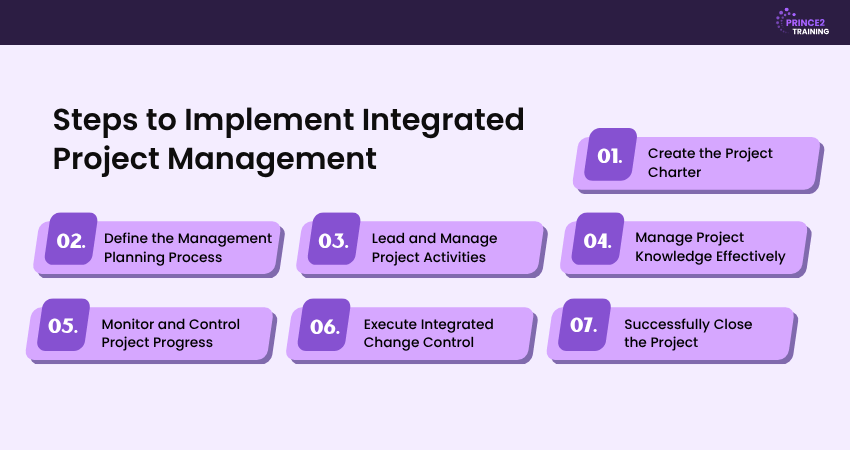
1) Create the Project Charter
The first step is to create a project charter that outlines the project's objectives, scope, key stakeholders, and responsibilities. This document acts as a reference point throughout the project lifecycle and provides a clear understanding of the project's purpose and direction. A strong charter ensures alignment and clarity from the outset.
2) Define the Management Planning Process
Develop a comprehensive Project Management plan that defines budgets, schedules, resources, communication processes, and risk management strategies. This plan acts as a roadmap for the project and helps ensure all teams work towards the same objectives. Detailed planning improves coordination and reduces uncertainties.
3) Lead and Manage Project Activities
Once planning is complete, project activities are executed according to the approved plans and objectives. During this stage, Project Managers coordinate teams, manage resources, oversee deliverables, and ensure work progresses in alignment with project requirements. Effective execution ensures that project goals are achieved efficiently.
4) Manage Project Knowledge Effectively
Project knowledge management focuses on capturing, sharing, and using information effectively throughout the project lifecycle. Ensuring team members have access to relevant knowledge helps improve decision-making, support collaboration, and enhance project performance. Knowledge sharing improves team efficiency and long-term organisational learning.
5) Monitor and Control Project Progress
Project performance is continuously tracked against established goals, timelines, budgets, and quality standards. Regular monitoring helps identify issues early, measure progress accurately, and implement corrective actions when required. Continuous monitoring ensures projects remain on track and within scope.
6) Execute Integrated Change Control
Changes are often unavoidable during a project. This step involves evaluating, reviewing, and approving proposed changes to ensure they align with project objectives and minimise disruption to schedules, costs, and resources. Controlled change management helps maintain project stability and efficiency.
7) Successfully Close the Project
The final step is to formally close the project and evaluate its outcomes. Teams review achievements, document lessons learned, identify areas for improvement, and capture valuable insights that can support future projects and organisational success. Proper closure ensures continuous improvement and knowledge retention.
Lead complex projects with greater confidence and control by signing up for the PRINCE2® Practitioner Training now!
Benefits of Integrated Project Management
By connecting teams, processes, and project activities, Integrated Project Management creates an efficient and transparent approach to managing projects. Let's look at the key benefits of Integrated Project Management below:
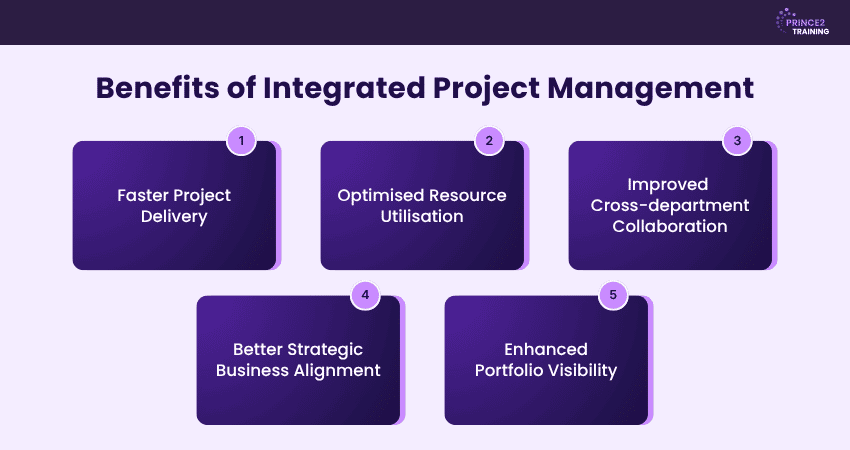
1) Faster Project Delivery
By facilitating better coordination between teams, it helps to minimise delays caused by communication gaps and workflow bottlenecks. As a result, projects can progress more smoothly and reach completion faster.
2) Optimised Resource Utilisation
Integrated Project Management provides visibility into resource availability and project demands, helping organisations allocate resources more effectively. This helps prevent conflicts, reduce waste, and improve overall productivity.
3) Improved Cross-department Collaboration
By creating shared visibility and accountability, Integrated Project Management encourages better collaboration across departments. Teams gain a clearer understanding of how their work contributes to broader organisational objectives.
4) Better Strategic Business Alignment
Integrated Project Management ensures that projects are directly connected to organisational goals. This helps leaders prioritise initiatives effectively and focus resources on activities that deliver the greatest business value.
5) Enhanced Portfolio Visibility
A centralised view of projects, resources, and dependencies enables more informed decision-making. Improved visibility supports better forecasting, proactive planning, and more effective management of the overall project portfolio.
Conclusion
As projects become more complex, organisations need a connected approach to achieve successful outcomes. Integrated Project Management aligns people, processes, resources, and objectives within a unified framework, improving collaboration, resource utilisation, and decision-making. By adopting this approach, organisations can deliver projects efficiently while supporting long-term business goals.
Transform project plans into measurable business success by signing up for the PRINCE2® Training Courses now!
Frequently Asked Questions
How do you Measure the Success of Integrated Project Management?
The success of Integrated Project Management is measured by assessing both project performance and business outcomes. Key indicators include project delivery, resource utilisation, stakeholder satisfaction, and strategic goal achievement.
Can Small Businesses Benefit from Integrated Project Management?
Yes, small businesses can benefit from Integrated Project Management. By aligning tasks, budgets, resources, and communication, it improves efficiency and reduces unnecessary duplication. This helps growing teams manage projects effectively, meet deadlines consistently, and support sustainable business growth.
What are the Five Fundamentals of Project Management?
The five fundamentals of Project Management are:
a) Initiation: Define project goals and secure approval
b) Planning: Create schedules, budgets, and risk plans
c) Execution: Complete project work and deliverables
d) Monitoring & Controlling: Track progress and manage changes
e) Closing: Finalise the project and capture lessons learned



 Continue Browsing