01344203999




 Back
Back


Table of Content

17-Sep-2026

Veronica Davis
Here’s the truth to confess: Deadlines are temporary, but the impact is permanent. So, while you’re checking off tasks and closing sprints, ask yourself if your project is leaving the world a little better than it found it. That’s the heartbeat of Sustainable Project Management. This isn’t just about climate reports or recycling bins but about creating work that uplifts, empowers, and endures.
Sustainability in Project Management isn’t a side note anymore as it’s front and center. You’ll learn about the common challenges to turn them into opportunities for innovation. In this blog, you can explore how to turn strategy into sustainability using actionable frameworks, tools, and principles that make sense in the real world. Ready to level up from project leader to planet leader? Let’s dive in!
Table of Contents
1) What is Sustainability in Project Management?
2) Key Models for Sustainable Project Management
3) Methodologies of Sustainable Project Management
4) Principles of Sustainable Project Management
5) Integrating Sustainability into Project Management Phases
6) Steps for Achieving Sustainable Project Management
7) Perform a Comprehensive Sustainability Assessment
8) Tools and Techniques for Sustainable Project Management
9) Challenges and Solutions in Sustainable Project Management
10) Conclusion
What is Sustainability in Project Management?
Sustainability in Project Management is the practice of including environmental, social, and economic considerations into the planning, execution, and project delivery. It goes beyond traditional project goals like scope, time, and budget. Mostly, it aims to ensure that a project’s outcomes contribute positively to the world in the future.
Key Takeaways:
1) It ensures environment-friendly practice throughout a project's lifecycle
2) It can be done by reducing waste, supporting communities and optimising resources
3) It enhances reputation and meets regulatory requirements
4) Known to align with global sustainability targets like the UN SDGs
5) Uses frameworks like PRiSM and P5
6) Integrate sustainable practices into all project phases
7) Projects must be successful, ethical, responsible, and future-ready
Key Models for Sustainable Project Management
To grow in the path of sustainable Project Management, several models serve as a push. Let’s discuss the key models:
PRiSM (Projects Integrating Sustainable Methods)
PRiSM is a methodology that places sustainability into the project lifecycle. It claims to minimise environmental impact and maximise societal benefits. This method also ensures projects contribute positively to the outer world.
The P5 Standard
This method is developed by Green Project Management (GPM). The P5 Standard expanded the triple bottom line including People, Planet, Profit by adding Product and Process.
This evaluates the sustainability impact of the projects, and the methods used to achieve them. This is done for aligning projects with the United Nations' Sustainable Development Goals.
Methodologies of Sustainable Project Management
There are some existing Project Management methodologies that sustainability requires to adapt. Here are some of them:
PRINCE2®
PRINCE2® or Projects IN Controlled Environments is a structured approach that can incorporate sustainability with environmental and social considerations. You can delve into its processes, ensuring projects are not only efficient but also responsible.
PRINCE2 Agile
Combining the flexibility of Agile with the structure of PRINCE2, this methodology allows for adaptive planning and responsiveness, facilitating the integration of sustainability practices in dynamic project environments.
Lean and PRINCE2
Merging Lean principles with PRINCE2 focuses on delivering value by eliminating waste and optimising resources, aligning project outcomes with sustainable objectives.
Principles of Sustainable Project Management
Sustainable Project Management rests on three pillars and principles. They are:
Environmental Sustainability
Environmental sustainability focuses to reduce the environmental impact throughout the project lifecycle. This means carefully managing resources and waste by choosing eco-friendly materials and designing projects with energy efficiency.
Key Actions Include:
1) Minimising the use of non-renewable resources
2) Implementing practices that reduce, reuse, and recycle waste
3) Choosing energy-efficient technologies and monitoring consumption
4) Aiming for renewable energy sources when possible.
5) Conducting environmental impact assessments
6) Understanding potential effects on the local ecosystem and planning mitigation
Social Sustainability
Social sustainability promotes the importance of positive social outcomes and community well-being. This means ensuring fair labour practices, fostering inclusivity, and engaging with stakeholders. This is to meet their needs and expectations.
Important Aspects Include:
1) Creating a safe, healthy, and supportive work environment
2) This can be done with fair wages, training, and opportunities for growth
3) Involving local communities in the project planning and execution process
4) It is to ensure that the project benefits the area
5) Respecting local customs and values when designing and implementing projects
6) Encouraging transparent communication with all project stakeholders
7) This influences the customers, employees, suppliers, and residents
Economic Sustainability
Economic sustainability ensures that projects contribute to long-term financial health. This is done while delivering value to stakeholders. It involves balancing short-term gains with future profitability. Sustainability considers cost-effective approaches without compromising quality.
Key Elements Include:
1) Carefully budgeting and controlling costs to maximise financial efficiency
2) Designing projects that deliver measurable benefits
3) They are increased revenue, market share, or improved operational efficiency
4) Understanding and mitigating financial risks to safeguard costs
5) Ensuring that investments yield sustained returns
6) Contributes to the overall stability and growth of the organisation
Integrating Sustainability into Project Management Phases
If you want to practice Sustainability in Project Management, it requires attention at every stage. Here is a brief look into each phase:
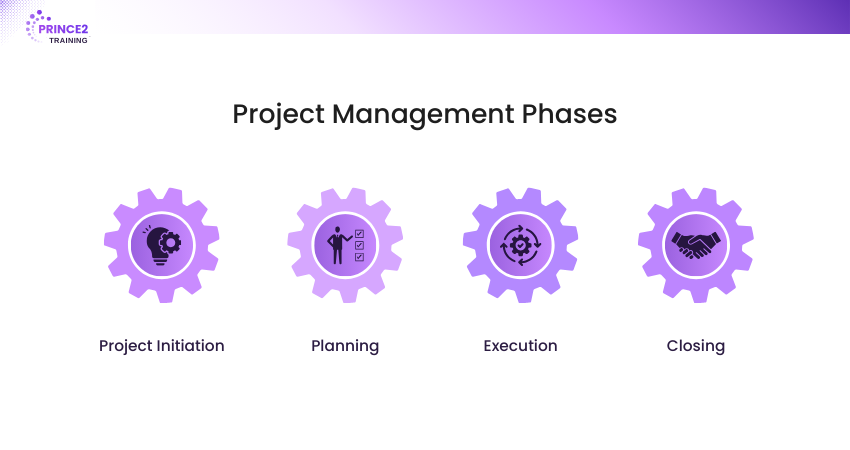
Project Initiation
The first step is to assess potential environmental and social impacts. This helps to set clear sustainability objectives and secure stakeholder commitment to these goals.
Planning
Develop a comprehensive Sustainability Management Plan (SMP) helps to outline strategies. These are to achieve sustainability targets, identifies necessary resources, and integrates risk management approaches.
Execution
Implement the SMP is done through executing the plans. This is done by adopting sustainable practices, monitoring performance against sustainability metrics, and fostering a culture of improvement. This continuous plan initiation and execution is done among the project team.
Closing
The last phase will be closing the Project Management to expect desired results. Conduct a thorough evaluation of sustainability outcomes and learn document lessons. These step shares insights to inform future projects and promote best practices.
Shape smarter projects — join our Agile PM® Project Management Foundation Course today!
Steps for Achieving Sustainable Project Management
Here are some steps to embed Sustainability in Project Management:
Set Clear Sustainability Objectives
Define specific, measurable goals that align with broader organisational sustainability commitments and work with stakeholders.
Collaborate with Stakeholders for Alignment
Engage stakeholders early and often to ensure their perspectives are considered. This fosters collective ownership of sustainability initiatives.
Perform a Comprehensive Sustainability Assessment
This is the step to evaluate potential environmental, social, and economic impacts. This is to inform decision-making and prioritise actions.
Create a Detailed Sustainability Management Plan (SMP)
Here, you can outline the strategies, resources, and timelines necessary. This will help to achieve sustainability objectives, ensuring clarity and accountability.
Implement a Sustainability Framework
Adopt recognised frameworks, such as the P5 Standard, to guide the integration of sustainability into project processes and deliverables.
Track and Evaluate Sustainability Performance
Regularly monitor progress using established metrics, adjusting strategies as needed to stay on course toward sustainability goals.
Commit to Ongoing Improvement and Innovation
Foster a culture that encourages learning from experiences, embracing innovative solutions, and continually enhancing sustainability practices.
Tools and Techniques for Sustainable Project Management
Sustainable Project Management promotes the right intentions by using the right tools and techniques to turn into measurable results. These tools help Project Managers track, evaluate, and enhance the sustainability performance of their projects.
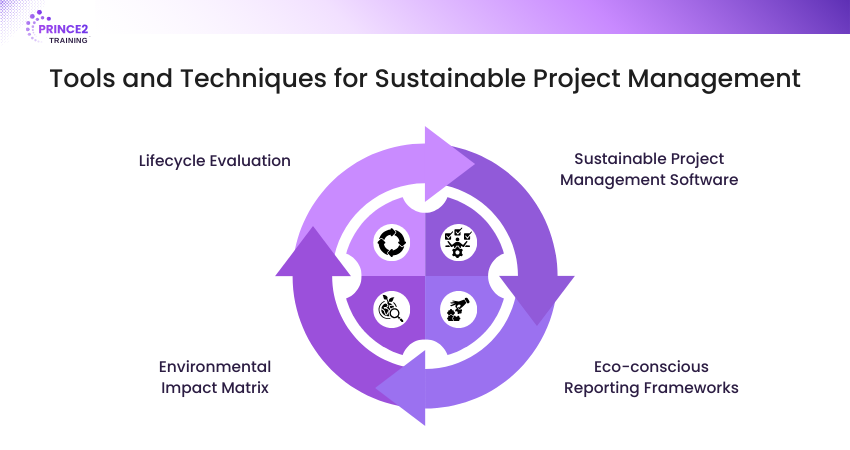
Lifecycle Evaluation
A method to assess the environmental impact of a product or process from raw material extraction to disposal or recycling.
Key Areas
1) Identifies areas where resources can be reduced or reused
2) Helps make eco-conscious decisions during planning
3) Encourages minimising waste and emissions over the entire project lifespan
Stay Ahead of the Curve with our
Project Management Practitioner Upgrade Course.
Register today!
Environmental Impact Matrix
A structured grid that maps project activities against potential environmental effects. This can be pollution, resource consumption, or land use.
Key Areas
1) Visualises potential environmental risks
2) Prioritises actions based on severity and likelihood
3) Assists in compliance with environmental regulations
Eco-conscious Reporting Frameworks
Reporting methods tracks and communicate the sustainability performance of a project. It is done using global standards such as Global Reporting Initiative (GRI) and United Nations Sustainable Development Goals (UN SDGs).
Key Areas
1) Builds transparency with stakeholders
2) Highlights sustainability success stories and improvement areas
3) Helps secure funding or public support for sustainable projects
Sustainable Project Management Software
Project Management tools and platforms that are specifically designed or enhanced to include sustainability tracking features. Examples are EcoSys and Microsoft Project with sustainability plugins.
Key Areas
1) Tracks carbon footprints, waste, energy use, and social metrics
2) Provides dashboards for real-time sustainability insights
3) Allows integration of sustainability targets within project milestones
Challenges and Solutions in Sustainable Project Management
While the goal of integrating sustainability into Project Management is beneficial, but it comes with real-world challenges. From aligning priorities to changing mindsets, Project Managers often encounter complexities along the way.
However, the good news is each challenge has a practical and achievable solution.
Managing Conflicting Priorities
Traditional project goals like scope, time, and budget often clash with sustainability goals such as reducing waste or sourcing ethically. For example, eco-friendly materials may cost more or take longer to procure.
Here are the Solutions:
1) Adopt value-based decision-making by evaluating long-term gains over short-term costs.
2) Use tools like the P5 Standard to integrate sustainability as a project requirement.
3) Communicate the long-term ROI of sustainability to stakeholders to gain support.
Ensuring Sustainability in Supply Chain Management
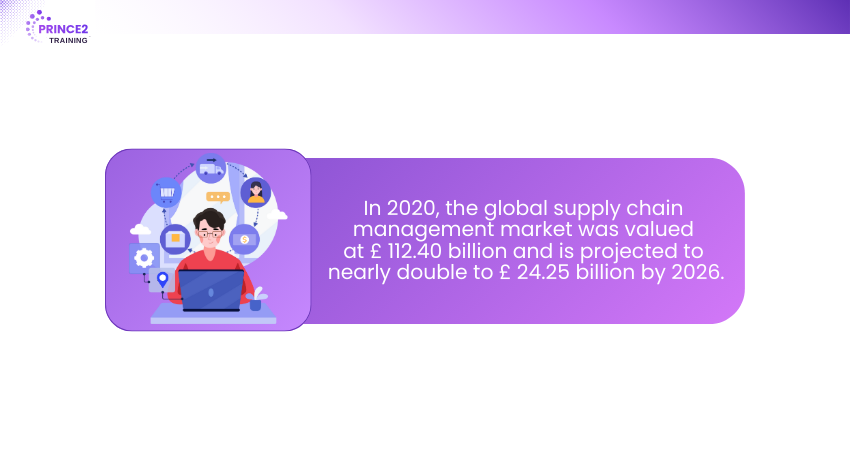
Sustainable practices often extend beyond your immediate team to suppliers, contractors, and external partners. Lack of transparency or standards in the supply chain can weaken sustainability efforts.
Here are the Solutions:
1) Establish clear sustainability criteria for suppliers during procurement
2) Conduct regular audits and require environmental certifications
3) Foster strong, collaborative relationships with vendors to align on sustainable values
Turn project chaos into clarity-start your
Agile Project Management Foundation & Practitioner journey
today!
Driving Adoption & Overcoming Resistance to Change
Team members may resist to adopt new sustainability practices. It is especially if they feel these practices increase workload, cost, or disrupt familiar processes.
Here are the Solutions:
1) Lead with education and awareness to show the benefits of sustainable practices to the team and organisation.
2) Start with small, visible wins to build confidence and momentum.
3) Engage stakeholders early and encourage their input in designing sustainability initiatives.
Measuring and Evaluating Intangible Benefits
Sustainability often offers benefits like enhanced reputation, community goodwill, or reduced risks. These are hard to measure with traditional Key Performance Indicators (KPIs).
Here are the Solutions:
1) Use qualitative metrics like stakeholder feedback and social impact assessments with quantitative data.
2) Develop custom sustainability scorecards that align with your project's goals.
3) Integrate sustainability KPIs into your project evaluation reports to capture the broader benefits.
Conclusion
To wrap up, Sustainability in Project Management is about more than ticking boxes; it’s about creating real, lasting impact. When you plan with purpose and act with the future in mind, every project becomes a step towards meaningful change. Let your projects leave a legacy worth celebrating.
Lead Projects That Deliver Results Without Costing the Earth with our Agile Project Management Practitioner Upgrade. Join today!



 Continue Browsing