Contact@prince2training.co.uk
 01344203999




 Back
Back


Table of Content

Think about working on a project where your team spends weeks building something, only to realise later that it does not meet expectations. That situation can be frustrating and time-consuming, which is why teams rely on a Sprint Review to check progress and get feedback at the right time.
This Sprint Review gives teams the chance to present their work, hear stakeholder opinions, and make quick improvements before moving forward. Instead of working in isolation, it keeps everyone aligned and ensures the project delivers real value at every stage. In this blog, you will also explore its benefits, best practices, and key participants involved. Read on to learn more!
What is a Sprint Review?
A Sprint Review is an important event in the Scrum framework held at the end of each Sprint to evaluate the work completed and gather feedback from stakeholders. During this session, the team demonstrates the product increment, discusses progress toward the Sprint goal, and reviews any challenges encountered.
Stakeholders provide input on the delivered features and suggest improvements or changes based on business needs. The Sprint Review promotes transparency, collaboration, and informed decision-making. It helps ensure that the product remains aligned with user expectations and organisational objectives while guiding priorities for the next Sprint.

What is the Primary Purpose of a Sprint Review?
The primary purpose of a Sprint Review is to inspect the product increment and gather feedback so the team can make better decisions about future work. It ensures development remains aligned with business needs and stakeholder expectations.
It helps teams validate progress, confirm that completed work meets agreed standards, and discuss changes in priorities or user needs. They also promote transparency by keeping stakeholders informed about what has been delivered and what comes next. Ultimately, the Sprint Review keeps the team focused on delivering real value rather than simply completing tasks.
What Happens During a Sprint Review?
A Sprint Review is a collaborative meeting held at the end of a Sprint where the Scrum Team presents completed work to stakeholders. Its purpose is to inspect the product increment, gather feedback, and adapt the Product Backlog based on current progress and changing business needs.
During this session, the team typically performs the following activities:
1) Demonstrating completed work to stakeholders and explaining what was achieved during the Sprint
2) Reviewing the Sprint Goal and confirming whether it was successfully met
3) Discussing challenges and changes that occurred during development
4) Collecting stakeholder feedback on the product increment
5) Updating the Product Backlog to reflect new insights, priorities, or market conditions
6) Planning next steps to guide future Sprints and product improvements
The Sprint Review focuses on product inspection and adaptation, ensuring transparency and alignment between the development team and stakeholders. It is not a status meeting but an interactive session to evaluate progress and refine the product direction.
Key Participants in a Sprint Review
A Sprint Review includes several key participants who collaborate to evaluate progress, gather feedback, and guide future development. Each role contributes specific insights to ensure the product continues to deliver value. Let’s discuss in detail:
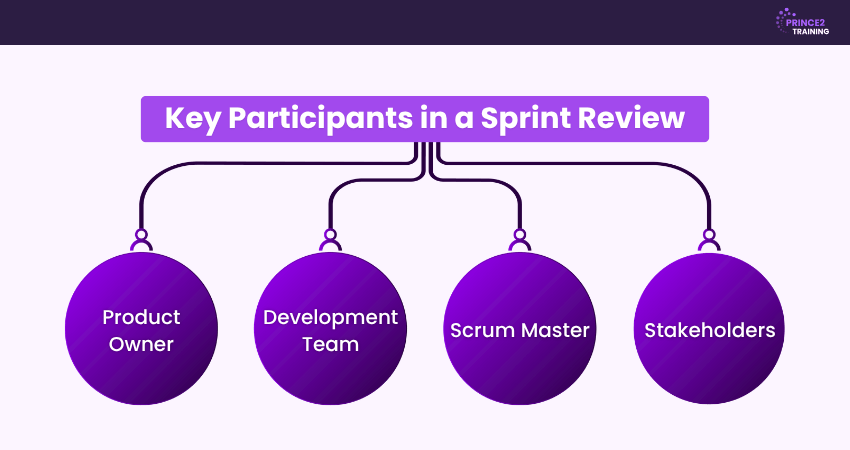
1) Product Owner
The Product Owner explains which Product Backlog items were completed and clarifies priorities for upcoming work. They ensure that stakeholder feedback is considered and that the product continues to align with business objectives.
2) Development Team
The Development Team demonstrates the completed features or deliverables during the Sprint Review. They provide technical insights, answer questions, and highlight any challenges encountered during the Sprint.
3) Scrum Master
The Scrum Master facilitates the Sprint Review and ensures the session remains focused and collaborative. They support effective communication between the team and stakeholders while maintaining a productive environment.
4) Stakeholders
Stakeholders give feedback on the product increment and share perspectives based on user needs or business goals. Their involvement helps the team make informed decisions and adjust priorities for future development.
Lead with Agility, Serve with Purpose with the Agile Project Management Foundation (Agile PM®) Course - Join now!
Benefits of a Sprint Review
Here are the benefits of a Sprint Review. Let’s discuss them in detail:
1) Continuous Feedback Loop
One of the biggest benefits of a Sprint Review is the opportunity to receive regular feedback. Instead of waiting until the end of a project, teams can gather input after every Sprint. This helps detect issues early and ensures that the product evolves in the right direction.
2) Early Identification of Issues
Sprint Reviews help teams detect problems before they become serious risks. By reviewing completed work regularly, stakeholders can identify gaps, misunderstandings, or technical challenges. Addressing issues early reduces rework and saves time. It also prevents delays that could affect project timelines or budgets.
3) Flexibility to Changing Priorities
Business environments often change quickly. Customer expectations, market conditions, and organisational goals can shift during a project. Sprint Reviews allow teams to adapt to these changes by updating priorities and adjusting plans. This flexibility ensures that development efforts remain relevant and valuable.
4) Scope for Ongoing Improvement
Sprint Reviews encourage teams to reflect on their performance and identify opportunities for improvement. They provide a safe space to discuss challenges, share lessons learned, and refine processes. Over time, this continuous improvement leads to better efficiency, higher quality, and stronger collaboration.
5) Increased Stakeholder Engagement
Regular interaction with stakeholders strengthens relationships and builds trust. When stakeholders see progress firsthand, they gain confidence in the team’s work and feel more involved in the project. Active engagement also improves communication and ensures that expectations remain clear throughout the development process.
How Often are Sprint Reviews Conducted or Held?
Sprint Reviews are conducted at the end of every Sprint. The frequency depends on the Sprint length, which typically ranges from one to four weeks.
For example:
1) A one-week Sprint results in weekly Sprint Reviews
2) A two-week Sprint results in reviews every two weeks
3) A one-month Sprint results in monthly reviews
The duration of the Sprint Review is usually proportional to the length of the Sprint. A common guideline is:
1) Up to one hour for each week of the Sprint duration
This means a two-week Sprint Review may last up to two hours, while a four-week Sprint Review may last up to four hours. Holding Sprint Reviews regularly ensures consistent communication, keeps stakeholders aligned, and supports continuous improvement.
Upgrade your Agile skills to manage projects and deliver consistent results by registering for the Agile Project Management Practitioner Upgrade (Agile PM®) Course now!
Best Practices for an Effective Sprint Review
Running a successful Sprint Review requires careful planning, clear communication, and active participation. The following best practices can help teams make the most of this important event:
1) Clearly Define Your “Done” Criteria
Before presenting work during the Sprint Review, the team should agree on a clear definition of what "done" means. This definition ensures that completed tasks meet quality standards and are ready for demonstration. Having clear criteria reduces confusion and prevents incomplete work from being presented as finished.
2) Keep the Session Informal
Sprint Reviews should feel like collaborative discussions rather than formal presentations. Encouraging open conversation helps stakeholders share ideas and provide honest feedback. An informal atmosphere also makes participants more comfortable and engaged.
3) Involve the Product Owner
The Product Owner performs an important role in the Sprint Review. Their involvement ensures that priorities are clear and that feedback is properly captured. They also help connect technical progress with business goals, making the discussion more meaningful for stakeholders.
4) Celebrate Small Achievements
Recognising progress, even small successes, helps motivate the team and build morale. Celebrating achievements encourages a positive work environment and reinforces a sense of accomplishment. Acknowledging effort also strengthens teamwork and supports long-term performance.
Sprint Review vs Sprint Retrospective
The table below shows the difference between Sprint Review and Sprint Retrospective:
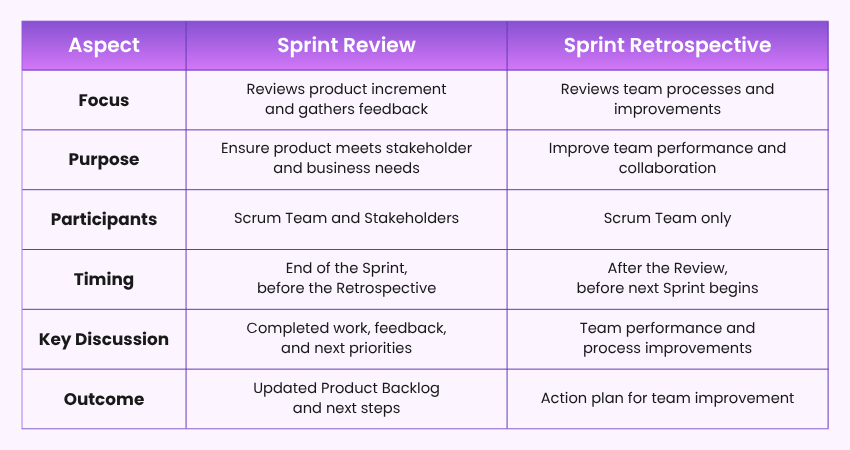
A Sprint Review and a Sprint Retrospective are both conducted at the end of a Sprint, but they serve different purposes. It focuses on the product, where the Scrum Team presents the completed work to stakeholders, gathers feedback, and discusses future priorities. Its main goal is to inspect the product increment and ensure it aligns with business needs and user expectations.
In contrast, the Sprint Retrospective focuses on the team and process rather than the product. During this session, the Scrum Team reflects on how the work was completed, identifies challenges, and agrees on improvements for the next Sprint. The Retrospective helps enhance collaboration, efficiency, and overall team performance through continuous improvement.
Conclusion
A Sprint Review plays a key role in ensuring projects stay aligned with stakeholder expectations and deliver real value. By encouraging feedback, transparency, and continuous improvement, it helps teams refine their work effectively. When conducted regularly and correctly, it supports better decision-making and keeps the product moving in the right direction.
Build practical Scrum skills to lead teams, deliver value, and drive success confidently by registering in Scrum Master Training today!
Frequently Asked Questions
What Best Describes the Sprint Review?
A Sprint Review is a collaborative event held at the end of a Sprint where the team presents completed work to stakeholders. It focuses on inspecting the product increment, gathering feedback, and adjusting priorities to ensure the product continues to deliver value.
What is the Sprint Review MCQ?
A Sprint Review MCQ refers to a multiple-choice question designed to test understanding of the Sprint Review event in Scrum. These questions typically assess knowledge of its purpose, participants, timing, and outcomes, helping learners evaluate their grasp of Agile and Scrum concepts effectively.
How Long Should a Sprint Review Take?
A Sprint Review is time-boxed to a maximum of four hours for a one-month Sprint. For shorter Sprints, the duration is reduced proportionally, typically around one hour per week of the Sprint. This ensures enough time to review progress, gather feedback, and discuss next steps efficiently.



 Continue Browsing