Contact@prince2training.co.uk
 01344203999




 Back
Back


Table of Content


13-Oct-2026

Maria Thompson
Do your Agile projects often feel disorganised or hard to manage? Scrum Events are designed to fix that. These five time-boxed activities create a clear rhythm for the team, helping them plan, deliver, review, and improve without confusion. From Sprint Planning to Daily Scrums and Retrospectives, each event ensures transparency and teamwork. In this blog, we'll explain these essential events and why they're key to successful Agile projects.
Table of Contents
1) What are Scrum Events?
2) Five Scrum Events
3) How are Scrum Events Timeboxed?
4) The Importance of Scrum Events
5) Scrum Participants and Their Roles in Events
6) Conclusion
What are Scrum Events?
Scrum Events are time-boxed activities within the Scrum framework that guide teams through the process of planning, executing, and improving their work. These events create a structured approach that promotes collaboration, transparency, and adaptability. By following these activities, teams can regularly inspect progress, adjust their strategies, and ensure they are delivering value effectively.
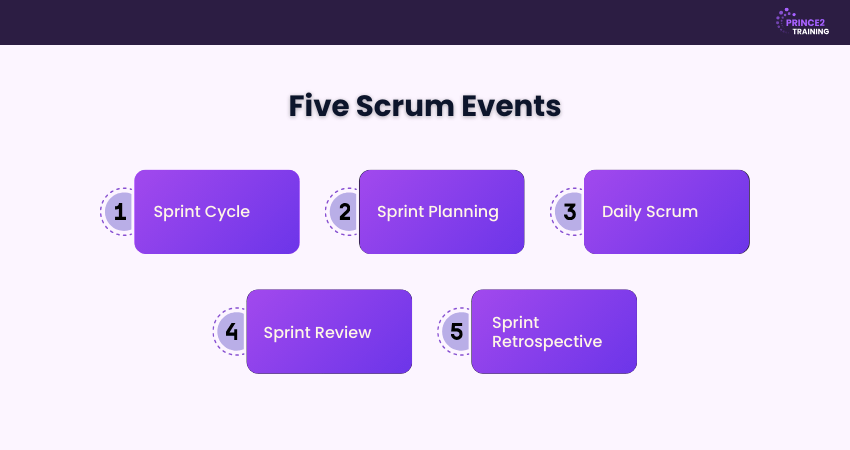
There are five key Scrum Events: Sprint Planning, Daily Scrum, the Sprint, Sprint Review, and Sprint Retrospective. Together, these events keep the team focused on the Sprint Goal, enable continuous improvement, and help achieve successful project outcomes efficiently and consistently.

Five Scrum Events
Scrum defines five important events that guide the team through each Sprint. These ensure better planning, collaboration, and continuous improvement throughout the project lifecycle. The following events work together with Scrum Artifacts to create a structured yet flexible framework for delivering value.
1) Sprint
The Sprint is the heart of Scrum. It is a time-boxed period, usually lasting one to four weeks, during which the Scrum Team aims to deliver a possibly shippable product increment. Each Sprint starts right after the previous one ends, ensuring a continuous flow of work. The goal is to focus on achieving the Sprint Goal and delivering value within the set timeframe.
2) Sprint Planning
Sprint Planning kicks off each Sprint. In this event, the Product Owner, Scrum Master, and Development Team collaborate to decide what will be delivered and how it will be accomplished. The Product Owner offers the Product Backlog items, and the team selects those that can realistically be completed during the Sprint based on factors such as Sprint Velocity. This meeting ensures that everyone understands the Sprint Goal and their responsibilities.
3) Daily Scrum
The Daily Scrum is a 15-minute stand-up meeting held every day during the Sprint. Its purpose is to help the team sync up, discuss progress, and identify any roadblocks. Each team member typically answers three key questions:
a) What did I complete yesterday?
b) What am I working on today?
c) Are there any obstacles in my way?
This daily event improves communication, fosters collaboration, and keeps everyone aligned.
4) Sprint Review
At the end of each Sprint, the Sprint Review takes place. The Scrum Team presents the work completed to stakeholders and demonstrates the new product increment. This event is an opportunity to gather feedback, assess progress, and discuss possible changes to the Product Backlog. It makes sure that the product stays aligned with business needs and user expectations.
5) Sprint Retrospective
The Sprint Retrospective is the final event of the Sprint. It focuses on reflecting on the Sprint process rather than the product itself. The Scrum Team discusses what went well, what challenges were faced, and how processes can improve in the next Sprint. By encouraging open discussions and continuous learning, this event helps teams work more efficiently and improve collaboration over time, reflecting the Scrum values.
Transform your workflow – Join our Agile Project Management Foundation (Agile PM®) Training faster!
How are Scrum Events Timeboxed?
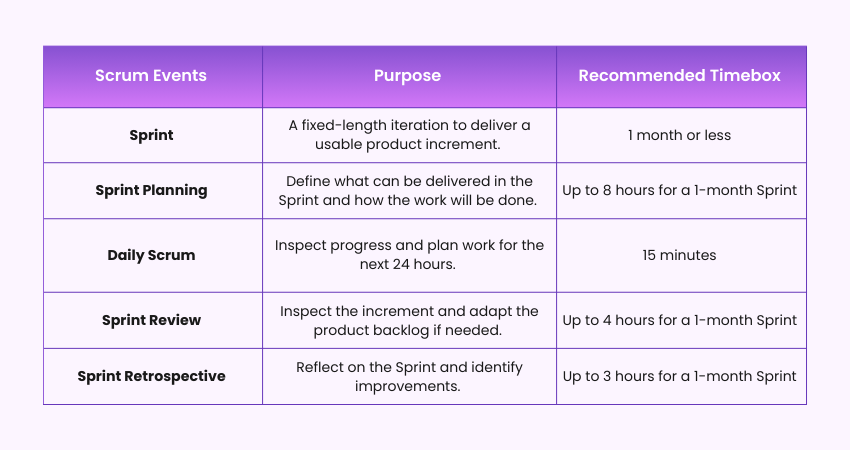
In Scrum, all events are time-boxed, meaning they have a fixed maximum duration to ensure efficiency and focus. These time limits are based on a 1-month Sprint. For shorter Sprints, the time-boxes are proportionally reduced. This timeboxing approach ensures that Scrum Events remain focused and productive, preventing unnecessary delays and maintaining a predictable workflow. Let's break down every event for better understanding:
The Importance of Scrum Events
Scrum Events play a crucial role in helping teams work effectively, stay organised, and deliver value consistently. They create a structured workflow where every activity has a clear purpose, keeping the team aligned and focused on the Sprint Goal. By following these time-boxed events, teams can plan better, track progress, and continuously improve.
Key Reasons why Scrum Events are Important:
a) Facilitate open communication between team members and stakeholders
b) Keep everyone informed about goals, progress, and challenges
c) Allow teams to inspect work regularly and make necessary changes quickly
d) Reduce wasted time by keeping discussions focused and time bound
e) Help teams learn from each Sprint and enhance their processes
Scrum Participants and Their Roles in Events
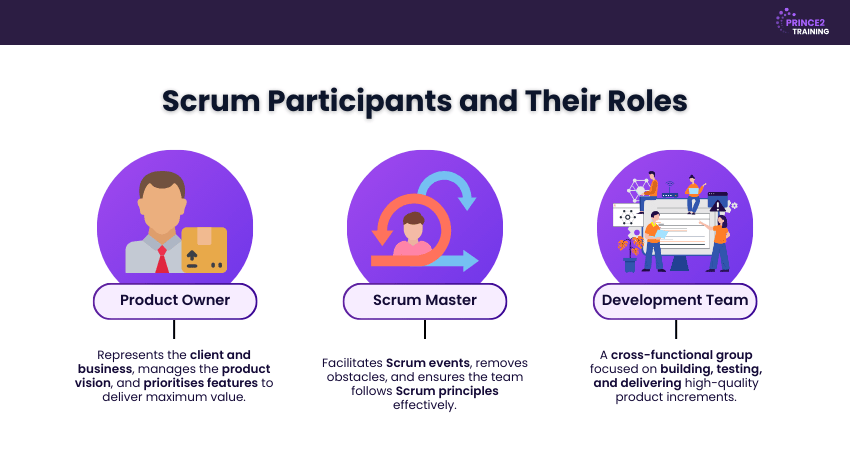
In Scrum, three main roles work together to ensure the success of every event. Each has specific responsibilities that help the team stay aligned, deliver value, and continuously improve.
Product Owner
The Product Owner manages the Product Backlog to maximise the product's value. They ensure that the backlog items are well-prioritised, clear, and aligned with customer needs. During Scrum Events, especially Sprint Planning and Sprint Review, the Product Owner plays a key role in defining the Sprint Goal, setting priorities, and gathering feedback from stakeholders.
Example: If a product team is building a mobile app, the Product Owner decides which features, like push notifications or payment integration, should be developed first based on user demand.
Scrum Master
The Scrum Master acts as both a facilitator and a coach for the team. They ensure the team follows Scrum principles, remove obstacles, and help improve collaboration. During Scrum Events, the Scrum Master guides discussions, keeps meetings time-boxed, and ensures everyone understands the objectives.
Example: If the Development Team faces a technical blocker, such as integration issues, the Scrum Master arranges the right support to resolve it quickly, so the Sprint stays on track.
Development Team
The Development Team is responsible for turning backlog items into a working product increment during the Sprint. They are self-organising, meaning they decide how to complete the work without micromanagement. Their active participation in events like Daily Scrums, Sprint Reviews, and Retrospectives ensures that progress is transparent and improvements are continuous.
Example: In an e-commerce project, the Development Team might break a "checkout process" backlog item into smaller tasks like designing the UI, integrating payment gateways, and testing workflows.
Conclusion
Scrum Events keep Agile projects organised, transparent, and efficient. Each event has a clear purpose, helping teams plan better, collaborate effectively, and deliver value continuously. By understanding and following these five essential events, teams can adapt quickly, overcome challenges, and achieve project goals smoothly. Mastering them is the key to making Agile work successfully.
Lead high-performing Agile teams - Become a Scrum professional with Scrum Master Training now!



 Continue Browsing