Contact@prince2training.co.uk
 01344203999




 Back
Back


Table of Content

17-Sep-2026

David Walter
A project without direction can quickly feel like a journey without a map completely uncertain, and difficult to manage. This is where Project Roadmap comes in. They act as a guiding blueprint, helping teams visualise goals, timelines and key milestones in one clear view. Instead of getting lost in day-to-day tasks, teams can focus on the bigger picture and move with a purpose.
A well-crafted roadmap not only aligns with stakeholders but also simplifies complex projects into manageable steps. It transforms ideas into a structured path, ensuring every effort contributes to a defined outcome while keeping everyone informed and aligned throughout the journey. In this blog you will understand what exactly a Project Roadmap is, what are its benefits and how to create one.
What is a Project Roadmap?
A Project Roadmap is a high-level visual plan that outlines the key objectives, milestones, deliverables, and timeline of a project. It provides a clear overview of how the project will progress from initiation to completion. Project Roadmaps help teams and stakeholders understand priorities and stay aligned with project goals.
Unlike detailed project schedules, a roadmap focuses on the broader strategic direction rather than individual tasks. It serves as a communication tool that keeps stakeholders informed about progress, upcoming milestones, and expected outcomes. This helps improve decision-making, manage expectations, and ensure everyone remains focused on the project's overall vision.

Why Is a Project Roadmap Important?
Projects often involve multiple goals, tasks, timelines, and resources that need to be managed simultaneously. Without a clear overview, it can be difficult to understand priorities, coordinate teams, and communicate progress effectively.
A Project Roadmap provides a high-level view of the project, highlighting key objectives, milestones, and timelines without focusing on detailed task management. This helps project managers align stakeholders, support informed decision-making, track progress, and ensure everyone remains focused on the project's strategic direction.
What are the Components of a Project Roadmap?
A Project Roadmap consists of several key elements that provide a high-level view of a project's direction and progress. These components help teams understand priorities, track major achievements, and align activities with project objectives. Together, they create a clear framework for planning, communication, and decision-making throughout the project lifecycle.
1) Goals
Goals define the overall purpose and desired outcomes of the project. They provide direction for the team and help stakeholders understand what the project aims to achieve. Clear goals ensure that all project activities remain aligned with business objectives and expected results.
2) Milestones
Milestones represent significant checkpoints or achievements within the project timeline. They help measure progress and indicate when key phases or deliverables have been completed. Tracking milestones allows teams to identify delays early and maintain project momentum.
3) Deliverables
Deliverables are the tangible outputs or results produced during a project. These may include reports, products, services, or completed project phases. Clearly defining deliverables helps set expectations and ensures stakeholders understand what will be provided.
4) Timelines
Timelines outline when project activities, milestones, and deliverables are expected to be completed. They provide a schedule that helps teams manage resources and monitor progress. A well-planned timeline supports better coordination and helps keep the project on track.
How to Create a Project Roadmap?
Creating a Project Roadmap involves defining objectives, identifying key deliverables, and organising work into a structured plan. A well-developed roadmap provides clarity on project priorities, timelines, and expectations. It serves as a communication tool that helps teams and stakeholders stay aligned throughout the project.
1) Set Clear Goals and Objectives
The first step is to establish clear goals that define what the project is intended to achieve. Objectives should be specific, measurable, and aligned with business needs. Well-defined goals provide direction and help guide project planning and execution.
2) Identify Key Deliverables and Milestones
Determine the major outputs and important checkpoints that will indicate project progress. Deliverables define what needs to be completed, while milestones mark significant achievements along the way. Together, they provide a framework for tracking success.
3) Organise And Sequence Tasks
Break the project into manageable tasks and arrange them in a logical order. Identifying dependencies between activities helps ensure work flows smoothly from one stage to the next. This step improves coordination and reduces the risk of delays.
4) Estimate Time and Resources
Assess how much time, budget, and manpower will be required to complete each phase of the project. Accurate estimates help create realistic schedules and prevent resource shortages. This supports effective planning and project control.
5) Develop A Visual Roadmap
Create a visual representation of the project using timelines, milestones, and key deliverables. A visual roadmap makes it easier for stakeholders to understand project progress and priorities at a glance. It also improves communication and keeps everyone aligned with project goals.
Learn structured Project Management with PRINCE2® Foundation Training- Join now!
What Are the Benefits of Project Roadmaps?
Project Roadmaps provide a clear visual overview of a project's goals, milestones, and timelines. They help teams stay aligned, improve communication, and ensure everyone understands project priorities. By offering a structured view of progress, Project Roadmaps support better planning and decision-making throughout the project lifecycle.
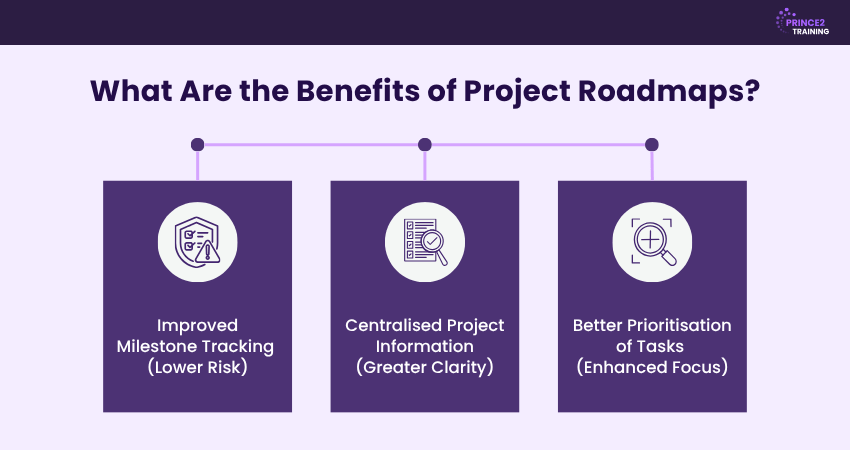
1) Improved Milestone Tracking (Lower Risk)
Project Roadmaps make it easier to track important milestones and monitor project progress. By identifying key checkpoints in advance, teams can quickly detect delays or potential issues. This helps reduce risks and ensures corrective actions are taken before problems escalate.
2) Centralised Project Information (Greater Clarity)
A Project Roadmap brings essential project details into one accessible location. It provides stakeholders with a clear overview of goals, timelines, deliverables, and progress updates. This centralised approach improves transparency and reduces confusion across the team.
3) Better Prioritisation of Tasks (Enhanced Focus)
Project Roadmaps help teams identify which activities are most important to achieving project objectives. By highlighting priorities and dependencies, they ensure resources are focused on high-value tasks. This improves productivity and helps teams work more efficiently toward project goals.
Tips for Creating a Project Roadmap
Creating an effective Project Roadmap requires a balance between clarity, strategy, and adaptability. Based on best practices, the following tips can help you design a roadmap that is both practical and easy to understand:
1) Use Clear and Actionable Information: Include specific goals, timelines, milestones, and deliverables rather than vague statements. Clear information helps stakeholders make informed decisions and understand project expectations.
2) Keep the Roadmap Updated: Review and update the roadmap regularly to reflect changes in priorities, schedules, or project requirements. An up-to-date roadmap provides a reliable view of project progress.
3) Establish Effective Communication Channels: Identify key stakeholders and project leads and ensure communication responsibilities are clear. Strong communication supports collaboration, faster decision-making, and better alignment across teams.
4) Leverage Project Management Tools: Use project management software to organise goals, tasks, milestones, dependencies, and timelines. These tools improve visibility, simplify roadmap maintenance, and provide a central source of project information.
Challenges of a Project Roadmap
While Project Roadmaps are highly effective for providing a strategic overview, they also come with certain practical challenges. These challenges are mentioned below:
1) Balancing Detail and Simplicity: A roadmap is meant to give a high-level view but deciding how much information to include can be tricky. If it becomes too detailed, it may overwhelm stakeholders with technical jargon and complexity and if it is too simplified, it may fail to provide meaningful insights or guidance.
2) Communicating with Diverse Audiences: Roadmaps are often used by both technical teams and non-technical stakeholders. Creating a format that is easy to understand for everyone without losing essential context can be difficult.
3) Keeping Information Current: Projects are dynamic, with changes in scope, timelines, and resources. If the roadmap is not regularly updated, it can quickly become outdated and misleading, reducing its effectiveness as a communication tool.
4) Managing Dependencies and Risks: Roadmaps often include interconnected tasks and milestones, and delays in one area can impact the entire project. Identifying and adjusting for these dependencies requires continuous monitoring and flexibility.
5) Aligning Stakeholder Expectations: Different stakeholders may have varying priorities and expectations, which can lead to conflicts or misunderstandings. Without proper communication, the roadmap may fail to reflect a unified project vision.
Develop In-Demand Agile Delivery Skills with PRINCE2 Agile® Foundation (Version 2) Training - Join now!
Project Roadmap vs Project Plan
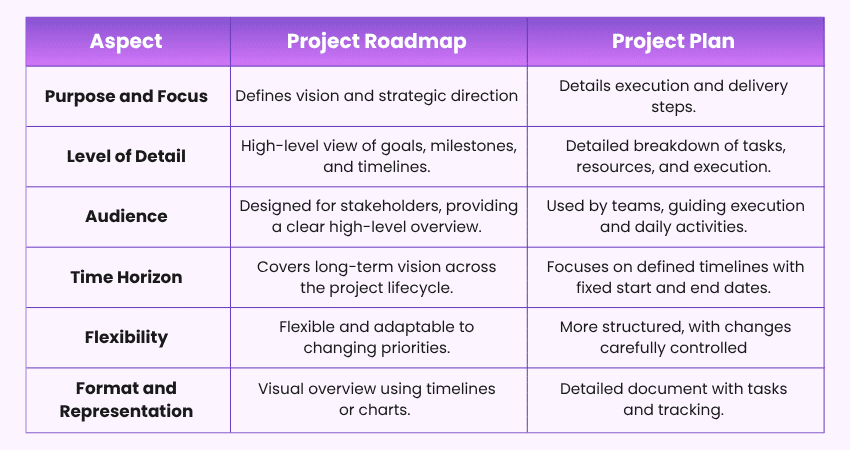
A Project Roadmap and a Project Plan both support project management, but they serve different purposes. A Project Roadmap provides a high-level overview of goals, milestones, and timelines, while a Project Plan contains detailed information about tasks, resources, schedules, and execution activities. Below are few differences between a Project Roadmap and a Project Plan:
1) Purpose and Focus
A Project Roadmap is designed to communicate the overall vision and strategic direction of a project. It answers key questions such as what the project aims to achieve and why it matters. It ensures alignment with broader business goals and helps stakeholders understand the intended outcomes.
In contrast, a Project Plan focuses on execution. It explains how the project will be delivered, outlining the specific steps, processes, and actions required. It is more operational and ensures that the strategy defined in the roadmap is actually implemented effectively.
2) Level of Detail
A Project Roadmap provides a high-level overview, highlighting only the most important elements such as goals, milestones, and timelines. It avoids technical or granular details to keep the information easy to understand and accessible for all stakeholders.
On the other hand, a Project Plan is highly detailed. It includes task breakdowns, dependencies, assigned responsibilities, timelines, budgets, and resource allocation. This level of detail is essential for managing the project on a day-to-day basis and ensuring nothing is overlooked.
3) Audience
A Project Roadmap is primarily created for stakeholders, senior management, and clients who need a clear and concise overview of the project. It helps them stay informed without overwhelming them with operational details.
A Project Plan, however, is intended for project managers and team members who are directly involved in execution. It serves as a working document that guides daily activities, tracks progress and ensures that all team members know their responsibilities.
4) Time Horizon
A Project Roadmap usually covers a broader timeframe, often spanning the entire lifecycle of the project or even multiple phases. It provides a long-term perspective and may evolve as business priorities change.
Project Plan operates within a defined timeframe with clearly set start and end dates. It focuses on short- to medium-term execution, with structured phases and deadlines that must be followed closely to ensure timely delivery.
5) Flexibility
A Project Roadmap is inherently flexible. Since it is strategic in nature, it can be adjusted as new information emerges, priorities shift, or external conditions change. This flexibility allows organisations to remain agile and responsive.
A Project Plan is comparatively rigid. While changes can be made, they often require careful consideration because they may impact timelines, resources, and dependencies. Frequent changes to a project plan can disrupt workflow and affect project stability.
6) Format and Representation
A Project Roadmap is typically presented in a visual format, such as timelines, charts, or dashboards. This makes it easy to interpret at a glance and helps communicate complex ideas in a simplified manner.
Project Plan is usually a structured document or tool-based format (such as spreadsheets or Project Management software). It includes detailed schedules, task lists, and tracking mechanisms that support precise planning and execution.
Conclusion
Project Roadmap is an essential tool for guiding projects from conception to completion. They provide a clear vision, align teams, and ensure effective communication among stakeholders. By outlining goals, milestones, and timelines, they help organisations stay focused and organised. While challenges may arise, following best practices and maintaining flexibility can enhance their effectiveness. When used alongside detailed project plans, roadmaps contribute significantly to successful project delivery and long-term business growth.
From Learning to Leading Projects with the best PRINCE2 Foundation & Practitioner Training - Register now!
Frequently Asked Questions
How Does a Roadmap Differ from a Gantt Chart?
A roadmap provides a high-level overview of project goals, milestones, and timelines, focusing on strategic direction. A Gantt chart, however, is a detailed scheduling tool that displays tasks, durations, and dependencies. Roadmaps guide vision and alignment, while Gantt charts support execution and day-to-day project tracking.
When Should You Create a Project Roadmap?
A Project Roadmap should be created at the early planning stage, before execution begins. It helps define goals, align stakeholders, and set expectations. It should also be updated during major changes to reflect evolving priorities, ensuring the project remains aligned with business objectives and overall strategic direction.
Who Is the Target Audience for a Roadmap?
A roadmap is intended for stakeholders, executives, project managers, team leaders, and project teams. It provides a clear overview of goals, timelines, milestones, and priorities, helping audiences understand project direction, track progress, align expectations, support decision-making, and maintain focus on key objectives.



 Continue Browsing