Contact@prince2training.co.uk
 01344203999



 Back
Back


Table of Content

09-Sep-2026

David Walter
In the field of business, organisations have to juggle numerous projects from product launches to marketing campaigns; all competing for attention and resources. But not every idea delivers equal value. So, how do companies decide which ones truly matter? That's where Project Portfolio Management (PPM) steps in. This empowers leaders to view projects as strategic investments that drive long-term success.
Essentially, it helps organisations prioritise, plan and execute multiple projects while aligning them with business goals. This blog explores What is Project Portfolio Management in detail, highlighting its key principles, benefits, challenges and more. So read on and learn how PPM can transform scattered initiatives into a unified roadmap for success!
What is Project Portfolio Management (PPM)?
Project Portfolio Management (PPM) involves centrally managing an organisation's projects. This can either be related or not under a single portfolio. This approach helps oversee and allocate resources effectively. Project Portfolio Management also encompasses the project intake process. This includes identifying, authorising, and assigning Project Managers to potential projects.
Project Portfolio Management is comparable to managing an airport. In an airport, multiple flights (projects) take off and arrive simultaneously. Each carry different set of goals, schedules and resource allocation. As air traffic control (considered PPM) coordinates every task to prevent conflicts and boost efficiency, PPM helps organisations prioritise projects, manage resources and achieve goals.
Why Project Portfolio Management is Important?
Project Portfolio Management (PPM) serves as the critical link between an organisation's strategic objectives and the projects undertaken to achieve them. By aligning initiatives with overarching goals, Project Portfolio Management enhances efficiency, optimises resource allocation, and improves overall project success.
1) Strategic Alignment
Think of Project Portfolio Management as a way to make sure your projects aren’t just busy work; they actually move your business forward. It helps you pick the right initiatives that align with your goals, focus on what really matters for growth, and make smarter decisions along the way. In simple terms, it connects your big-picture strategy with what’s actually getting done on the ground.
2) Optimised Resource Management
It also makes managing resources a lot smoother. Instead of spreading people and budgets too thin, it helps you focus on projects that deliver the most value. This reduces duplication of effort, improves teamwork across departments, and ensures that no team is overloaded while others sit idle. The result is better productivity and more efficient execution.
3) Risk Mitigation and Governance
Another big advantage is having better control over risks and processes. With a clear, centralised system in place, it becomes easier to spot potential issues early and handle them before they turn into bigger problems. It also promotes consistency by using standard approaches and ensures everything stays compliant with organisational and industry expectations.
4) Enhanced Decision-making
Finally, Project Portfolio Management helps you make better decisions with the help of data and insights. It allows you to adjust your plans as business needs evolve, focus on initiatives that deliver real value, and keep everyone informed along the way. This leads to more transparency, stronger communication and smarter choices at every level. Overall, it brings clarity and efficiency, making sure every project actually contributes to your organisation’s growth and long-term success.
Build your Agile expertise the right way with our Agile PM® Foundation Certification – Join Today!
Principles of Project Portfolio Management
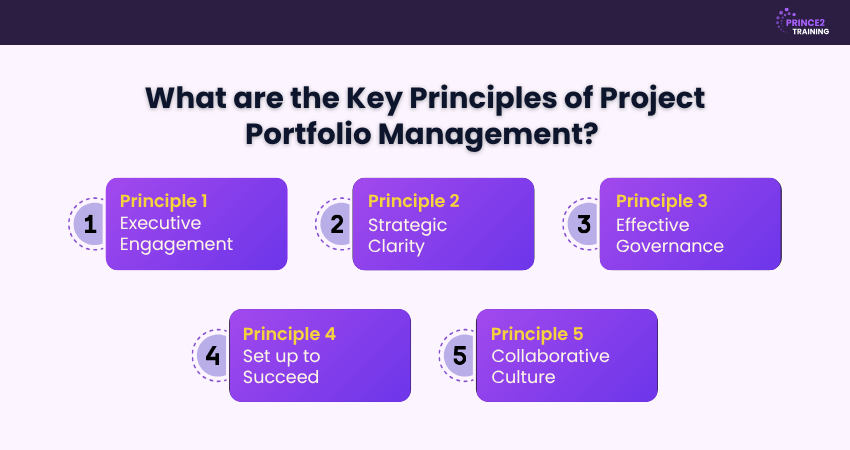
A successful Project Portfolio Management is developed on fundamental principles to help organisations select the right projects and allocate resources wisely. Some important key principles of PPM include:
1) Principle 1: Executive Engagement
For effective management of portfolios, strong leadership is essential. When leaders support PPM actively, it becomes easier to allocate resources, foster cultural change and align teams towards strategic goals. Executive Engagement can be increased through:
a) Appointing portfolio director for leading, building strategy and influencing stakeholders
b) By participating actively in meetings specifically for portfolio governance.
c) Defining clear categories for strategic benefits.
2) Principle 2: Strategic Clarity
Through clearly defined business goals and Project Strategy, Without the sense of clarity, projects become disarray and it becomes difficult to select the project that requires investment. For building strategic clarity:
a) Categorise initiative based on business priorities
b) Link portfolio objectives with the benefits expected
c) Consistent assessment of projects for aligning with clear strategies
3) Principle 3: Effective Governance
A strong posture in governance provides structure and clarity in decision-making. It involves documenting processes, clear responsibilities and more. Some ways to build effective governance include:
a) Diligent documentation of the governance model
b) Making sure stakeholders have clear understanding of the decisions
c) Establishing PMO (Portfolio Management Office) for fair analysis
4) Principle 4: Set up to Succeed
It is crucial for any project to begin with a clear purpose. For increasing the chances of success for projects, it is important to:
a) Start with the needs of the business and expected outcomes
b) Invest time in planning and designing
c) Utilising incremental delivery for efficient value and lower amount of risk
5) Principle 5: Collaborative Culture
Project Portfolio Management works effectively when teams work toward shared goals. For fostering a culture of collaboration, it includes to:
a) Engage stakeholders on a regular basis
b) Track portfolio performance with KPIs
c) Support consistent learning throughout the cycle of a portfolio
The Project Portfolio Management Process
A structured PPM process can transform chaos into a well-oiled machine. Here's how it works:
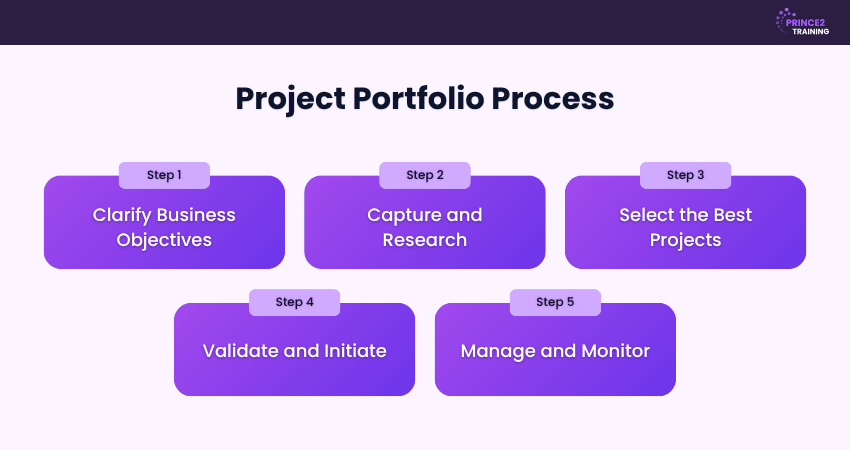
Step 1: Clarify Business Objectives
Start by getting clear on what your organisation is actually trying to achieve. What are the big goals? What outcomes matter most? Once that’s defined, you can set simple criteria to decide which projects are worth pursuing; things like business value, ROI, risk, and how well they align with your strategy. This way, you’re only investing time and resources in projects that truly support your long-term direction.
Step 2: Capture and Research
Next, gather project ideas from across the organisation in a structured way. As these ideas come in, dig into the details: what benefits they’ll bring, what they’ll cost, the risks involved, and what resources they’ll need. Doing this homework upfront makes it much easier to compare projects fairly and make decisions based on solid, consistent information.
Step 3: Select the Best Projects
Now comes the decision-making part. Evaluate each project based on its value, feasibility, and the resources available. You can use scoring models or financial metrics to rank them, but the key is to choose a mix of projects that delivers maximum value without taking on too much risk. The goal is a balanced portfolio, not just a list of the flashiest ideas.
Step 4: Validate and Initiate
Before you jump into execution, take a moment to sanity-check your portfolio. Do you actually have the budget, people and time to make it work? Are there dependencies or constraints you need to consider? Once everything looks realistic and achievable, you can confidently approve the projects and get things started.
Step 5: Manage and Monitor
Finally, keep a close eye on how everything is progressing. Track performance, resolve any resource conflicts, and stay on top of risks. As business priorities shift (which they often do), be ready to adjust your portfolio accordingly. Regular check-ins help ensure your projects stay aligned with your goals and continue delivering value over time.
Gain the confidence, structure and credibility to lead with our
Agile Project Management Foundation & Practitioner (AgilePM®) Course
– Register now!
Challenges of Project Portfolio Management
Let us look at the challenges associated with the complex process of Project Portfolio Management:
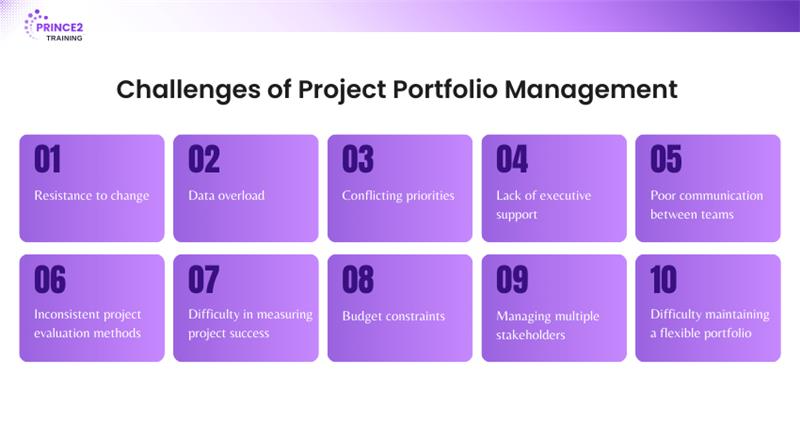
1) Resistance to Change
One of the biggest hurdles in Project Portfolio Management is getting people comfortable with change. Introducing new tools, processes, and ways of thinking can feel disruptive, so it’s natural for employees and stakeholders to push back. This resistance can slow down adoption and create friction, especially when long-standing Project Management practices are being replaced. Without the right mindset and support, the transition can feel difficult and uncertain for many teams.
2) Data Overload
Managing multiple projects means dealing with a huge amount of data, and that can quickly become overwhelming. When there’s too much information to track like metrics, reports and performance updates, it becomes hard to focus on what really matters. If data systems aren’t efficient, extracting meaningful insights becomes even more challenging. This can leave decision-makers confused rather than informed.
3) Conflicting Priorities
With different teams and departments working towards their own goals, it’s common for priorities to clash. Everyone may have their own “urgent” projects, which can lead to competition for resources and attention. This makes it harder to stay aligned with the overall strategy, and delays can happen when it’s unclear what should come first. Balancing these competing demands is often easier said than done.
4) Lack of executive support
Without strong backing from leadership, Project Portfolio Management can struggle to gain momentum. Executive support is key for securing resources, funding, and alignment with business goals. When leadership isn’t fully involved, initiatives may lack direction or authority, and investment in tools or training may fall short. Ultimately, this can limit how successful PPM efforts are across the organisation.
5) Poor Communication Between Teams
When teams operate in silos and communication isn’t clear, things can quickly fall apart. Lack of transparency can lead to misunderstandings, duplicated efforts, and misaligned goals. Collaboration becomes difficult, and projects may suffer as a result. Strong, open communication is essential to keep everyone on the same page and ensure smooth execution.
Fast-track your PMP® journey with confidence. Register for our PMP® Exam Prep Boot Camp Course now!
6) Inconsistent Project Evaluation Methods
If projects are evaluated using different criteria or inconsistent metrics, it becomes hard to compare them fairly. Some decisions may end up being subjective instead of data-driven, which can weaken prioritisation. Without a standard framework for evaluation, organisations may struggle to identify which projects truly add the most value, leading to less effective portfolio decisions.
7) Difficulty in Measuring Project Success
Measuring success isn’t always straightforward, especially when dealing with a variety of projects. Some outcomes, like long-term ROI or strategic impact, aren’t immediately visible. Without clear and consistent metrics, it becomes challenging to assess how well projects are performing. This lack of clarity can make it harder to evaluate effectiveness and guide future decisions.
8) Budget Constraints
Limited budgets are a constant challenge in managing a project portfolio. Organisations have to carefully decide where to invest, and not every project can be funded. Poor allocation can lead to cost overruns or underfunded initiatives, affecting overall outcomes. Striking the right balance is essential, but financial constraints often make it difficult to deliver everything that’s planned.
9) Managing Multiple Stakeholders
Project Portfolio Management involves working with a broad range of stakeholders, each with their own set of priorities and expectations. Bringing all these perspectives together can be complex, especially when interests don’t align. Managing these relationships takes time and effort, and balancing the needs of executives, Project Managers and customers can be a real challenge.
10) Difficulty Maintaining a Flexible Portfolio
In a constantly changing business environment, portfolios need to stay flexible. But that’s easier said than done. Market conditions, priorities, and strategies can shift quickly, requiring frequent adjustments. However, too much change can create instability and inefficiency, especially when resources are constantly being reallocated. The real challenge lies in staying adaptable without disrupting ongoing projects or losing focus.
5 Best Practices for Effective Project Portfolio Management
Let us look at the best practices associated with Project Portfolio Management:
1) Expanding E-commerce Capabilities
Customers' shopping is transforming, with online platforms becoming more intuitive and personalised. Seamless transactions, AI-driven recommendations, and faster delivery options enhance the shopping experience. Companies are continuously refining their digital storefronts to stay ahead.
2) Reducing Carbon Footprint Through Sustainable Logistics
Businesses are reimagining deliveries with sustainability in mind. Eco-friendly packaging, electric vehicles, and optimised supply chains minimise environmental impact. Companies are embracing greener operations to achieve efficiency and corporate responsibility.
3) Enhancing In-store Experiences with Digital Technology
Retail spaces are evolving with interactive screens, virtual fitting rooms, and AI-assisted shopping. Customers receive personalised recommendations, and checkout processes are becoming more seamless. Technology is making brick-and-mortar stores more engaging than ever.
4) Implementing AI-driven Customer Service Tools
Support teams utilise AI-powered chatbots, Predictive Analytics, and automated ticketing systems. Faster response times and boosted customer satisfaction are becoming the norm as businesses shift toward intelligent, round-the-clock assistance. Companies are taking a more proactive approach to service.
5) Developing Private-label Product Lines
Retailers are introducing exclusive product ranges to build brand loyalty and differentiation. Competitive pricing, unique offerings, and higher profit margins are becoming priorities. Consumer preferences are carefully analysed to craft innovative and appealing products.
Conclusion
Project Portfolio Management isn't just about managing multiple projects. It is also about making the right strategic choices to ensure sustained business growth. Organisations can navigate complexities and drive long-term success by aligning projects with business objectives, optimising resource use, and continuously refining the portfolio.
Master every phase of project excellence with the Project Management Professional (PMP)® Certification - Sign up now!
Frequently Asked Questions
What Tools are Commonly Used in PPM?
Project Portfolio Management (PPM) commonly uses tools such as Microsoft Project, Jira, Asana, Smartsheet, Planview, Monday.com and Microsoft Power BI. These platforms help organisations prioritise projects, allocate resources, track performance, manage risks and monitor portfolio progress through dashboards and reports.
How is PPM Different From Project Management?
Project Management is about planning, executing, and delivering a single project successfully. Project Portfolio Management takes a broader approach by managing multiple projects together, ensuring they align with business objectives, optimise resource allocation, and maximise overall organisational value.
What skills are Required for Effective PPM?
Effective Project Portfolio Management requires skills like:
a) Strategic thinking
b) Leadership
c) Communication
d) Financial Analysis
e) Risk Management
f) Resource planning
g) Stakeholder Management
h) Decision-making
Professionals should also be proficient in Data Analysis and Portfolio Management tools.



 Continue Browsing