Contact@prince2training.co.uk
 01344203999




 Back
Back


Table of Content

17-Sep-2026

Veronica Davis
Every successful project has one thing in common: a Manager who knows how to plan, lead, communicate, and solve problems. Project Management Skills are not just for big companies or experts; they help anyone handle tasks smoothly, guide teams, overcome challenges, and deliver results, even when things get stressful or unexpected changes happen.
In this blog, we’ll explain what are Project Management Skills and why they matter. You’ll learn key hard and soft skills, from leadership and communication to planning, problem-solving, and technical abilities, helping you manage projects with confidence and success. So, let’s dive in!
What are Project Management Skills?
Project Management Skills are the abilities that help you plan, manage, and complete projects on time and within budget. These skills include technical abilities such as Risk Management, scheduling, budgeting, and using Project Management Software, which make it easier to organise and track project progress.
They also involve soft skills for Project Management like communication, leadership, organisation, and conflict resolution, along with strategic skills such as planning, budgeting, and Risk Management. Together, these skills ensure projects are handled smoothly, efficiently, and successfully.
For Example:
If you're launching a new website, you need planning, scheduling, and communication skills to keep everyone on the same page. If you're leading a construction project, cost control, teamwork, and Quality Management are crucial.

Top 25+ Essential Project Management Skills
Project Managers need a balance of hard and soft Project Management Skills to succeed. Hard skills include things like planning, budgeting, scheduling, and using project tools. Soft skills involve communication, leadership, teamwork, and problem-solving. Together, these Project Management Skills help you manage tasks, support your team, and deliver projects successfully.
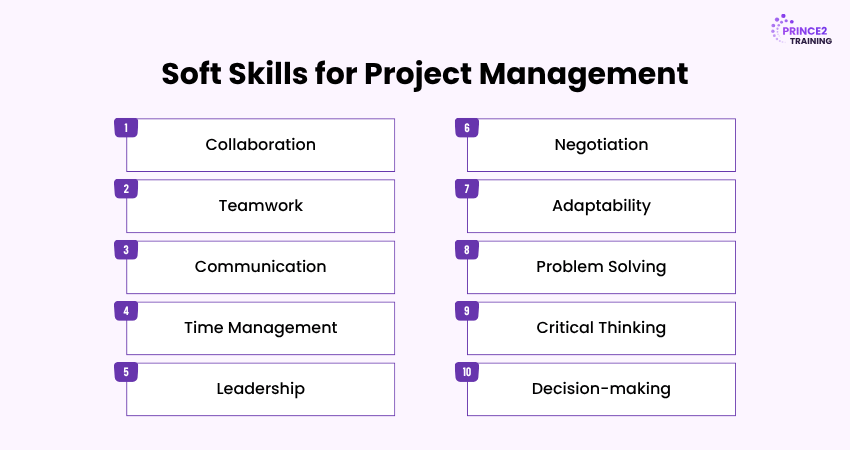
11 Soft Skills for Project Management
Leadership and Soft Skills help you guide your team, communicate well, motivate others, and handle challenges smoothly. Next, let's explore the next essential Project Management Skills.
1) Collaboration
Collaboration involves working closely with your team, clients, and stakeholders to achieve a shared goal. It brings together diverse skills, perspectives, and ideas, which makes projects more creative, efficient, and successful. Strong collaboration improves understanding, reduces mistakes, and keeps everyone aligned throughout the project.
Tip: Use tools like Slack, Trello, or Asana to communicate easily and share updates.
Example: While managing a marketing campaign, you coordinate designers, writers, and advertisers to deliver content on time.
2) Teamwork
Teamwork is the foundation of successful projects and a vital part of Project Management Skills. It means sharing responsibilities, supporting one another, and working collaboratively towards a common goal. A team built on trust and mutual respect performs better, solves problems faster, and consistently delivers high-quality outcomes.
Tip: Foster strong teamwork by encouraging open discussions, recognising contributions, and celebrating milestones as a group.
Example: You create a shared workspace where Developers, Designers, and Marketers collaborate effectively and stay aligned on project goals.
3) Communication
Effective communication ensures everyone understands project objectives, timelines, and expectations. It keeps teams aligned, reduces misunderstandings, and builds trust among stakeholders. Without it, projects can face delays, missed deadlines, and unnecessary conflicts.
Tip: Be clear, concise, and consistent in your updates. Always confirm important information in writing.
Example: You organise weekly team meetings to share updates, resolve issues, and set priorities.
4) Time Management
Time Management is the skill of organising and prioritising tasks to use available time effectively. It boosts productivity, reduces stress, and helps individuals consistently meet deadlines and goals.
Tip: Prioritise important tasks, set realistic deadlines, and minimise distractions.
Example: An employee uses a daily planner to complete high-priority tasks before the end of the workday.
5) Leadership
Leadership is about guiding your team towards success. A strong leader inspires, motivates, and supports their team, helping them overcome challenges and stay focused on goals. It also involves setting the right example by maintaining positivity and professionalism.
Tip: Lead with empathy, stay approachable, and encourage feedback to build trust within your team.
Example: When deadlines are tight, you motivate the team, delegate tasks effectively, and provide the resources needed to deliver results.
6) Negotiation
Negotiation is one of the key Project Management Skills for Project Managers, helping reach agreements that benefit everyone. You may negotiate with clients, vendors, or teams on timelines, budgets, or resources to ensure smoother collaboration and better outcomes.
Tip: Understand the needs of all parties and aim for win-win agreements.
Example: Negotiating with a supplier to reduce costs while ensuring the materials still meet quality standards.
7) Adaptability
Adaptability is the ability to adjust quickly to changing situations, challenges, and workplace demands. It helps individuals remain productive, embrace new opportunities, and succeed in dynamic environments.
Tip: Stay open to change and adjust your approach when new situations arise.
Example: An employee quickly learns a new software system after the organisation updates its technology.
Master the best of Agile and PRINCE2® in one powerful training session. Sign up for our PRINCE2 Agile® Foundation and Practitioner (Version 2) Course now!
8) Problem Solving
Problem solving is the process of spotlighting challenges, analysing possible solutions, and implementing the most effective one. It improves decision-making, increases efficiency, and supports continuous improvement in the workplace.
Tip: Identify the root cause of the issue before choosing the best solution.
Example: A customer service representative resolves repeated complaints by improving the support process.
9) Critical Thinking
Critical thinking refers to the crucial ability to evaluate information objectively, question assumptions, and make logical conclusions. No wonder it’s considered among the most vital Project Management Skills. It supports better judgement, informed decisions, and effective problem solving in complex situations.
Tip: Evaluate facts carefully, question assumptions, and consider different perspectives before reaching conclusions.
Example: A Business Analyst reviews market data from multiple sources before recommending a new strategy.
10) Decision-making
Decision-making is the process of selecting the best course of action after evaluating available options. Strong decision-making leads to better outcomes, improves efficiency, and supports organisational success.
Tip: Gather relevant information, assess the options, and choose the solution that best meets the objective.
Example: A Project Manager selects the most cost-effective supplier after comparing quality, price, and delivery times.
11) Conflict Resolution
Conflicts are common in projects, but resolving them quickly and fairly is an important part of Project Management Skills. It involves listening to all sides, finding common ground, and ensuring disagreements don't affect progress.
Tip: Stay neutral, focus on solutions, and avoid blaming individuals during conflicts.
Example: When two departments disagree on priorities, you mediate a discussion and propose a compromise acceptable to both.
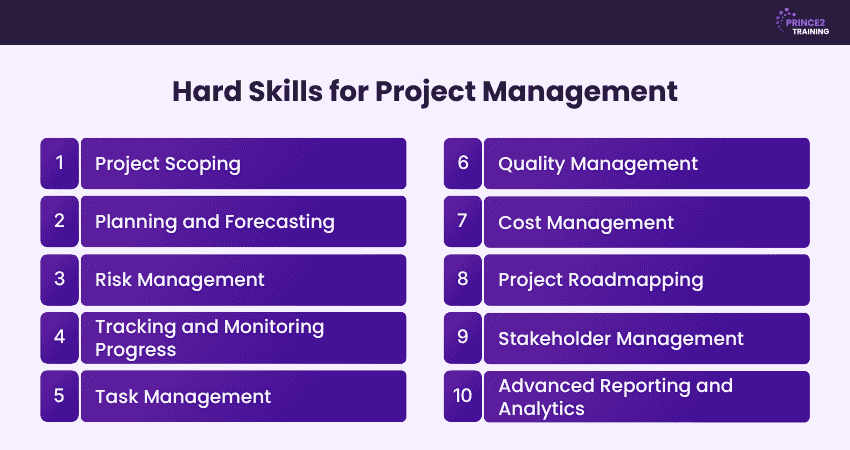
10 Hard Skills for Project Management
Now let’s explore the hard Project Management Skills necessary for long-lasting project success:
12) Project Scoping
Project scoping defines a project's objectives, deliverables, boundaries, and requirements before work begins. A well-defined scope prevents misunderstandings, controls changes, and keeps projects aligned with business goals.
Tip: Clearly define project goals, deliverables, and boundaries before starting any work.
Example: A Project Manager creates a scope document outlining features, timelines, and exclusions for a software project.
13) Planning and Forecasting
Planning and forecasting involve setting project timelines, allocating resources, and predicting future outcomes. These skills help teams prepare for challenges, improve efficiency, and achieve project objectives successfully.
Tip: Break projects into manageable tasks and regularly review forecasts as conditions change.
Example: A project team updates its schedule after forecasting a delay caused by supplier shortages.
14) Risk Management
Risk Management is the in-depth process of identifying, assessing, and responding to potential risks that may affect project success. It helps reduce uncertainties and ensures smoother project execution.
Tip: Identify potential risks early and create response plans before they become issues.
Example: A construction company develops contingency plans for bad weather to minimise project delays.
15) Tracking and Monitoring Progress
Tracking and monitoring progress involve measuring project performance against planned objectives, timelines, and milestones. Regular monitoring can help detect the issues early and ensures projects remain on schedule.
Tip: Review project progress regularly using reports, milestones, or performance dashboards.
Example: A Project Manager conducts weekly progress meetings to track completed tasks and upcoming deadlines.
16) Task Management
Task Management is one of the top Project management Skills. It’s the process of organising, prioritising, assigning, and monitoring work to ensure timely completion. Effective Task Management improves productivity and keeps projects running smoothly.
Tip: Prioritise important tasks and assign clear responsibilities to team members.
Example: A team uses a Task Management tool to assign work and track completion status.
17) Quality Management
Quality Management is one of the most indispensable Project Management Skills. It ensures that products, services, or project deliverables consistently meet required standards and customer expectations. It supports continuous improvement and enhances customer satisfaction.
Tip: Establish quality standards and perform regular reviews throughout the project.
Example: A manufacturing company conducts product inspections before shipping items to customers.
18) Cost Management
Cost Management involves planning, estimating, controlling, and monitoring project expenses to stay within budget. Effective Cost Management supports financial efficiency and prevents unnecessary overspending.
Tip: Track project expenses regularly and compare them with the approved budget.
Example: A Project Manager reviews monthly spending reports to ensure the project remains within budget.
Transform your process and innovate and lead effectively with our PRINCE2 Agile® Practitioner Training – Join now!
19) Project Roadmapping
A Project Roadmap refers to a high-level overview of a project’s timeline, key deliverables, milestones, and important dependencies. It helps teams and stakeholders understand the overall direction and progress of a project before execution begins. Project Roadmaps are especially useful for complex projects involving multiple teams and stakeholders.
Tip: Keep the Project Roadmap simple and focused on major milestones, timelines, and dependencies. Regularly update the roadmap to reflect project change.
Example: A Software Development team creates a Project Roadmap to plan product research, design, testing, deployment, and launch activities across a six-month timeline.
20) Stakeholder Management
Stakeholder Management is one of the most inportant Project Management Skills. It involves identifying and understanding everyone who can impact or be influenced by a project, while maintaining clear and effective communication throughout the project lifecycle. Strong Stakeholder Management helps Project Managers handle expectations and reduce resistance to change.
Tip: Create a stakeholder communication plan early in the project to define stakeholder expectations, communication frequency, and preferred communication methods.
Example: During a software implementation project, employees may be reluctant in adopting the new system due to fear of change. A Project Manager can address this by involving key department heads early, gathering feedback, and providing regular updates and training sessions.
21) Advanced Reporting and Analytics
Strong reporting and analytics skills help Project Managers monitor project performance, identify risks early, and support informed decision-making. By tracking Key Performance Indicators (KPIs), timelines, budgets, and team progress, Managers can turn project data into meaningful insights that improve delivery outcomes and stakeholder communication.
Tip: Focus on a few meaningful metrics, such as task completion rate, budget variance, and delivery timelines, instead of overwhelming stakeholders with excessive data.
Example: A Project Manager uses Jira dashboards to track sprint progress and integrates the data into Confluence to create a weekly executive summary with project milestones, blockers, and team performance updates.
Learn core Project Management tools and techniques with our Introduction to Project Management Training – Join today!
Seven Technical Skills Project Management
These skills help you use project tools, understand data, and solve complex problems to keep projects on track. Now, let's explore these Project Management Skills in more detail.
22) Data Analysis
Data Analysis involves collecting, organising, and interpreting information to support informed decision-making. It helps Project Managers identify trends, measure performance, and improve project outcomes through evidence-based insights.
Tip: Use reliable data and focus on key performance metrics when making decisions.
Example: A Project Manager analyses project data to identify delays and improve future planning.
23) Software Knowledge
Software knowledge refers to the ability to use Project Management and productivity tools effectively. It improves planning, collaboration, reporting, and overall project efficiency across teams.
Tip: Stay updated with commonly used Project Management and collaboration software.
Example: A team uses Project Management software to assign tasks, monitor progress, and share updates.
24) Change Management
Change Management is the process of planning and guiding people, processes, and systems through organisational change. It helps minimise disruption and ensures successful adoption of new initiatives.
Tip: Communicate changes early and provide training to support team members.
Example: A company introduces a new workflow and trains employees before implementation.
25) Change Management
Change is inevitable in projects, whether it’s updated requirements, shifting priorities or new technologies. Change Management ensures these updates are handled efficiently and communicated clearly to avoid confusion and delays.
Tip: Always explain how changes affect timelines, costs, and deliverables to keep stakeholders informed.
Example: When a client requests new features, you update the scope, inform the team, and adjust project schedules accordingly.
Take your first step toward delivering successful projects with confidence. Sign up for our PRINCE2® Foundation Course now!
26) Gantt Charts
Gantt Charts are visual Project Management tools used to plan schedules, assign tasks, and track project timelines. They help teams understand task dependencies, deadlines, and overall project progress in a structured format. Gantt Charts improve visibility and support better Time Management across projects.
Tip: Keep timelines realistic and update task progress regularly to maintain accurate project tracking.
Example: A construction company uses a Gantt Chart to schedule design, procurement, and building activities while tracking project milestones and deadlines.
27) Kanban Boards
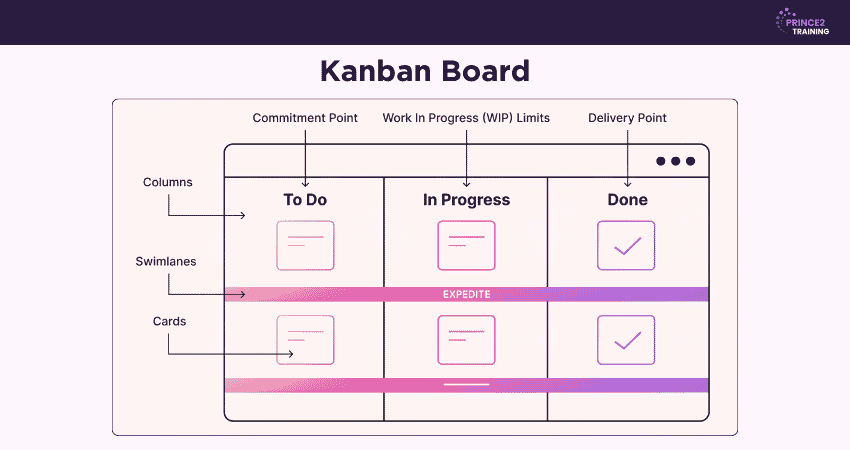
Kanban Boards are Workflow Management tools that visually organise tasks into stages such as “To Do,” “In Progress,” and “Completed.” They help teams monitor work status, improve collaboration, and manage workloads more efficiently. Kanban Boards are widely used in Agile and operational environments.
Tip: Limit the number of tasks that are in progress to avoid team overload and improve productivity.
Example: A Software Development team utilises a Kanban Board to track bug fixes, feature development, and testing activities during a product release cycle.
28) Generative AI-enhanced Project Management Software
Generative AI-enhanced Project Management Software uses Artificial Intelligence to automate tasks, improve decision-making, and support project planning. These tools can generate task summaries, create schedules, predict risks, automate reporting, and assist teams with project communication.
Tip: Use Generative AI tools to automate repetitive administrative tasks, but always review AI-generated insights and recommendations to ensure accuracy, relevance, and alignment with project goals.
Example: A Project Manager uses an AI-powered Project Management tool to automatically generate meeting summaries, prioritise tasks, and predict project delays based on workload and deadlines. This helps the team respond quickly and maintain project timelines more effectively.
29) Agile Management
Agile Management is a flexible Project Management approach that focuses on continuous improvement, collaboration, and iterative delivery. Teams work in short cycles called sprints to adapt quickly to changing project requirements and customer feedback. Agile supports faster delivery and better team responsiveness.
Tip: Conduct regular team reviews and feedback sessions to improve workflows and project outcomes.
Example: A mobile application team follows Agile Management by releasing small feature updates every two weeks based on user feedback and testing results.
30) Project Portfolio Management
Project Portfolio Management (PPM) is the process of managing multiple projects and programmes together to align them with organisational goals. It helps businesses prioritise investments, allocate resources effectively, and monitor overall project performance. PPM improves strategic decision-making and project visibility.
Tip: Prioritise projects based on business value, resource availability, and organisational objectives.
Example: A global IT company uses Project Portfolio Management to oversee Software Development, Cyber Security, and infrastructure projects across different departments.
How to Build Your Project Management Skills?
Building strong Project Management skills requires continuous learning and practical experience. Professionals can improve their skills by managing small projects and leading team activities. Participating in retrospectives also helps individuals understand planning, communication, and problem-solving more effectively. Practical experience builds confidence over time.
Learning from experienced Project Managers can improve knowledge and decision-making skills. Professionals can join industry communities and networking platforms to gain insights and guidance. Certification courses also help individuals develop structured Project Management knowledge and improve career opportunities.
Reviewing successful workflows within an organisation helps professionals understand how projects move from planning to completion. It also improves understanding of processes, teamwork, and project coordination. Developing Project Management skills takes time, consistency, and regular practice.
Conclusion
Developing strong Project Management Skills helps you plan well, lead confidently and handle challenges smoothly. With the right mix of communication, leadership, planning, and technical abilities, you can deliver successful projects and grow in your career. Keep learning, stay organised, and practise regularly to manage projects effectively and achieve lasting success.
Boost your career to learn, lead, and deliver with confidence. Join our PRINCE2 Training today!
Frequently Asked Questions
What are the Three Most Important Things in Project Management?
The three most important aspects of Project Management are clear communication, effective planning, and strong Risk Management. Clear communication keeps teams aligned, planning ensures tasks stay on schedule, and Risk Management helps organisations identify and address challenges before they affect project outcomes.
What are the five Pillars of Project Management?
The five pillars of Project Management are:
a) Initiation
b) Planning
c) Execution
d) Monitoring And Control
e) Project Closure
These stages help organisations define goals, manage resources, track progress, control risks, and successfully complete projects while meeting quality, budget, and timeline requirements.
What are the Ten Knowledge Areas of Project Management?
The ten knowledge areas of Project Management are:
a) Integration
b) Scope
c) Schedule
d) Cost
e) Quality
f) Resource
g) Communication
h) Risk
i) Procurement
j) Stakeholder Management
These areas help Project Managers plan, execute, monitor, and control projects effectively while meeting organisational objectives and expectations.



 Continue Browsing