01344203999




 Back
Back


Table of Content

08-Sep-2026

Maria Thompson
Think about the last project you worked on. It probably began with excitement, clear plans, and big expectations. But as the work progressed, did things start to feel overwhelming, unclear, or harder to control? That shift from confidence to chaos is common, and it is exactly why Project Management Principles matter.
To prevent confusion and keep projects running smoothly, teams need a clear way of working. Project Management Principles provide that structure, helping teams stay focused, organised, and ready for change. In this blog, we will explore the core principles of Project Management that turn well-planned ideas into successful results. Let's dive in!
Top 12 Principles of Project Management
The Principles of Project Management are fundamental guidelines that shape how projects are planned, executed, monitored, and completed across different industries and organisational environments. They provide structure and direction, helping teams work efficiently while managing risks and changes.
These principles support consistency across projects and help organisations control resources, timelines, and outcomes. They promote accountability, collaboration, and continuous improvement while ensuring project goals deliver real value. Below are the key Principles of Project Management that guide successful project delivery:
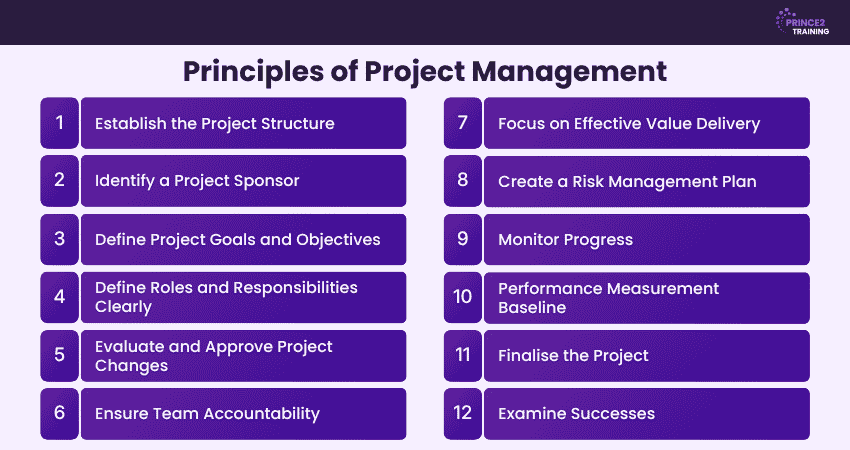
1) Establish the Project Structure
Establishing the project structure creates a clear framework that defines how work will be organised, governed, and delivered. It outlines reporting lines, decision authority, communication channels, and control mechanisms, ensuring everyone understands how the project operates from initiation to closure.
A well-defined structure improves coordination across teams and prevents confusion about responsibilities or processes. It supports consistent decision-making, strengthens governance, and enables efficient resource allocation, helping project activities remain organised, predictable, and aligned with objectives throughout the lifecycle.

2) Identify a Project Sponsor
Identifying a Project Sponsor is an important step in any project. A Project Sponsor is usually a senior person in the organisation who supports the project and has the authority to approve budgets and key decisions. Choosing the right sponsor ensures the project has strong leadership and clear direction from the beginning.
The sponsor connects the project team with senior management. They help solve major problems, provide guidance, and make sure the project stays aligned with business goals. An active sponsor increases confidence, keeps the project supported, and helps the team succeed throughout the project lifecycle.
3) Establish Project Goals
Establishing project goals defines what the project must achieve and why it matters to the organisation. Clear objectives provide direction for planning, execution, and evaluation, ensuring all activities contribute to measurable outcomes that support broader business priorities and strategic success.
Well-defined goals guide decision-making and help teams prioritise work effectively. They create shared expectations among stakeholders, simplify performance measurement, and enable progress tracking, ensuring resources are used efficiently and efforts remain focused on delivering meaningful results within defined constraints.
4) Define Project Goals and Objectives
Defining roles and responsibilities ensures every team member understands their duties and authority within the project. It clarifies decision-making rights, reporting relationships, and task ownership, reducing duplication of effort and preventing confusion that could delay progress or weaken accountability.
Clear role definition improves collaboration because individuals know how their work connects with others. It supports effective communication, strengthens responsibility for outcomes, and enables smoother coordination across teams, ensuring tasks are completed efficiently, consistently, and in alignment with project objectives.
5) Evaluate and Approve Project Changes
Managing project changes involves evaluating proposed adjustments to scope, schedule, or resources before implementation. A structured process assesses impact, risks, and benefits, ensuring decisions are informed and controlled, rather than reactive, protecting project stability and maintaining alignment with agreed objectives.
Effective Change Management prevents uncontrolled scope expansion and helps teams adapt responsibly to new requirements. It keeps stakeholders informed, updates plans when necessary, and preserves project integrity, ensuring modifications support value delivery without disrupting timelines, budgets, or overall strategic direction.
6) Ensure Team Accountability
Holding teams accountable means setting clear expectations and ensuring responsibilities are fulfilled as planned. Accountability promotes ownership of tasks, encourages commitment to deadlines, and reinforces performance standards, helping maintain consistent productivity while reducing delays, errors, and missed deliverables across project activities.
Accountability also supports transparency and continuous improvement. Regular feedback, performance monitoring, and constructive review help identify issues early and guide corrective action. When individuals understand their impact on outcomes, teams remain motivated, focused, and committed to delivering reliable project results.
7) Focus on Effective Value Delivery
Focusing on effective value delivery ensures project outputs create meaningful benefits for stakeholders and the organisation. It emphasises outcomes rather than activity, encouraging teams to prioritise work that improves performance, supports strategy, and generates measurable long-term impact beyond simple completion.
This principle requires continuous evaluation of whether project efforts contribute to real business value. By aligning deliverables with stakeholder needs, teams make better decisions, allocate resources wisely, and ensure results provide sustainable advantages and practical organisational improvement over time and change.
Take your Project Management expertise to the next professional level through the PRINCE2® Practitioner Training – Register now!
8) Create a Risk Management Plan
Risk Management identifies potential threats that could affect project objectives, timelines, or resources. It involves analysing likelihood, assessing impact, and developing response strategies, allowing teams to prepare proactively and minimise disruptions that might otherwise delay progress or reduce project effectiveness.
Ongoing risk monitoring ensures emerging issues are recognised quickly and managed effectively. By planning mitigation actions and contingency responses, teams remain resilient and adaptable, maintaining stability even under uncertainty while protecting budgets, schedules, quality, and overall project performance throughout execution.
9) Monitor Progress
Monitoring progress tracks actual performance against planned targets for scope, schedule, and cost. Regular measurement highlights deviations early. This allows timely corrective action that keeps activities aligned with expectations. It also ensures work continues moving steadily toward successful project completion and stakeholder satisfaction.
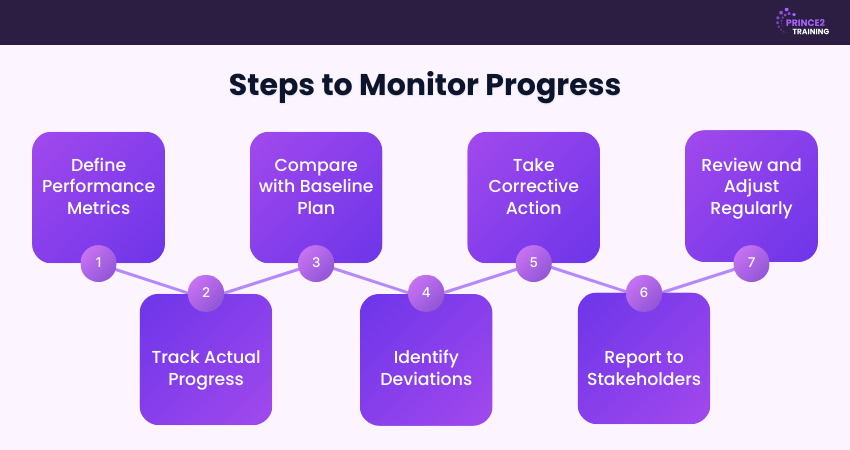
Consistent progress monitoring supports informed decision-making and transparent communication with stakeholders. Performance data reveals trends and identifies risks. It also guides necessary adjustments, enabling Project Managers to maintain control and optimise resources. This ensures objectives are achieved efficiently, reliably, and in line with plans.
10) Performance Measurement Baseline
A performance measurement baseline combines the approved scope, schedule, and cost baselines used to measure and control project performance. It provides a clear reference point for comparing planned work with actual results, helping teams identify variances that require investigation or corrective action during execution.
Maintaining a clear baseline strengthens project control and supports accurate forecasting. When performance differs from the approved plan, managers analyse the causes and adjust strategies to restore alignment. This keeps the project measurable, predictable, and effectively governed throughout its lifecycle.
Learn proven Project Management Principles with the PRINCE2® Foundation Training – Join today!
11) Finalise the Project
Finalising the project before completion verifies that deliverables meet requirements and objectives have been achieved. This evaluation checks quality, confirms stakeholder expectations, and ensures all planned work is properly finished before formal closure and transition to operational use or handover.
Pre-completion review also identifies unresolved issues or gaps that require attention before finalisation. Addressing these early prevents rework later and supports smoother closure. It provides confidence that outcomes are complete, reliable, and ready to deliver expected benefits after project conclusion.
12) Examine Successes
Examining successes involves analysing what worked well during the project and why positive results were achieved. This evaluation highlights effective practices, strong decisions, and successful strategies, providing valuable insights that strengthen future planning and improve organisational project capability over time.
Documenting lessons learned and recognising achievements supports continuous improvement and team motivation. Sharing knowledge helps organisations repeat success and avoid past mistakes. Reflecting on outcomes ensures experience becomes practical guidance that enhances performance across future projects and organisational learning culture.
Conclusion
Successful projects require clear direction, strong teamwork, and a focus on continuous improvement. By applying these Project Management Principles, teams can stay organised, respond to change confidently, and deliver results that truly matter. When these principles are followed consistently, organisations can manage complexity more effectively and achieve their goals with greater confidence and long-term value.
Advance your career with globally recognised
PRINCE2 Training
– Join now!
Frequently Asked Questions
Why are Project Management Principles Important?
Project Management Principles are important because they provide a structured approach to planning, decision-making, risk management, and stakeholder engagement. They help teams stay aligned with objectives, improve efficiency, maintain quality, and increase the likelihood of delivering successful projects on time and within budget.
What is the Difference Between Project Management Principles and Project Management Methodologies?
Project Management Principles are broad guidelines that support effective project delivery, while Project Management methodologies are structured frameworks that define specific processes and practices. Principles guide decision-making, whereas methodologies provide a practical approach to managing projects.
What are the Top Five Project Manager Skills?
The top five Project Manager skills are communication, leadership, organisational planning, problem-solving, and adaptability. These skills help managers coordinate teams, overcome challenges, respond to change, and deliver projects successfully on time and within budget.



 Continue Browsing