Contact@prince2training.co.uk
 01344203999




 Back
Back


Table of Content
Have you ever started a project with high energy, only to face confusion or unclear decisions along the way? Many projects struggle not because of a lack of effort, but because they lack proper structure and direction. This is where Project Governance becomes essential. It provides a clear framework that guides teams, defines responsibilities, and keeps everything moving in the right direction.
It creates consistency in how projects are managed, ensures accountability at every level, and keeps communication focused and effective. Clear direction is what turns plans into successful outcomes, and that is exactly what it provides. In this blog, you will learn about what is Project Governance, its principles, types, benefits, and more. Let's begin!
What is Project Governance?
Project Governance is a management framework that guides decision-making, accountability, and oversight throughout a project’s lifecycle. It establishes clear roles, authority structures, and processes to ensure projects align with organisational strategy and deliver intended value.
Project Governance defines how decisions are made and who is responsible for them. It includes elements like steering committees, approval processes, and reporting structures for improving transparency, reducing risks, and increasing the chances of project success.

The Three Pillars of Project Governance Structure
A Project Governance structure is built on three key pillars that ensure effective oversight, clear decision-making, and smooth project delivery. Each pillar focuses on an essential aspect of governance and works together to support successful outcomes. Let’s look at them below:
1) Structure and Framework
This pillar defines the setup of governance, including decision-making hierarchies, reporting lines, and escalation paths. It clarifies where authority lies and how decisions move across the organisation. It ensures the right level of control without creating unnecessary complexity.
2) Roles and Responsibilities
This pillar focuses on who is involved in governance and their responsibilities. Key roles include the Executive Sponsor, Steering Committee, Governance Lead, and Project Manager. Clearly defined roles ensure accountability, better coordination and oversight throughout the project.
3) Information Flow and Communication
This pillar ensures that the right information reaches the right people at the right time. It includes reporting systems, communication channels, and documentation standards that support informed decision-making. This maintains transparency and keeps stakeholders aligned.
What are the Four Principles of Project Governance?
The four core principles of Project Governance form the foundation for managing projects effectively and ensuring successful outcomes. Let’s look at them below:
a) Structure: A clear governance structure defines roles, responsibilities, and authority levels. It ensures the right stakeholders are involved and that everyone understands their role.
b) Oversight: it involves continuously monitoring project progress, performance, and timelines. It helps identify risks early and ensures corrective actions are taken to keep the project on track.
c) Decision-making: Transparent and well-defined decision-making processes are essential. This includes clear approval steps and escalation paths, enabling timely decisions and preventing delays.
d) Accountability: It ensures that each team member and stakeholder is responsible for their role and deliverables. Clearly defined responsibilities improve ownership, performance, and overall project success.
Understand Agile with clarity and control, and build flexible project skills with PRINCE2 Agile® Foundation Training now!
Types of Project Governance Frameworks and Models
Organisations need different Project Governance frameworks based on project size, complexity, and business needs. Each provides a structured way to manage decisions, oversight, and alignment with organisational goals. Let's look at them below:
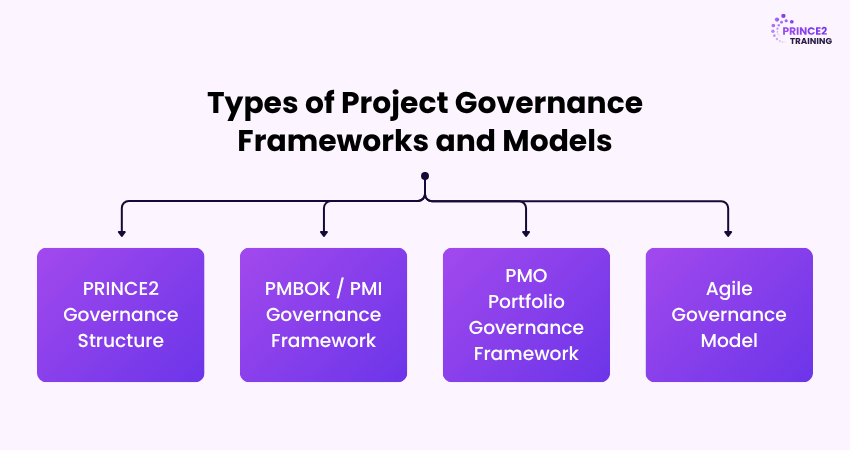
1) PRINCE2 Governance Structure
The PRINCE2 governance model uses a stage-gate approach, dividing projects into controlled phases with approval points at each stage. This ensures that progress is reviewed regularly and decisions are made before moving forward.
A key feature is the project board, which provides oversight and decision-making authority. This model is commonly used in government and enterprise environments, where accountability, control, and clear escalation paths are crucial.
2) PMBOK / PMI Governance Framework
The Project Management Institute’s (PMI)’s PMBOK framework is a structured and process-driven approach, designed for environments where control and predictability are essential. It follows defined phases, such as initiation, planning, execution, monitoring, and closure, ensuring consistency across the project lifecycle.
This framework is widely used in industries like IT, construction, and infrastructure, where projects involve high costs and multiple dependencies. It focuses on detailed documentation, performance tracking, and strong risk management to improve project outcomes.
3) PMO Portfolio Governance Framework
The PMO governance framework operates at a higher, strategic level by overseeing multiple projects and programmes across the organisation. It ensures that all initiatives align with business objectives and are prioritised effectively.
This model helps organisations manage resources efficiently, track performance across projects, and maintain visibility. It is commonly used in large enterprises where coordinating multiple projects is essential for achieving long-term goals.
4) Agile Governance Model
The Agile governance model is flexible and adaptive, designed for environments where requirements change frequently. It integrates governance into short cycles with continuous feedback and collaboration.
This model supports faster decision-making and empowers teams to respond quickly to changes. It focuses on transparency, iteration, and delivering value, making it ideal for Software Development and product-based organisations.
Blend Agile speed with structured control and deliver projects faster without losing control by joining the PRINCE2 Agile® Foundation and Practitioner Training today!
How to Build an Effective Project Governance Framework?
Building an effective Project Governance framework requires a structured approach that balances control with flexibility. The goal is to create a system that supports clear decision-making, accountability, and efficient project delivery. Let’s look at the steps below:
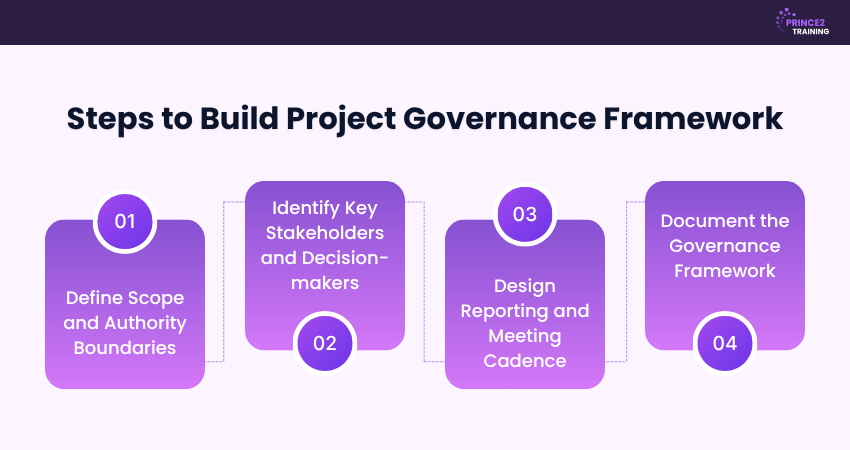
Step 1: Define Scope and Authority Boundaries
The first step is to clearly define what the Project Governance framework will cover and where decision authority lies. This helps avoid confusion, prevents micromanagement, and ensures decisions are made at the right level.
Key Actions:
a) Define Scope Boundaries: Clarify what is included within governance and what is handled at the project level.
b) Classify Decision Types: Identify which decisions require governance oversight and which can be delegated.
c) Create a Governance Charter: Document roles, responsibilities, and decision rights across all levels.
Step 2: Identify Key Stakeholders and Decision-makers
A strong Project Governance framework depends on clearly defined roles and stakeholder involvement. Identifying the right people ensures accountability and effective decision-making throughout the project.
Key Actions:
a) Map Stakeholders: Identify individuals based on their influence, interest, and involvement.
b) Define Decision Roles: Clarify who participates in decisions at different governance levels.
c) Create a Governance Structure: Develop a clear visual representation showing reporting lines and responsibilities.
d) Set Terms of Reference: Outline roles, meeting frequency, and authority for each governance body.
e) Use a RACI Matrix: Define who is Responsible, Accountable, Consulted, and Informed.
Step 3: Design Reporting and Meeting Cadence
Effective Project Governance relies on timely information and regular communication. Establishing structured reporting and meeting schedules ensures decisions are based on accurate and relevant data.
Key Actions:
a) Define Information Needs: Identify what data is required for effective oversight.
b) Develop Key Metrics: Use KPIs, risk indicators, and status reports to track performance.
c) Set Meeting Schedules: Establish a consistent cadence for Project Governance reviews.
d) Standardise Meetings: Create clear agendas and decision-making protocols.
Step 4: Document the Governance Framework
The final step is to document the entire Project Governance framework to ensure clarity and consistency. A well-documented plan acts as a single source of truth for all governance activities.
Key Actions:
a) Compile Documentation: Include structure, roles, processes, and reporting requirements.
b) Establish a Single Reference Point: Ensure all stakeholders follow the same governance guidelines.
c) Manage Access: Control permissions to maintain security and clarity.
d) Review Regularly: Update the framework to reflect changes in the project or the organisation.
Understand project fundamentals with clarity and ease by joining the PRINCE2® Foundation Training today!
Benefits of Effective Project Governance
Project Governance helps organisations manage projects with better control and alignment. It ensures that leadership expectations are connected to project execution, reducing confusion and improving overall performance. Let’s look at its key benefits below:
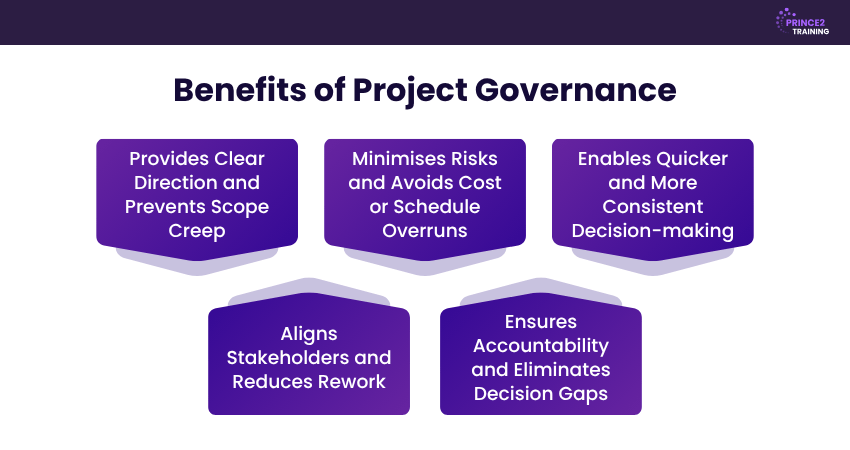
1) Provides Clear Direction and Prevents Scope Creep
A well-defined Project Governance framework keeps the project aligned with its original goals and objectives. It reduces ambiguity and prevents unnecessary changes, helping teams avoid scope creep and stay on schedule.
2) Minimises Risks and Avoids Cost or Schedule Overruns
Effective Project Governance enables early identification and management of risks. By addressing issues proactively, organisations can reduce the chances of delays, budget overruns, and unexpected disruptions.
3) Enables Quicker and More Consistent Decision-making
With clearly defined decision authority and escalation paths, Project Governance ensures that decisions are made quickly and by the right people. This improves efficiency and prevents delays caused by unclear ownership.
4) Aligns Stakeholders and Reduces Rework
Project Governance ensures that stakeholders are involved at the right stages of the project at the right time. This helps organisations avoid last-minute changes, reduces misunderstandings, and minimises rework caused by misaligned expectations.
5) Ensures Accountability and Eliminates Decision Gaps
Clear roles and responsibilities ensure that individuals are accountable for decisions and outcomes. This reduces confusion, prevents unresolved issues, and ensures smoother Project Governance and execution.
Lead complex projects with proven confidence by joining the PRINCE2® Practitioner Training now!
Common Challenges in Project Governance Implementation
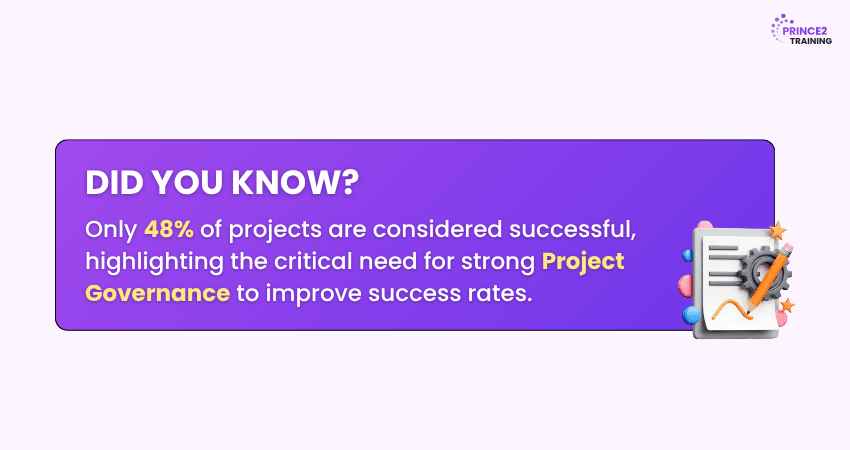
Implementing Project Governance can be challenging because adoption and execution are often inconsistent. While organisations may design strong governance structures, applying them across teams and projects requires alignment and continuous effort. Let’s look at the common challenges of Project Governance and how to solve them below:
1) Limited Understanding and Insufficient Training
Teams are often expected to follow Project Governance processes without fully understanding them. This can potentially lead to inconsistent application, confusion, and gaps during implementation.
Solution:
Provide proper training and integrate governance practices into daily workflows. Use real project examples to show how Project Governance supports better decision-making and successful project delivery.
2) Poorly Aligned Governance Framework
Organisations may adopt a Project Governance model that does not suit the project’s size, complexity, or working style. Rigid frameworks can slow progress, while overly flexible ones can lead to a lack of control.
Solution:
Select and adapt the governance framework based on the project type, scale, and risk level. Use flexible approaches for dynamic projects and structured models for large, complex initiatives.
3) Resistance From Stakeholders Toward Governance
Project Governance introduces structured decision-making and accountability, which some stakeholders may see as unnecessary bureaucracy. Also, teams used to informal processes may resist changes, especially when roles and authority are redefined.
Solution:
Engage stakeholders early by clearly explaining decision rights, roles, and expected outcomes. Position governance to simplify processes and reduce confusion rather than adding complexity.
Conclusion
Project Governance is the foundation that brings clarity, control, and consistency to every stage of a project. By establishing the right structure, roles, and processes, organisations can deliver successful outcomes consistently with confidence. Also, adopting strong governance ensures long-term value, making it an essential practice for any organisation aiming for project success.
Bring clarity and control to every project and build smarter projects with PRINCE2 Training – Join now!
Frequently Asked Questions
What are Five Parts of a Strong Governance Plan?
The five parts of a strong governance plan include:
a) Defined roles and responsibilities to ensure accountability
b) Clear decision-making processes support timely approvals
c) Risk and issue management reduces disruptions
d) Reporting and communication improve transparency
e) Performance metrics track success and ensure compliance
What is a Governance Checklist?
A governance checklist is a structured tool used to ensure an organisation follows policies, regulations, and best practices. It verifies compliance, improves transparency, manages risks, and ensures accountability. This supports effective decision-making and alignment with organisational goals.
What are the Key Roles in Project Governance?
The key roles in Project Governance include:
a) Project Sponsor: Owns the project and provides strategic direction
b) Steering Committee: Makes key decisions and offers oversight
c) PMO: Ensures governance processes are followed
d) Project Manager: Leads execution and delivers project outcomes



 Continue Browsing