Contact@prince2training.co.uk
 01344203999




 Back
Back


Table of Content

16-Jun-2026

David Walter
Did you know that your surroundings shape who you become? You’re not just you; you are a reflection of the people you meet, the habits you form, and the world you grow up in. Now, think of a project in the same way. Its success doesn’t just depend on plans and deadlines because its environment has a profound influence on it.
From team dynamics and company culture to economic shifts and political changes, the Project Environment plays a powerful role. So, dive into this blog, understand what is Project Environment and uncover how it all comes together to transform your project from the inside out!
Table of Contents
1) What is the Project Environment?
2) What are the Types of Project Environment?
3) Project Environment Analysis Methods
4) Advantages of Project Environment
5) Conclusion
What is the Project Environment?
The Project Environment is the mix of all the internal and external things that can affect a project. This could include your team’s structure, company rules, market trends, or even the weather. These factors can help your project succeed or cause problems.
Moreover, it plays a big role in how a project is planned and carried out and how it succeeds. If you are able to understand your environment well, you can plan better, avoid risks, and handle changes more smoothly.

What are the Types of Project Environment?
Knowing beforehand of what is Project Environment modifies the way your project is carried out. It also includes several types. Here are some of them:
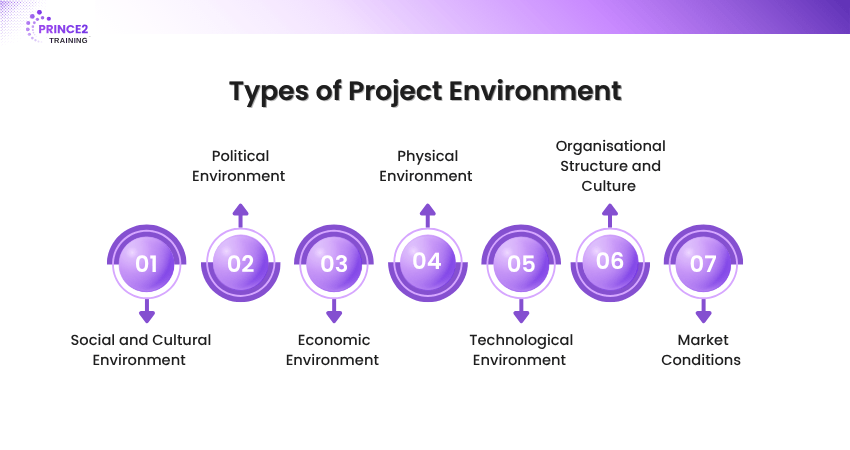
1) Social and Cultural Environment
The social and cultural environment includes the customs, beliefs, values and behaviours of the people in the project. It even includes how people work together, how they communicate, and what is expected. If your team is from different countries or cultures, understanding these differences is essential.
For example, if you are working with an international team, then you will need to understand their time zone differences, holidays, and communication styles.
2) Political Environment
Politics can affect how projects are allowed to run. This includes government rules, laws, policies, elections, political stability, and even tax rules. If your project is in a country with frequent changes in laws or unstable politics, you need to be careful and plan for changes. So, if you are working on a public project, government changes can delay or stop the work.
For private projects, you may have to follow new laws, such as data protection rules or environmental regulations.
3) Economic Environment
As one of the Project Environment types, the economic environment is all about money and the economy. The economy affects project budgets, staffing, and supplies. Things like inflation, currency rates, or job markets can raise costs or slow down hiring. A strong economy can help your project, while a weak one can make things harder.
For instance, if prices for raw materials are increased, then your project may need a higher budget. Knowing the economic ranges helps you plan smarter and avoid surprises.
Obtain proficiency in using Project Management tools and methodologies with our
Introduction to Project Management Training
- Register now!
4) Physical Environment
In general, the physical environment refers to the natural and built surroundings of your project. Weather, terrain, and local infrastructure are all part of it. This is very important for projects that are in construction or logistics. If a project is in a remote area or in a flood zone, then planning needs to include safety, transport, and backup options.
In such cases, if you are building something in a rainy area, you will need to plan for weather delays. It also includes things like roads, buildings, and access to materials.
5) Technological Environment
Technology can help your project move faster and smoothly. This covers the tools, systems, and digital platforms used for your project. It can be a challenge if changes are quick or if your team is not yet trained. Rapid changes in technical areas can be helpful and tricky. You will need to make sure your systems are up-to-date, secure, and able to grow.
For example, using outdated software could slow down the team or cause errors, while the right tech can make everything run faster and smoother.
6) Organisational Structure and Culture
This is about how your company is set up and the values of how people work together. A company with clear roles and good teamwork will support your project better. A flexible, open culture, on the other hand, might allow quick decisions, while a more traditional setup could slow things down with extra approval steps. If you match your project’s approach to your company’s way of working, you will find it easier to get support and move forward smoothly.
7) Market Conditions
Market conditions include customer needs, competition, and supplier availability. It advises that the projects that create products or services need to watch the market to stay useful and in demand. If the market is changing fast, your project needs to adapt to it. Learning what your customers want and what competitors are doing helps you stay ahead.
For instance, if a customer's tastes change, your project may need to adjust its goals or features. Keeping an eye on the market helps avoid falling behind.
Build your Project Management core by signing up for our PRINCE2® Foundation Training immediately!
Project Environment Analysis Methods
Analysing the Project Environment helps you understand what exactly is happening around your project and how to deal with it. Here are some common tools and methods used to study Project Environments:
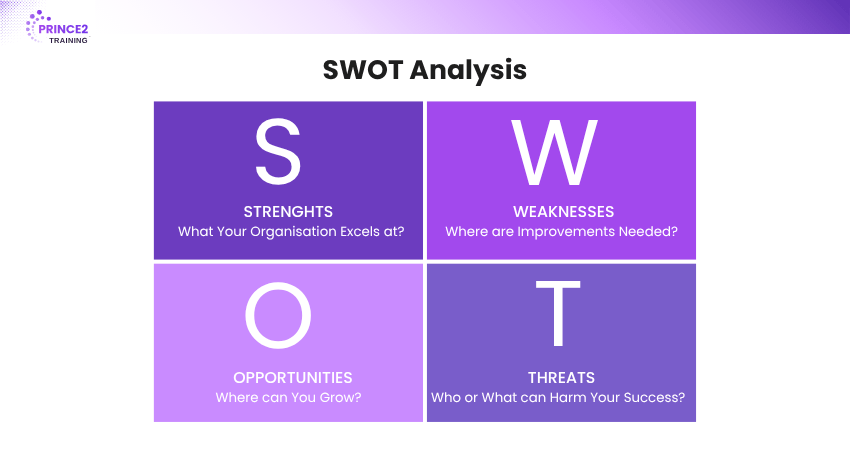
Method 1: SWOT Analysis
SWOT could be elaborated as Strengths, Weaknesses, Opportunities, and Threats. It helps you understand what your project is good at, where it struggles, the chances to grow, and the risks it faces. This tool helps you see the big picture and plan wisely, particularly when you are starting something new or making changes.
Method 2: PEST Analysis
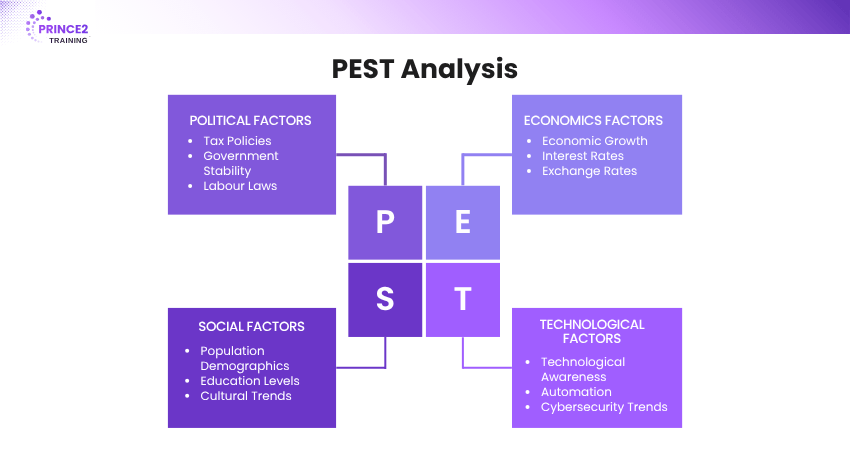
PEST is the short form for Political, Economic, Social, and Technological factors. It assists you in understanding government rules, policies, money, habits and the culture of people, and the tools and systems you use. This analysis helps you look at outside factors that can affect your project. A more detailed version is called PESTLE, which adds Legal and Environmental factors, too.
Method 3: Porter's Value Chain
The Porter's Value Chain looks at your company’s main activities, like buying materials, making products, and selling them to see where you can add value. It focuses on main activities like making and selling products and support activities like Human Resources and Information Technology. This helps you find ways to improve and use resources better.
Method 4: Porter's Five Forces
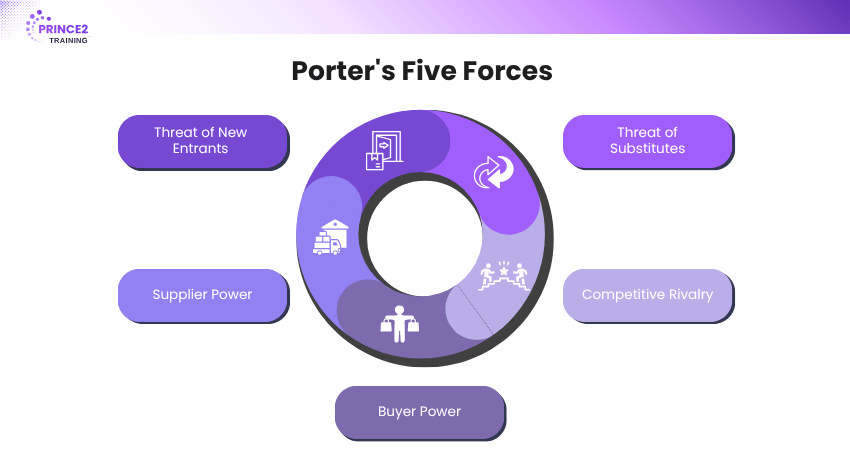
This method looks at how competitive your market is and checks the current competition in your industry. It focuses on five things: new competitors, customer power, supplier power, substitute products, and existing competition. These help you understand your market and plan your strategy. It suits you better if your project is launching something new in the market.
Method 5: Stakeholder Analysis
Stakeholders are people who think and care about your project. Thus, Stakeholder Analysis helps you find out who is affected by your project, who has power over it, and what they care about. Knowing this helps you manage expectations, keep people informed, and avoid conflict. It is key to getting support and making sure the right people are involved.
Are you dreaming of leading projects with greater confidence and precision? Make it possible by joining our
PRINCE2® Practitioner Training
anytime soon!
Advantages of Project Environment
Project Environment can be a great choice to implement for your business. Since it focuses on all perspectives rather than only on the project and its needs, it will bring more positive outcomes. Here are some of the advantages of it:
1) Improved Accountability
a) Roles and responsibilities need to be defined from the start
b) Employees understand how their tasks contribute to overall project success
c) Encourages personal ownership and commitment
d) Makes it easier to track performance and individual contributions
e) Supports better decision-making based on responsibilities
2) Defined Communication Channels
a) Tools like emails, dashboards and regular meetings are established
b) Helps to share regular updates with the right people
c) Encourages open conversation among all project stakeholders
d) Reduces any sort of miscommunication and missed information
e) An easier resolution to any kind of conflict
3) Strengthened Team Collaboration
a) Creates an environment where teamwork is encouraged
b) An open feedback practice encourages continuous improvement
c) Builds mutual trust and respect among employees and Managers
d) Enhances problem-solving through team discussions
e) Boosts creativity and innovation through group collaboration
4) Efficient Resource Allocation
a) Maintains that the right people are working on the right tasks
b) Helps prioritise the use of time, budget, and manpower
c) Minimises delays due to poor planning or resource shortages
d) Supports cost control and budget tracking
e) Supports scalability when projects grow or change
5) Proactive Risk Management
a) Builds confidence among stakeholders by reducing surprises
b) Early identification of risks allows for timely action
c) Prepared backup plans reduce the impact of unexpected issues
d) Improved project outcomes by staying ahead of challenges
e) Fewer project delays due to well-planned risk responses
Conclusion
The Project Environment includes anything and everything that can affect your project, that is, inside and outside your business. By understanding it, you can do better planning, avoid risks, and lead your team to success. It helps you deal with change, avoid surprises, and deliver better results. In today’s world, knowing your Project Environment is not just helpful; it is a necessity.
Implement faster delivery and better Risk Management by registering for our PRINCE2 Agile® Foundation Training now!
Frequently Asked Questions
What is a Project Environments Example?
A Project Environment includes all the internal and external factors that affect a project. For example, if you are building a new app for your business, your Project Environment includes your team, your company’s tools, customer needs, data privacy laws, and your competitors' actions. All these elements influence how you plan and deliver the project.
What is Project-based Environment?
A project-based environment is a workplace where most of the work is done through projects. Teams are formed for each project, and they move on to the next when one project is over. This is common in industries like construction, IT, consulting, and design.
What is a PMO Environment?
A Project Management Office (PMO) environment is a structure within a company that provides support, tools, templates, and processes for managing projects. It helps ensure projects are consistent, well-organised, and aligned with company policies. The PMO environment makes Project Management more efficient and standardised across the organisation.



 Continue Browsing