01344203999




 Back
Back


Table of Content

19-Oct-2026

Maria Thompson
Balancing ambition with financial reality is essential for smooth project execution. This is where the discipline of predicting, planning, and controlling costs becomes critical to keeping projects on track. That discipline is known as Project Cost Management. By managing costs effectively, teams can maintain control and deliver projects that remain profitable and achievable.
In this blog, we explain what Project Cost Management really means, walk through its key steps, outline practical benefits, and share smart tips to help teams prevent cost overruns. Read on to learn how to make your project budget work for you, not against you.
What is Project Cost Management?
Project Cost Management is the process of planning, estimating, budgeting, financing, funding, managing, and controlling project costs to ensure the project is completed within the approved budget. It focuses on monitoring expenditure and maintaining financial control throughout the project lifecycle. From early planning to tracking actual costs and final closure, Cost Management supports timely delivery and sustainable project performance.
Why is Project Cost Management Important?
Project Cost Management is essential because it establishes clear financial boundaries for planning and delivery. By defining an approved Project Budget early on, organisations can break the overall costs into manageable tasks and detailed expense categories.
A well-defined budget supports proper choices around resource allocation, scope, quality standards and delivery approaches.
Without it, tracking progress, controlling spending, and assessing performance becomes difficult. Cost Management provides the structure needed to maintain financial control and ensure successful project outcomes.
The 4 Steps in Project Cost Management
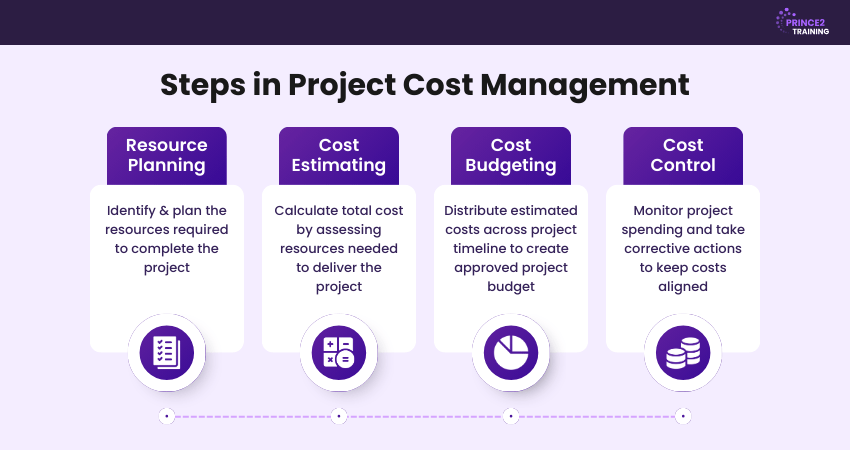
Proper Project Cost Management is built around four core stages: resource planning, cost estimating, cost budgeting, and cost control. Together, these steps provide a structured approach to planning project finances. Let's take a detailed look at each stage:
Step 1: Resource Planning
Resource planning is the starting point of Project Cost Management. It focuses on identifying and planning future resource requirements for a project or a defined scope of work. This includes determining how physical, human, financial and informational resources will be used to complete project activities. At this stage, these structures are developed:
1) Work Breakdown Structure (WBS): It divides the project scope into manageable work packages.
2) Organisational Breakdown Structure (OBS): It groups labour resources and responsibilities, thus ensuring accountability for all resources.
3) Resource Breakdown Structure (RBS): It categorises all resource types, including labour, equipment and materials, into a structured hierarchy for detailed planning and tracking.
Step 2: Estimating Project Costs
Cost estimating is a predictive process used to assign monetary values to the resources required to deliver a project. It converts scope-related information into financial data that supports business planning, Cost Analysis, and decision-making.
Cost estimating must be aligned with schedule development, as changes in resource requirements can directly affect activity durations and timelines.
Because estimates often influence scope decisions, the process is iterative. Cost adjustments often lead to changes in scope or execution plans, making estimating an integral part of scope definition.
Step 3: Cost Budgeting
Cost budgeting involves allocating estimated costs to specific cost accounts, thus creating a cost baseline against which project performance can be measured. This baseline is essential for monitoring expenditure, identifying deviations, and taking corrective action when required.
Cost accounts must align with the organisation's chart of accounts to support accurate cost tracking and reporting. Budgets are commonly time-phased to match the project schedule or to reflect funding and cash flow requirements.
Step 4: Cost Control
Cost control focuses on monitoring the actual costs against the approved cost baseline and managing variances. It includes tracking expenditures, measuring performance and implementing corrective actions to minimise cost overruns. All changes to the cost baseline must be recorded, and forecasts of final project costs should be updated continuously.
When actual cost data becomes available, analysing the reasons for cost variances is critical. Post-project feedback is also an important part of cost control. Capturing actual cost data and feeding it back into cost models improves the accuracy and reliability of future estimates.
Build the skills and mindset to manage projects from day one. Sign up for our
Introduction to Project Management Training
now!
Benefits of Project Cost Management
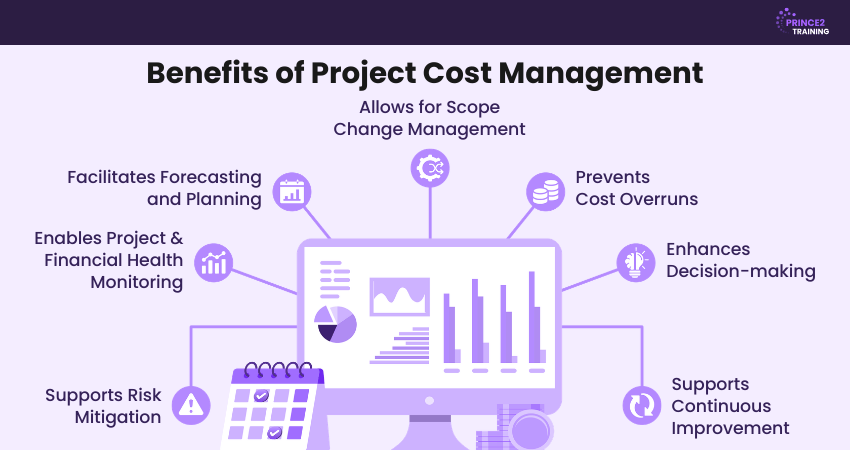
Here are the main benefits of Project Cost Management:
1) Risk Mitigation
Cost Management helps teams identify financial risks early on and apply the right measures to minimise their impact, thus supporting smoother project delivery. It reduces uncertainty and improves financial resilience throughout the project.
2) Project and Financial Health Monitoring
Consistent cost tracking, monitoring and reporting using indicators such as Cost Performance Index (CPI) and Schedule Performance Index (SPI) improve budget control and support informed decisions. This transparency enables stakeholders to understand project financial health clearly.
3) Facilitates Forecasting and Planning
Analysing spending trends and resource utilisation strengthens financial planning and enables more accurate future cost estimates. This leads to more realistic budgets and achievable financial targets.
4) Enables Scope Change Management
Cost Management makes it easier to evaluate the financial impact of scope changes and ensure adjustments remain within approved limits. It supports controlled decision-making when project requirements evolve.
5) Ensures Budget Accuracy and Prevents Cost Overruns
A structured Cost Management approach detects budget variances early and supports timely corrective actions to prevent overruns. This helps maintain alignment between planned and actual expenditure.
6) Enhances Decision-making
Access to reliable cost data supports confident, evidence-based decisions throughout the project life cycle. It ensures choices are aligned with financial objectives and constraints.
7) Supports Continuous Improvement
Reviewing cost performance across projects helps establish benchmarks, compare outcomes and improve planning and execution in future initiatives. This promotes organisational learning and long-term cost efficiency.
Lead adaptive projects with the energy of Agile and the discipline of PRINCE2®. Sign up for our PRINCE2 Agile® Practitioner Course now!
Challenges for Project Cost Management
Project Cost Management is highly effective, but it comes with several challenges that must be addressed. Common issues include:
1) Uncontrolled Scope Expansion: When scope boundaries are poorly managed, projects tend to grow. This can lead to increased costs and budget overruns.
2) Inaccurate Cost Forecasts: Early estimates may be unreliable due to poor data quality, optimistic assumptions or communication gaps. This can lead to incorrect budgets from the start.
3) Insufficient Cost Tracking: Weak monitoring systems can delay the detection of overspending, thus allowing financial issues to escalate.
4) Market Volatility: Sudden changes in material prices, labour rates, or currency exchange values can significantly impact project costs, particularly for international projects.
5) Resource Constraints: Limited availability of skilled personnel, equipment, or materials can increase costs and disrupt budget plans.
6) Complex Change Control: Managing project changes and formal change requests can be challenging and may significantly inflate costs if not controlled, while still ensuring contractual compliance.
7) Improper Stakeholder Communication: Weak communication with stakeholders can reduce trust and intensify cost-related issues.
8) Outdated Tools and Methods: Relying on inefficient or outdated Project Management tools makes it harder to monitor, analyse and control project costs.
Project Cost Management Tips
Here are some proven points to consider when controlling project costs properly:
1) Prepare for Disruptions: Set aside contingency funds for unforeseen events such as adverse weather, personal issues, or unexpected delays.
2) Allow for Inflation: Costs can fluctuate, so build flexibility into your budget to accommodate price changes over time.
3) Anticipate Hidden Expenses: Some costs arise from legal matters, penalties, or unplanned labour requirements. While it is hard to predict, awareness helps shape a more resilient budget.
4) Monitor Costs in Real Time: Use reliable tools that provide up-to-date financial data, enabling quick action when variances occur.
5) Apply Cost Control at Every Scale: Cost Management is essential for all projects, regardless of size, to ensure financial discipline throughout delivery.
6) Act Without Delay: Address cost discrepancies as soon as they appear. Delays in response can quickly escalate expenses.
Conclusion
Project Cost Management provides the structure needed to keep projects financially stable and on track. By applying accurate estimation, realistic budgeting, and continuous cost tracking, teams gain better visibility, control, and confidence. With the right approach, cost challenges can be managed proactively, helping projects achieve successful delivery within approved budgets.
Deliver projects with confidence and control with our range of PRINCE2® Courses – Register now!



 Continue Browsing