Contact@prince2training.co.uk
 01344203999




 Back
Back


Table of Content

24-Sep-2026

Maria Thompson
Have you ever worked on a project where team members had different expectations, deadlines kept shifting, or important decisions created confusion? These challenges are common when projects begin without a clear structure or shared understanding. A Project Charter helps organisations avoid such issues by setting clear goals, defining responsibilities, and establishing a strong direction from the very beginning.
It acts as a roadmap that keeps teams aligned, stakeholders informed, and project objectives focused throughout the project lifecycle. Whether you are leading a business initiative or managing client work, understanding how to create an effective Project Charter can improve planning, communication, and project success. Let’s explore its importance, key components, benefits, and more.
What is a Project Charter?
A Project Charter refers to documentation that defines the key foundations of a project. It serves as an internal document to gain stakeholder approval and provide a guiding framework to keep the project aligned and on track. Much like a concise pitch, it presents the project’s objectives, scope and responsibilities to secure formal authorisation.
The charter explains why the project is necessary by outlining the business case, expected benefits, and required resources. Creating it at the start of the planning phase allows risks to be identified early and enables informed approval before execution begins.

Why is a Project Charter Important?
A Project Charter is important because it provides official approval to begin a project. Below are some key reasons why a Project Charter is essential:
1) Keeps the Team Informed
A Project Charter gives team members a clear overview of the project, including objectives, scope, timelines, responsibilities, and key deliverables. This helps everyone understand their role and work towards shared goals.
2) Emphasises Project Value
The Project Charter explains how the project supports organisational goals and business needs. It helps stakeholders understand the importance of the project and the value it aims to deliver.
3) Connects to Portfolio Management
A Project Charter creates a connection between the project and wider business objectives. This makes it easier for organisations to track project performance and measure overall success across multiple projects.
4) Sets a Project Timeline
The Project Charter outlines expected project timelines and major milestones from the beginning. This helps stakeholders set realistic expectations and supports better task planning and scheduling.
5) Defines Success Criteria
A Project Charter clearly explains how project success will be measured. Defining success criteria early helps teams understand expectations and evaluate outcomes more effectively.
Key Components of a Project Charter
A Project Charter includes essential components that provide project direction, clarify responsibilities, and establish expectations from the beginning. Let's look at the components below:
1) Business Case:
Explains why the project is needed, including its expected benefits, costs, and overall business value.
2) Project Purpose:
Defines the main reason for initiating the project and the problem or opportunity it aims to address.
3) High-level Requirements:
Outlines the key goals, deliverables, or outcomes required for project success.
4) Organisational Alignment:
Shows how the project supports the organisation’s overall goals, priorities, and strategic objectives.
5) Overall Project Risks:
Identifies major risks or challenges that could affect project progress or outcomes.
6) Key Milestone Schedule:
Provides a high-level timeline of important milestones, deliverables, and deadlines.
7) Financial Resources:
Confirms the approved budget and financial resources allocated for the project.
8) Project Approval Requirements:
Defines the approval process, decision-makers, and required stakeholder authorisations.
9) Project Exit Criteria:
Explains the conditions that must be met before the project can officially close.
10)
Assigned Project Manager:
Identifies the Project Manager responsible for planning, execution, and project oversight.
11)
Project Sponsor:
Identifies the sponsor responsible for providing support, guidance, and project approvals.
How to Create a Project Charter?
Creating a Project Charter helps organisations define project goals, responsibilities, scope, and stakeholder expectations before project execution begins. Let’s look at the three key elements involved in creating a Project Charter:
1) The "Why"
Start by clearly explaining the project purpose, business need, and expected outcomes. Outline why the project is important and how it supports organisational goals. Project objectives should follow the SMART approach, meaning they should be Specific, Measurable, Achievable, Realistic, and Time-bound.
2) The "What"
Clearly define the project scope by outlining what is included and excluded from the project. This helps establish clear boundaries and reduces the risk of scope creep. Also, you should include the estimated budget, resource allocation, and important financial assumptions.
3) The "Who"
Identify the Project Manager, stakeholders, sponsors, and team members involved in the project. Clearly defining roles and responsibilities improves accountability, communication, and resource management throughout the project lifecycle.
Combine Agile flexibility and drive faster project success with the
PRINCE2 Agile® Foundation and Practitioner (Version 2) Training
– Join now!
Who Signs and Issues the Project Charter?
The Project Charter is usually developed with input from key stakeholders, including the selected team members, Project Sponsor, Project Manager and Business Analyst. Their contributions ensure the document clearly captures the project’s purpose, objectives, and scope.
Final approval rests with the Project Sponsor, typically a senior decision-maker within the organisation. By signing the charter, the sponsor formally authorises the project to begin and empowers the Project Manager to utilise organisational resources to deliver it.
Benefits of a Project Charter
A Project Charter helps stakeholders understand the value and purpose of a project before work begins. Having one in place provides clarity, alignment and structure throughout the project lifecycle. Its key benefits include:
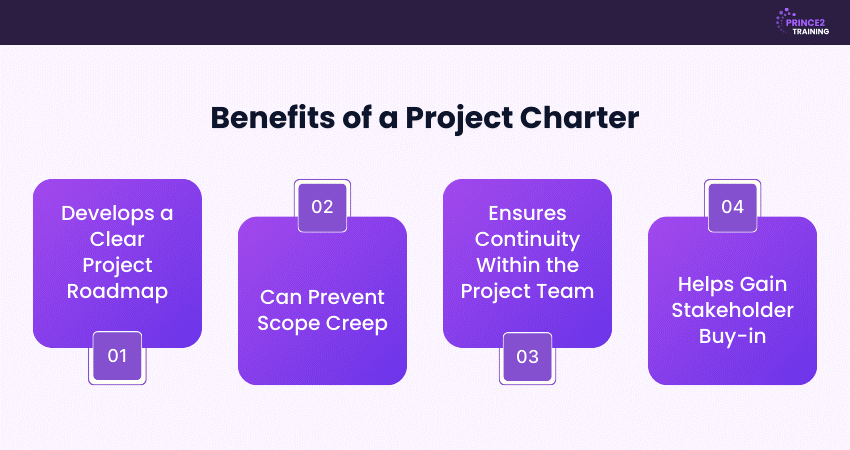
1) Develops a Clear Project Roadmap
The Project Charter outlines the project vision and expectations, giving teams a clear sense of direction. When challenges or uncertainties arise, it serves as a reference point to support decision-making and keep work aligned with project goals.
2) Can Prevent Scope Creep
By clearly defining project boundaries, objectives, and success criteria, the charter minimises misunderstandings. This helps prevent unexpected changes that may increase costs, delay timelines, or affect project outcomes.
3) Ensures Continuity Within the Project Team
When team members join or leave the project, the Project Charter provides consistent guidance. It helps new members quickly understand project timelines, goals, and expectations, ensuring smoother transitions and continuous progress.
4) Helps Gain Stakeholder Buy-in
A well-structured charter acts as a strong internal justification document. It highlights business value, estimated costs, and expected outcomes, making it easier to gain approval, resources, and stakeholder commitment.
Sharpen your Project Management edge with our
PRINCE2® Practitioner Training
– Register now!
Common Mistakes When Creating a Project Charter
Several pitfalls can reduce the effectiveness of a Project Charter if not addressed early:
1) Including Too Much Detail:
A Project Charter should present high-level information. Adding excessive detail can distract readers and reduce its usefulness as a quick reference.
2) Mixing in Team Charter Content:
Blending team-specific details, such as individual duties, with the Project Charter can blur its intent. The focus should remain on overall objectives and direction.
3) Limited Stakeholder Involvement:
Excluding key stakeholders during development may lead to misalignment and future disagreements. Early involvement helps ensure shared understanding and support.
4) Unclear Objectives and Scope:
Vague goals or boundaries create confusion and increase the risk of scope creep. Objectives and scope should be clearly defined from the outset.
5) Unrealistic Timelines and Budgets:
Overly ambitious schedules or cost estimates can undermine project success. Practical, achievable planning supports smoother execution.
6) Poor Risk Identification:
Ignoring potential risks can lead to unexpected challenges. Identifying risks early allows teams to prepare appropriate responses.
7) Weak Communication Guidelines:
Unclear communication methods can slow progress and cause misunderstandings. Clear communication expectations support effective collaboration.
8) Lack of Formal Approval:
Without a sponsor sign-off, the Project Manager may lack authority. Formal approval is essential before moving forward.
9) Failing to Review the Charter When Required
: Although generally stable, the charter may need clarification at times. Not revisiting it, when necessary, can lead to confusion and misaligned expectations.
Start managing Agile projects with confidence by joining the PRINCE2 Agile® Foundation (Version 2) Training today!
Tips and Best Practices of Project Charter
Here are some proven tips on crafting a Project Charter:
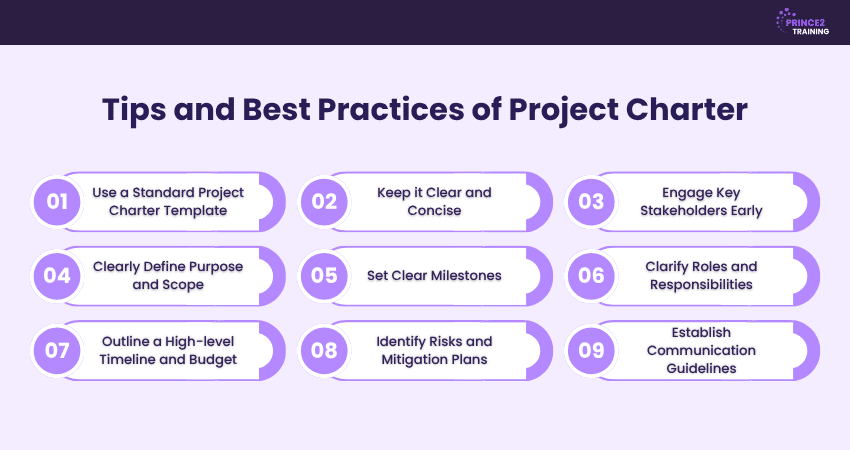
1) Use a Standard Project Charter Template:
Apply a template aligned with your organisation or industry to maintain consistency and follow established guidelines. This also speeds up preparation and ensures no critical sections are missed.
2) Keep it Clear and Concise:
Focus on high-level details that give a strong overview without overloading the document with unnecessary information. A concise charter is easier to understand, review, and approve.
3) Engage Key Stakeholders Early:
Work with relevant stakeholders to gather input and ensure all viewpoints are reflected in the charter. Early involvement builds alignment and reduces resistance later in the project.
4) Clearly Define Purpose and Scope:
State what the project intends to achieve and set clear boundaries to create shared understanding. This helps prevent misunderstandings and unplanned changes.
5) Set Clear Milestones:
Outline major checkpoints to track progress and keep the project moving forward. Project Milestones also help identify delays and corrective actions early.
6) Clarify Roles and Responsibilities:
Clearly define who is responsible for what to support accountability and smooth coordination. Clear ownership reduces confusion and overlaps in work.
7) Outline a High-level Timeline and Budget:
Provide realistic estimates to support planning, tracking and Resource Management. These estimates act as a baseline for performance measurement.
8) Identify Risks and Mitigation Plans:
Anticipate potential challenges and prepare high-level responses to minimise impact. Proactive risk planning increases confidence and project resilience.
9) Establish Communication Guidelines: Define how and when information will be shared to keep the stakeholders informed and aligned. Consistent communication improves transparency and the collaboration process.
Conclusion
A Project Charter helps organisations start projects with clear direction, defined responsibilities, and aligned stakeholder expectations. By outlining objectives, scope, timelines, and success criteria early, it improves communication, reduces project risks, and supports seamless project execution from start to finish.
Structure your success as a project leader with our globally trusted PRINCE2® Training - Sign up now!
Frequently Asked Questions
Is a Project Charter Used in Agile Projects?
Yes, a Project Charter is used in Agile projects. It acts as a guiding document that aligns stakeholders, defines project goals, and provides clear direction while enabling teams to adapt to changing requirements throughout the project lifecycle.
What Tools can be Used to Create a Project Charter?
Project Charters can be created using document tools like Microsoft Word and Google Docs, AI-powered generators like QuillBot, or Project Management platforms like ClickUp and Wrike. These tools help teams organise project details, improve collaboration, and streamline charter creation more efficiently.
What is the Difference Between a Project Charter and a Project Plan?
A Project Charter is a high-level document that formally authorises a project and defines its purpose, objectives, and stakeholders. In contrast, a Project Plan is a detailed roadmap explaining how the project will be executed, including tasks, timelines, resources, responsibilities, and workflows.



 Continue Browsing