01344203999



 Back
Back


Table of Content

08-Aug-2026

Veronica Davis
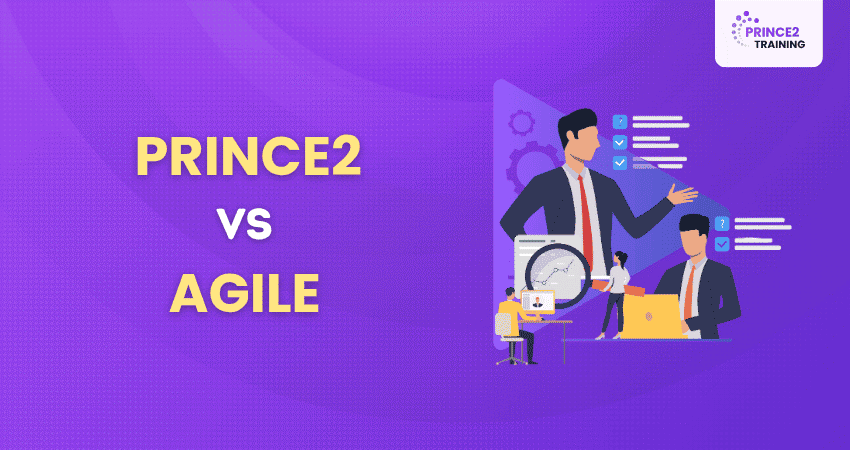
PRINCE2 vs Agile compares two different forms of Project Management, each with its benefits and uses. PRINCE2, a business-focused method, provides a clear structure for controlling large, complex projects. Conversely, Agile is flexible, integrated, and iterative, making it more effective for projects with frequently changing specifications.
Organisations must understand these differences, as it puts them in a position to choose the suitable method that fits their project needs, market requirements, and employees. This understanding fosters a sense of responsibility and proactivity. Are you curious to know more? Keep reading this blog to find out more about them.
Table of Contents
1) What is PRINCE2?
2) What is Agile?
3) Who should use PRINCE2?
4) Who should use Agile?
5) Major differences between PRINCE2 and Agile
6) Conclusion
What is PRINCE2?
Projects IN Controlled Environments (PRINCE2) is a framework for managing projects based on processes that provide a logical and systematic approach to project delivery. Initially used by the UK government, it champions clear responsibility and accountability, defined phases, and product-oriented project execution.
It is important to note that PRINCE2 is flexible and can be adapted for any project regardless of size and industry. It encompasses ideas, concepts, and steps that Project Managers follow through project development phases to manage resources effectively, address risks, and check for quality.
What is Agile?
Agile is a practical and iterative approach to managing projects that incorporates communication, customer feedback, and adaptation to change. Stemming from software production, Agile divides a project into shorter chunks called sprints or iterations, which usually take two to four weeks.
It also means that the groups can regularly revisit the plan's details and make the updates more suitable for the stakeholders' needs. The Agile principles also prioritise individuals and communications, working software, customer interaction, and adapting to change over following processes and documenting. Some of the most popular varieties of Agile are Scrum, Kanban Board, and Extreme Programming (XP), which stress the constant advancement of development and immense flexibility.
Who should use PRINCE2?
PRINCE2 is best suited to organisations and Project Managers that require rigor and structure in Project Management. It benefits large and multifaceted activities that require a clear definition of responsibilities, comprehensive scheduling, and strict regulation. PRINCE2 is especially helpful for industries like government, construction, Information Technology (IT), and finance that rely heavily on regulation compliance and risk mitigation.
This approach will also benefit organisations that need strictly divided phases, detailed documentation, and an emphasis on products. It is also good for those who are looking for an internationally accredited qualification to strengthen their Project Management knowledge and employment profile.
Who should use Agile?
Agile development is ideal for organisations where rapid change is the norm and requirements are volatile. It suits Software Development, startups, and fields, including marketing and product development, which require flexibility, speed, and customer engagement. It is advantageous to the teams that prefer iteration of results, feedback, and constant enhancement.
This is especially useful for projects that need quick amplification, creativity, and the ability to modify quickly. Scrum and Kanban Board are great for any organisation willing to increase collaboration, adapt to customer requirements more effectively and provide the final goods in small increments of high quality.
Learn Agile methods and frameworks with our
PRINCE2 Agile® Foundation Course
– register now!
Major differences between PRINCE2 and Agile
This table of difference will help you understand the differences between PRINCE2 and Agile:
| Aspect | PRINCE2 | Agile |
| Approach | Structured and process-driven | Flexible and iterative |
| Framework | Detailed stages and defined processes | Iterative cycles (sprints/iterations) |
| Documentation | Extensive and thorough | Minimal and just-in-time |
| Roles and responsibilities | Clearly defined | Adaptive and often shared |
| Planning | Comprehensive up-front planning | Comprehensive up-front planning |
| Change management | Limited, with changes requiring formal control | High, with frequent adjustments based on feedback |
| Project Size | Suitable for large, complex projects | Best for dynamic, rapidly changing projects |
| Industry | Widely used in government, construction, IT, finance | Common in Software Development, startups, and innovation-driven industries |
| Customer involvement | Low to moderate, with defined checkpoints | Continuous and collaborative throughout the project |
Conclusion
We hope that from this blog you have understood the comparison of PRINCE2 vs Agile and have understood when and how you can use these two types of Project Management methodologies. With this comprehensive blog, where the comparisons are drawn in detail you can select the appropriate approach that aligns with your organisation and project goals.
Improve your employment opportunities with our
PRINCE2 Agile® Practitioner
– join now!



 Continue Browsing