Contact@prince2training.co.uk
 01344203999




 Back
Back


Table of Content

08-Jul-2026

David Walter
Work today feels busy, connected, and constantly changing. One moment you are focused on your core role, the next you are pulled into a new project with a different manager and team. If that sounds familiar, you are already living in a world shaped by a Matrix Organisational Structure, whether you realise it or not.
This blog explains the Matrix Organisational Structure in a clear and practical way, explaining how it works, its main types, and key benefits. You will also see why many organisations use it to stay flexible, collaborative, and competitive. Let's get started!
What is a Matrix Organisational Structure?
A Matrix Organisational Structure is a hybrid management model where employees report to more than one manager, usually a Functional Manager for their role or expertise and a Project Manager for specific assignments. This creates a grid-like structure rather than a simple top-down hierarchy.
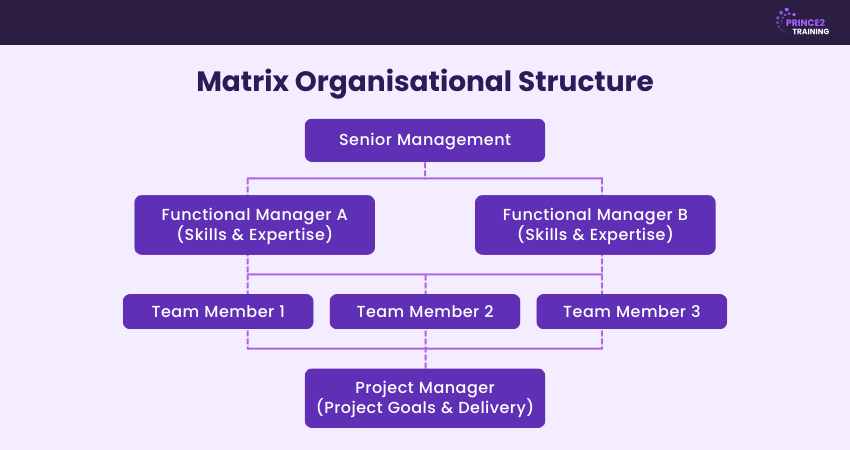
By combining functional teams with project-based work, this structure encourages cross-functional collaboration, better use of resources, and greater flexibility. However, it also requires clear communication and role definition, as dual reporting can sometimes lead to confusion or conflict if not managed properly.

How do Matrix Organisations Work?
In a Matrix Organisational Structure, the focus is on managing projects alongside traditional departments. Here's how it typically works:
1) Two Managers:
Each employee has two managers. One is a Functional Manager, and the other is a Project Manager.
2) Functional Manager:
This manager oversees the department in which the employee works, such as marketing, finance, or IT.
3) Project Manager:
This manager is responsible for a specific project. They focus on ensuring the project runs smoothly, and the team meets deadlines.
4) Collaboration Across Teams:
Since employees are working under both managers, collaboration between departments is essential. This encourages sharing knowledge and resources across teams to achieve project goals.
5) Resource Sharing:
A Matrix Structure allows people, equipment, and budgets to be shared across projects for better resource use. Clear roles and communication help reduce confusion in multi-project environments.
Types of Matrix Structures
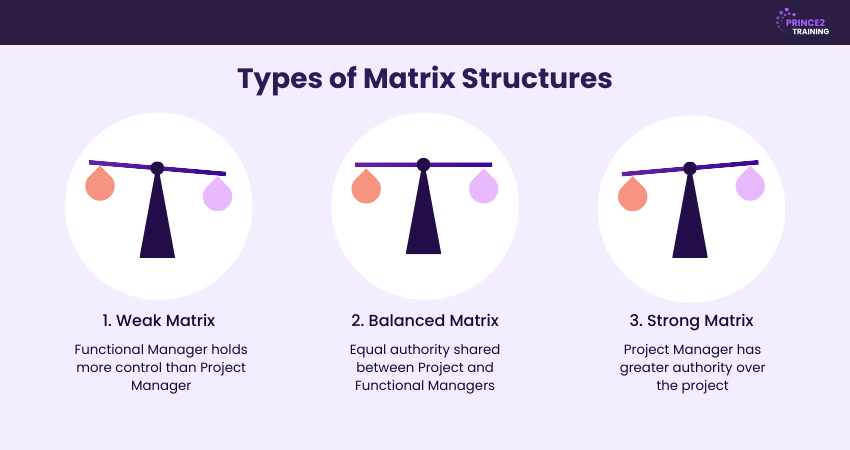
Matrix structures vary based on how authority is shared between Functional and Project Managers. Each type offers a different level of control, collaboration, and decision-making. Below are the three main types of Matrix structures explained clearly.
1) Weak Matrix
In a Weak Matrix structure, most authority remains with the Functional Manager, who controls resources and key decisions. The Project Manager has limited influence and mainly acts as a coordinator, supporting communication and task alignment.
This Matrix structure suits organisations that prioritise functional expertise over project control. It is most effective for smaller, short-term projects where formal Project Management is not a primary focus.
2) Balanced Matrix
A Balanced Matrix structure shares authority between the Functional Manager and the Project Manager. Employees report to both, and each manager has an equal role in decision-making and resource planning.
This shared control encourages collaboration across teams. It works well for organisations managing multiple complex projects that require strong functional input, clear project direction, and accountability.
3) Strong Matrix
In the Strong Matrix structure, the Project Manager holds most of the authority, including control over resources and project decisions. Functional Managers take on a supportive role, ensuring teams have the skills and tools needed to deliver.
This Matrix structure is ideal for large-scale or high-priority projects where speed, accountability, and project success are critical to business growth. It also provides clearer ownership, allowing faster decisions and a stronger focus on delivery outcomes.
Develop the essential project management capabilities with PRINCE2® Foundation Training – Register today!
Why Should You Use a Matrix Organisational Structure?
A Matrix Organisational Structure supports collaboration by allowing employees to report to both functional and Project Managers. This setup helps balance daily operational tasks with project needs, while encouraging better communication and shared responsibility across teams.
It also improves flexibility and resource use by allowing skills and expertise to be shared across multiple projects. This makes it especially effective for organisations working in dynamic environments or managing complex projects that require quick decisions and cross-functional input.
Benefits of Matrix Organisation Structure
Now that we've covered the types of Matrix structures, let's explore the benefits of using this organisational model.
Resource Optimisation
One of the biggest advantages of a Matrix structure is the ability to optimise resources. By sharing employees, budgets, and equipment across multiple projects, organisations can make better use of their resources. This can lead to expense savings and a more efficient workflow.
Information Flow
Matrix organisations encourage the flow of information between departments. Since employees are working with multiple teams, they have access to a broader range of information. This can help teams make more informed decisions and improve overall communication.
Project Manager Training and Development
Working in a Matrix structure provides Project Managers with valuable experience in managing complex projects. It also helps them improve their leadership skills by managing cross-functional teams. Over time, this can help organisations build a stronger pool of skilled Project Managers.
Enhancing Team Retention Strategies
Since employees in a Matrix structure work with multiple teams, it is a game-changing system where they are exposed to new challenges and learning opportunities. This helps keep them engaged and motivated, which can improve retention rates. The chance to work on various projects can make employees feel more valued and give them a sense of career progression.
Improved Agility and Responsiveness
A Matrix structure is flexible and can quickly adapt to changes. If a new project comes up or if there's a need to shift priorities, the structure allows for quick adjustments. This makes the organisation more agile and responsive to changing market conditions.
Accelerated Decision Processes
With multiple reporting lines, decisions can be made more quickly. Employees can get immediate feedback from both their functional and Project Managers, helping to avoid delays. This speed is crucial when working on time-sensitive projects or when dealing with high-priority tasks.
Growth and Learning Opportunities for Employees
Working in a Matrix structure allows employees to gain experience in various areas of the business. They can develop skills that go beyond their immediate job function, which can lead to personal and professional growth. This not only benefits employees but also strengthens the organisation.
Strengthen your ability to manage complex projects and deliver successful outcomes with PRINCE2® Practitioner Training – Sign up soon!
Challenges of Matrix Organisation Structure
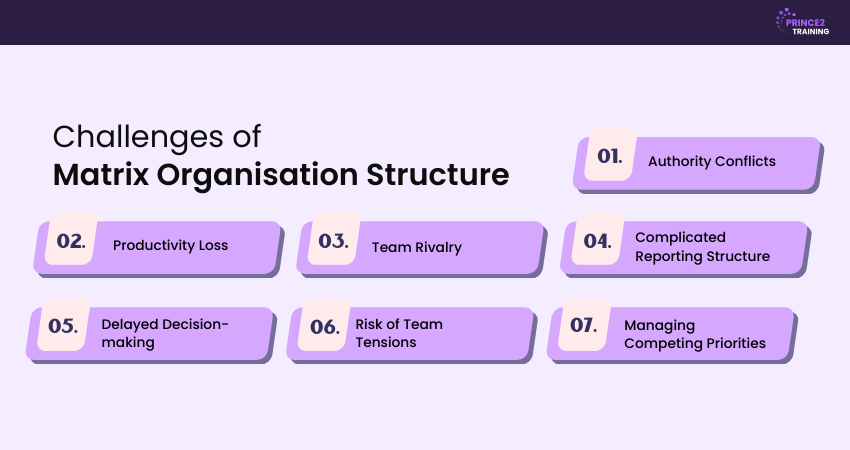
While a Matrix structure has many advantages, it also comes with some challenges. Let's look at the drawbacks:
1) Authority Conflicts
One of the most common issues in a Matrix structure is conflict between Functional and Project Managers. Since employees report to two managers, it can lead to confusion about who has the ultimate authority. This can create tension and inefficiency if not managed well.
2) Productivity Loss
The complexity of working under two managers can sometimes slow things down. Employees may feel overwhelmed by the conflicting demands from both managers. This can result in a drop in productivity and employee frustration.
3) Team Rivalry
Having multiple managers overseeing different aspects of a project can create competition between teams. This can lead to rivalry, where teams focus more on competing rather than collaborating. The organisation must be careful to foster a collaborative environment.
4) Complicated Reporting Structure
With multiple reporting lines, the structure can become complicated and confusing, especially for new employees. It can be difficult to keep track of who reports to whom, and this can create misunderstandings.
5) Delayed Decision-making
Although Matrix structures can lead to faster decisions in some cases, the dual-reporting system can also delay decision-making. When employees need approval from both a Functional and Project Manager, it can lead to delays in getting the green light for important actions.
6) Risk of Team Tensions
Managing teams with different goals can sometimes create tension. Employees may feel torn between the demands of their functional department and the needs of the project. These tensions, if not addressed, can affect team morale and performance.
7) Managing Competing Priorities
Since employees report to two managers, they may face competing priorities. This can lead to stress and a lack of focus on either task. Managers need to work together to align their goals and ensure that employees are not overburdened with conflicting tasks.
Matrix Organisation Structure Examples
Many well-known organisations use a Matrix Organisational Structure to manage multiple departments, projects, and regional operations effectively. Below are some common examples of companies that successfully use this approach:
1) Nike
Nike uses a Matrix Organisational Structure by combining functional departments, product divisions, and geographic teams. This approach helps the company maintain global brand consistency while allowing regional teams to adapt products and marketing strategies to local customer needs.
2) Starbucks
Starbucks follows a Matrix Organisational Structure by balancing corporate functions with product-based and regional divisions. Employees may report to both Functional Leaders and Regional Managers, helping the company maintain global standards while responding to local market preferences effectively.
3) NASA
NASA uses a Matrix Organisational Structure to manage large and complex projects. Engineers and Scientists work within functional departments while also contributing to mission-based project teams. This structure supports collaboration across multiple disciplines to achieve specialised project goals.
How to Make the Most of Matrix Organising Structures?
You can reduce most disadvantages of a Matrix Organisational Structure by putting the right measures in place. Whether you are a team member or in a managerial role, following a few practical steps can help you get the best results from this structure.
1) Detail the Hierarchy in Advance:
Clearly explain roles, responsibilities, and reporting lines before implementation to reduce confusion and misunderstandings.
2) Communicate Clearly and Regularly:
Maintain open and consistent communication to prevent assumptions and miscommunication. Regular updates help teams identify and resolve issues quickly.
3) Provide Proper Training:
Train employees on how the Matrix structure works, especially if they are unfamiliar with this way of working. This shortens the learning curve and improves productivity.
4) Set up Resolution Measures:
Establish clear processes for raising and resolving issues early. Addressing problems as they arise prevents them from becoming larger conflicts.
5) Balance Managerial Responsibilities:
Distribute authority and responsibilities fairly between managers. This helps avoid conflict, improves clarity, and makes work easier for team members.
Conclusion
A Matrix Organisational Structure, which is can, optimise resources and enhance flexibility, communication, and collaboration across departments. However, it comes with challenges like authority conflicts and potential productivity loss. Careful planning and coordination can boost efficiency and employee satisfaction, driving success in complex projects. When balanced well, it transforms complexity into agility.
Explore how to plan, manage, and deliver projects effectively with PRINCE2 Training – Join now!
Frequently Asked Questions
How do Employees Handle Having Two Managers?
Employees handle having two managers by setting clear priorities, maintaining open communication, and managing responsibilities. Also, strong transparency and healthy boundaries help reduce confusion, prevent burnout, and resolve conflicts, allowing employees to balance functional duties and project tasks.
Is a Matrix Structure Right for my Company?
A Matrix Structure may be right for your company if your business handles complex projects, requires cross-functional teamwork, and needs to share specialised skills across multiple initiatives.
What is Matrix Management?
Matrix Management is an organisational approach where employees report to both Functional Managers and Project Managers. This dual-reporting system helps businesses improve collaboration, share resources, and apply specialised skills across multiple projects.



 Continue Browsing