Contact@prince2training.co.uk
 01344203999




 Back
Back


Table of Content

17-Sep-2026

Hailey Davis
Every project aims to deliver value, but many lose time, money and effort to unnecessary activities along the way. Furthermore, doing more doesn’t always mean doing better. Lean Project Management tackles this challenge by focusing on efficiency, continuous improvement and eliminating waste.
In short, it ensures the resources are used where they matter most. This approach helps teams streamline workflows, improve collaboration, and deliver better outcomes faster. In this blog, we’ll explore What is Lean Project Management, its principles, benefits and practical ways to apply it successfully. So read on!
What is Lean Project Management?
Lean Project Management focuses on delivering maximum value to the customer while cutting out anything that doesn’t add real benefit. The idea is simple: provide exactly what’s needed, at the right time, using the least possible resources, whether that’s time, effort, materials, or cost.
Every task or activity is evaluated based on whether it directly contributes to customer needs. Additionally, Lean teams continuously look for inefficiencies like redundant steps, delays, overproduction or unused resources. By focusing on value creation and continuous improvement, Lean Project Management helps organisations deliver projects more efficiently and achieve better outcomes.

Why Lean Management is Important?
Lean methodology is important because it helps organisations maximise value while minimising waste. By identifying and eliminating activities that do not contribute to customer needs, businesses can improve efficiency, reduce costs, and make better use of their resources. This enables teams to complete work faster, maintain quality standards, and achieve better operational performance.
Lean Project Management also boosts customer service by delivering exactly what the customer needs. Whether serving internal or external stakeholders, adopting Lean thinking helps simplify processes and build a more efficient, effective project team.
Principles of Lean Project Management
Lean Project Management is built on five principles that help to maximise value, reduce waste, and improve customer satisfaction. Here are those five core principles:
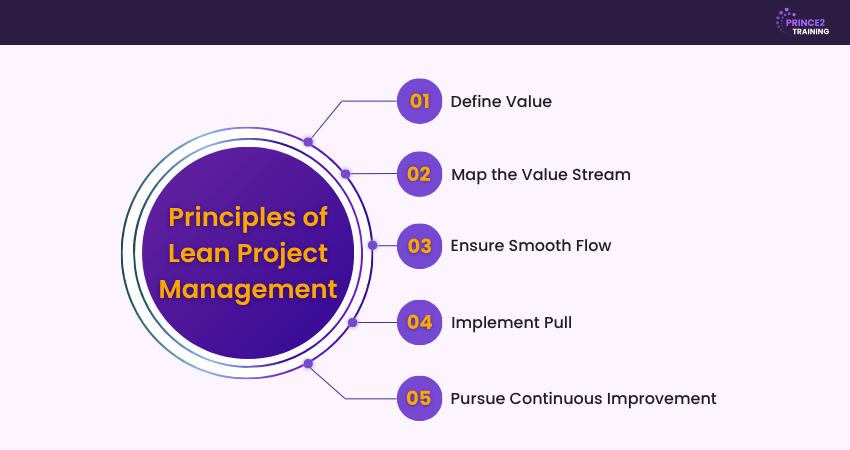
1) First Principle: Define Value
In Lean Project Management, everything starts with the customer. You need to clearly understand what they actually want and what they consider valuable. When teams focus on this, they can prioritise the right tasks, avoid unnecessary work and ensure that the final outcome matches customer expectations.
2) Second Principle: Map the Value Stream
This step of Lean Project Management is about looking at how work is currently done. Teams analyse each step in the process from start to finish to understand what adds value and what doesn’t. By creating a visual map of the workflow, it becomes easier to spot delays, inefficiencies, or wasted effort.
3) Third Principle: Ensure Smooth Flow
Once the inefficiencies are identified, the next step in Lean Project Management is to make the workflow smooth without interruptions. This means reducing bottlenecks, minimising delays, and ensuring tasks move seamlessly from one stage to the next. Tools like Kanban boards can also help visualise tasks and keep everything on track.
4) Fourth Principle: Implement Pull
Instead of working based on assumptions or forecasts, a pull system means starting work only when there is actual demand. In Lean Project Management, this prevents overproduction and keeps resources from being wasted. It also ensures that tasks are completed just in time. It also improves workflow visibility, making it easier to balance workloads.
5) Fifth Principle: Pursue Continuous Improvement
Lean Project Management is not a one-time process; it’s an ongoing effort to get better. This principle is often referred to as Kaizen since it supports continuous improvement. Teams regularly review how things are done and look for small ways to improve. These small changes add up over time, leading to better efficiency, reduced waste and stronger teamwork.
Plan, lead, and deliver successful projects with our Introduction to Project Management Course – Register today!
What are Lean Project Management Tools?
Lean Project Management uses a set of practical tools to help teams improve processes and deliver better results. These tools provide a clear structure for planning changes, testing them, measuring outcomes and continuously improving performance. Let's check those tools:
1) Deming Cycle (PDCA)
The Deming Cycle, also called the Plan-Do-Check-Act (PDCA) cycle, is a simple but powerful Lean Project Management method for continuous improvement. It works as a loop where teams first plan what they want to achieve, then test those ideas on a small scale, check the results, and finally act by standardising what works or improving what doesn’t. This cycle helps teams learn as they go and adapt to changes.
2) Kanban Methodology
Kanban is a visual way of managing work that helps teams see exactly what’s happening at every stage of a project. Tasks are displayed on a board, usually divided into columns like “To Do,” “In Progress,” and “Done.” This makes it easy to track progress and manage workloads. Kanban also focuses on limiting Work in Progress (WIP), which prevents teams from taking on too much at once.
3) Lean Six Sigma Techniques
Lean Six Sigma Techniques combine Lean’s focus on reducing waste with Six Sigma’s emphasis on quality and consistency. This is valuable for teams in analysing processes, reducing variation, and improving performance using data-driven methods. By applying these techniques, organisations can streamline workflows, enhance customer satisfaction, and achieve reliable project outcomes.
4) DMEDI Framework
The Define, Measure, Explore, Develop, and Implement (DMEDI) framework is especially useful when designing new processes or products. It starts with clearly understanding customer needs, then analysing data, exploring possible solutions, and developing the best option before finally implementing it. This structured framework helps organisations create efficient processes that meet customer expectations from the outset.
When to Implement Lean Project Management?
Lean Project Management is versatile and can be applied across various sectors. It is ideal for businesses that want to improve efficiency, reduce waste, and deliver better value to their customers, without adding extra resources. Here are a few common applications:
1) Manufacturing
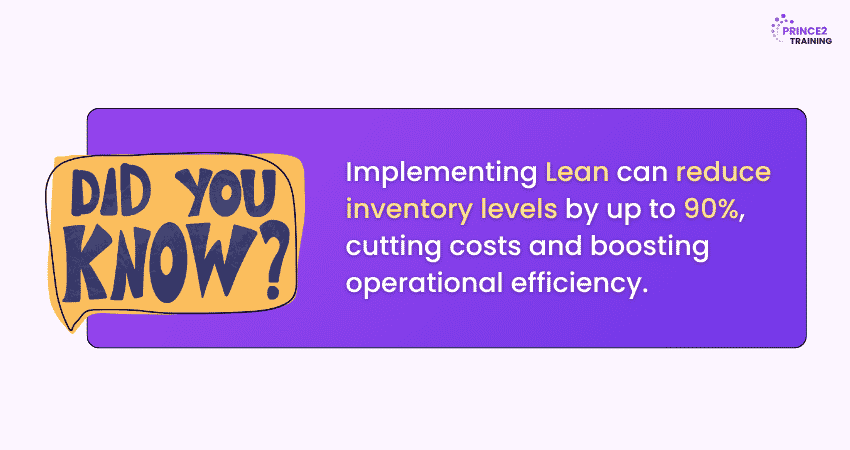
Lean Project Management was born in manufacturing, making it a perfect match for factories and production-based industries. It streamlines production by cutting waste like excess inventory, idle time, and overproduction. It helps manufacturers lower costs, improve workflow, and deliver higher quality with fewer defects.
Ideal When:
1) Excess inventory or raw material costs are rising
2) Production bottlenecks are slowing down output
3) Quality issues or defects are becoming frequent
4) Delivery timelines are inconsistent
5) Equipment and labour aren't being optimally utilised
2) Construction
Construction projects often face unpredictable challenges like delays, resource shortages, and a lack of communication between teams. Lean Project Management introduces consistency through standardised processes and encourages frequent check-ins to identify issues early. It improves just-in-time delivery and reduces material waste.
Ideal When:
1) Delays are caused by scheduling or supply chain issues
2) Material costs are high due to waste or reordering
3) Project phases lack clear communication and coordination
4) On-site teams face overlapping responsibilities
5) Predictability and standardisation are lacking across projects
3) Product and Software Development
In the fast-moving world of software and product development, speed and adaptability are essential. Implementing Lean will help Developers prioritise high-impact features, reduce unnecessary work, and minimise technical debt. This will help your teams deliver smaller, value-driven releases more frequently.
Ideal When:
1) Feature releases are slow or inconsistent
2) Developers are overwhelmed with large backlogs
3) Customer feedback is not integrated efficiently
4) Technical debt is growing rapidly
5) Priorities change often due to evolving market needs
Learn the essentials of project delivery and advance your Project Management skills with the PRINCE2 Foundation Course - Join today!
Benefits of Lean Project Management
Lean Project Management brings a wide range of benefits that help teams work smarter, move faster, and deliver better results. Here are its key benefits:
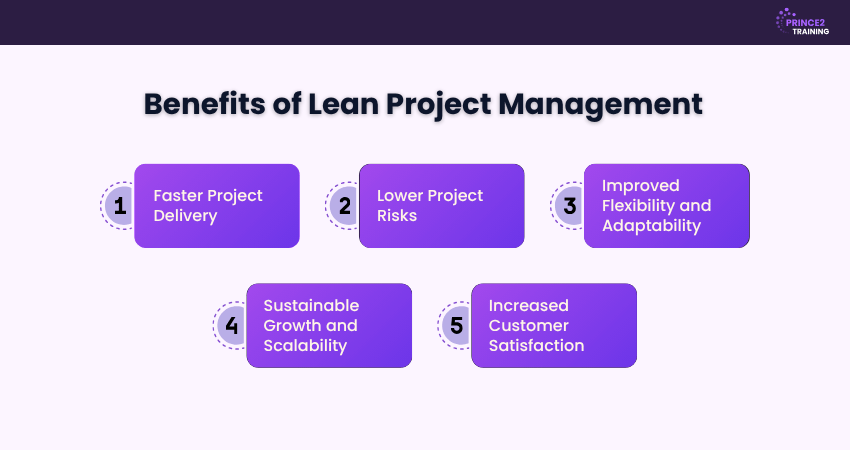
1) Faster Project Delivery
Lean Project Management focuses only on activities that add value to the project. Removing unnecessary steps and delays helps teams move faster. It eliminates bottlenecks and reduces rework for smoother execution and predictable timelines.
2) Lower Project Risks
Lean Project Management helps to identify issues early through reviews and check-ins. This reduces the chances of major work disruptions. Maintaining focused planning limits scope creep and keeps projects manageable. This leads to transparent workflows and better decision-making.
3) Improved Flexibility and Adaptability
It breaks work into smaller, manageable tasks. This makes it easier to plan and collaborate while encouraging faster problem-solving. With iterative planning and execution, Lean Project Management reduces reliance on rigid timelines and balances workload while increasing agility.
4) Sustainable Growth and Scalability
Lean Project Management supports sustainable growth by building a culture of continuous improvement. Teams are encouraged to review processes regularly and make meaningful improvements. This reduces waste and promotes innovation and process ownership, ensuring growth is steady and value focused.
5) Increased Customer Satisfaction
It places customer needs at the centre of planning and execution. This ensures projects solve real problems, leading to better quality outcomes. Consistent value delivery builds trust and strengthens customer relationships, leading to higher satisfaction and loyalty.
Lead projects with precision and confidence with our PRINCE2® Practitioner Course – Join now!
Challenges of Lean Project Management
While Lean Project Management provides several key benefits, it is essential to be aware of certain challenges that come with it. Let’s look at them below:
1) Inventory Problems
Lean Project Management treats excess inventory as waste and encourages stock levels as low as possible. This increases reliance on suppliers to deliver materials faster and with accuracy. Any disruption within the supply chain can delay work and affect project timelines.
2) Implementation Costs
Implementing Lean Project Management requires replacing existing systems and redesigning processes. Organisations may require investing in new tools, equipment, and training. These costs can be challenging for small-sized teams or financially unprepared ones.
3) Difficult Change Over
Shifting to Lean Project Management needs a major change in how work is planned and executed. There can be potential resistance from employees due to uncertainty and disruption. Thus, strong leadership and clear communication are integral to managing transitions successfully.
Combine project structure with flexibility with our PRINCE2 Agile® Foundation and Practitioner Course – Sign up soon!
Practical Lean Project Management Tips
Making Lean Project Management work in real-world settings requires practical, everyday habits. Here are some of the tips that you can follow for your teams:
1) Simplify Workflows
Making things too complicated can waste time, cause confusion, and lead to mistakes. Lean Project Management works best when everything is clear and simple. By keeping workflows easy to follow and removing extra steps or tools, your team can stay focused and deliver work that truly matters.
Tips to Simplify:
1) Use visual tools like Kanban boards or checklists
2) Minimise the need for approvals or handovers
3) Standardise common tasks and templates
2) Encourage Team Collaboration
Even if you're managing the project, your team members often know the most about how tasks get done. Lean encourages involving the people closest to the work in planning and improvement discussions. Their insights can help spot inefficiencies you might miss and lead to better solutions.
Why This Works:
1) Builds trust and mutual respect
2) Finds hidden blockers or bottlenecks
3) Helps align improvement efforts with real needs
3) Recognise Achievements
Lean is all about continuous improvement, and that means recognising progress. Celebrate small wins like a reduced turnaround time, smoother task flow, or fewer delays. Acknowledging these steps forward helps keep morale high and shows the team that change is working.
Ways to Celebrate:
1) Share scores that show positive results
2) Highlight individual and team contributions
3) Hold short recognition moments during team stand-ups
4) Clearly Communicate Objectives
If your team doesn’t know why you’re asking them to change how they work, they may not be fully committed to Lean practices. Clearly explaining the purpose, such as reducing waste, improving customer experience, or saving time, helps everyone understand the big picture and feel invested in the outcome.
What to Communicate:
1) The specific goals behind the Lean initiative
2) The expected benefits for the team and customer
3) How team feedback will shape the process
Conclusion
Lean Project Management represents a shift in mindset that focuses on delivering value, reducing waste and constantly improving how your team works. Through this, you can create more efficient workflows and keep your customers at the centre of every project. Start small, stay consistent and remember, Lean isn’t just about doing things right; it’s about focusing on the right things and cutting out what doesn’t add value.
Gain the skills to lead impactful projects with our
PRINCE2 Training
– Be a part of it soon!
Frequently Asked Questions
What are the Four Elements of Lean?
The four key elements of Lean are value, value stream, flow and pull. These elements help organisations identify what customers value, remove waste from processes, improve workflow efficiency and deliver products or services based on actual demand.
Is Lean Considered Agile?
Lean and Agile are closely related but not the same. Lean’s focus is on eliminating waste and maximising value, while Agile emphasises flexibility, collaboration, and rapid adaptation to change. Many organisations combine Lean and Agile principles to improve efficiency.
What are the Five C's of Lean?
The five C's of Lean are Clear Out, Configure, Clean and Check, Conformity and Custom and Practice. Together, these principles help organisations align teams, improve processes, reduce waste, enhance efficiency, and consistently deliver greater value to customers and stakeholders.



 Continue Browsing