Contact@prince2training.co.uk
 01344203999




 Back
Back


Table of Content

12-Oct-2026

David Walter
Managing a project can feel like a race. The good news is that you can modulate your pace in this race in numerous ways and emerge as a champion every time. Two methodologies that help you manage this pacing are Scrum and Kanban. Think of Kanban as the steady and adaptable runner, flowing effortlessly through each task, while Scrum is the sprinter, charging ahead in short, powerful bursts.
If you are struggling with the choice between the two, this blog has got you covered. It explores Kanban vs Scrum, focusing on how each method can reshape your workflow and keep your team on track for stellar results. So, read on!
Table of Contents
1) What is Kanban?
2) What is Scrum?
3) Difference Between Kanban and Scrum
4) Kanban or Scrum: Which is Right for You?
5) Conclusion
What is Kanban?
Kanban is a visual method for managing workflows that started with Toyota’s production system and is now popularly used in Software Development, Project Management, and other business areas. It uses a physical or digital board divided into workflow stages, where tasks are represented as cards that move across the board as work progresses. This makes it easy for teams to track progress, spot delays, and boost efficiency.
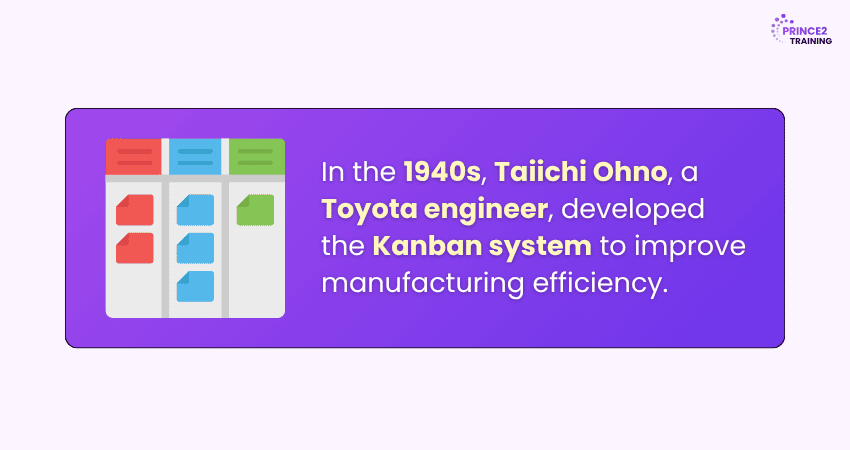
Kanban can be understood through these key workflow stages:
1) Workflow Stages: The pace of work is determined by the workflow stages set up on the Kanban board, such as 'To Do', 'In Progress', 'Blocked', and 'Done'.
2) Release Method:
Tasks are delivered as soon as they are complete, enabling continuous delivery rather than waiting for fixed release cycles. If a task is completed early, it can be released immediately, and there’s no need for a sprint review.
3) Roles:
Kanban boards are accessible to the whole team, but individuals can also have their own boards to manage specific tasks.
4) Metrics:
Kanban uses metrics like lead time and cycle time to track progress. These metrics help identify how long tasks stay in each stage and reveal any bottlenecks in the workflow.
5) Change Philosophy:
Kanban allows changes to happen at any time. Tasks can be added, removed, or blocked based on priorities.
Kanban Roles
Kanban does not require fixed roles or strict team structures. Existing teams can continue using their current responsibilities while adopting Kanban practices to improve workflow visibility and efficiency. Team members focus on managing work continuously, limiting Work-in-Progress (WIP), and improving task flow. Although some organisations may assign service delivery or workflow managers, Kanban remains flexible and adaptable without mandatory role definitions.
Pros and Cons of Kanban
Here are the pros and cons of Kanban to consider:
1) Pros:
a) Kanban boards provide a clear visual of work progress, keeping everyone aligned.
b) When a column gets crowded, it signals a mismatch between resources and demand.
c) It offers flexibility in setting priorities and making decisions at any stage.
d) Work queues can be adjusted based on new information without disrupting the overall workflow.
2) Cons:
a) Kanban does not prescribe fixed deadlines or timeboxed iterations, making it more difficult to predict exact completion dates without additional planning.
b) If the board isn’t regularly updated, it won’t reflect the current project status accurately.
What is Scrum?
Scrum is a Project Management, especially an Agile framework that organises work into short, focused periods called sprints. It involves breaking down projects into small tasks, known as user stories, to gather customer feedback at different stages and adjust plans accordingly.
Scrum can be broken down into the following components:
1) Cadence:
Work is divided into two-week or month-long sprints, each with specific goals. Teams plan each sprint, hold daily stand-up meetings to stay on track, and review completed work for feedback.
2) Roles:
a) Scrum Master:
Makes sure the team stays on track, manages processes, and maintains motivation.
b) Product Owner:
Manages the product backlog, sets priorities, and defines project requirements.
c) Developers: Complete tasks assigned within each sprint.
3) Metrics:
Teams track data such as task completion time to assess progress and plan future sprints. Regular updates during stand-up meetings help Scrum Masters and Product Owners monitor and improve workflow efficiency.
4) Change Philosophy:
Adjustments can only be made after a sprint ends. Unfinished tasks are reviewed, reassessed, and either carried over to the next sprint or moved back to the backlog. The retrospective meeting helps identify changes and improvements for the upcoming sprint.
Lead Agile projects successfully – Join the
Scrum Master Certification Training today!
Scrum Role
Scrum follows clearly defined roles to support structured project delivery and team collaboration. The Product Owner manages the product backlog and prioritises work based on business value and customer needs. The Scrum Master facilitates Scrum practices, removes blockers, and ensures the team follows Agile principles effectively.
The Developers consist of cross-functional professionals responsible for delivering product increments during each sprint. These defined roles help improve accountability, communication, and sprint execution.
Pros and Cons of Scrum
Here are the pros and cons of Scrum:
1) Pros:
a) Scrum has well-defined processes, roles, and timelines, making it easy to follow.
b) Short sprints allow teams to release work quickly, get feedback, and adjust for the next sprint.
c) Daily standup meetings help address issues promptly and keep everyone in sync.
2) Cons:
a) Scrum is strict about roles and processes, leaving little room for flexibility.
b) The constant sprint cycles can be demanding and leave little time for breaks or adjustments.
Difference Between Kanban and Scrum
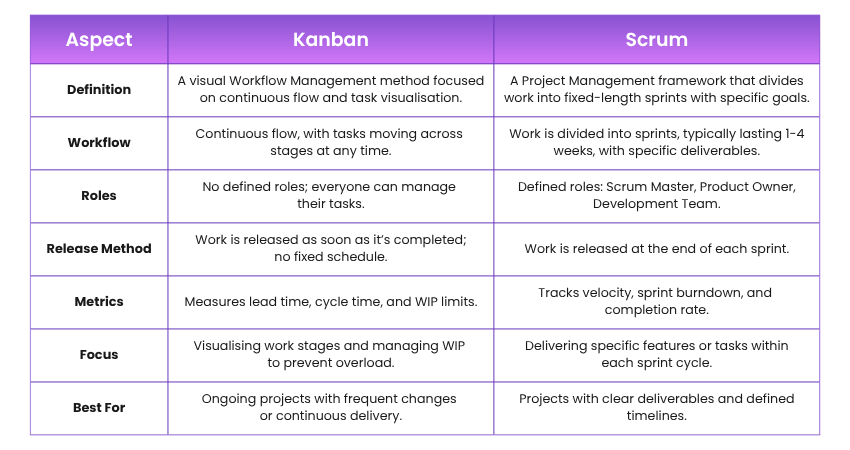
Here's a summary of the key differences between Scrum and Kanban:
1) Complete vs Incremental Changes
Scrum often requires organisations to adopt an entirely new way of managing and delivering projects through structured roles, sprint cycles, and defined Agile practices. Kanban, however, supports gradual improvements by allowing teams to optimise existing workflows incrementally without causing major disruption to current processes.
2) Prioritisation
Neither Scrum nor Kanban strictly defines how organisations should prioritise projects or initiatives. In Scrum, prioritisation is influenced by sprint timelines, making smaller and achievable tasks easier to complete within a sprint cycle. Kanban allows more flexible prioritisation, as tasks can be adjusted continuously without fixed development windows.
3) Cadences
Scrum follows fixed cadences called sprints, where work is planned and delivered within set timeframes, usually lasting one to four weeks. This creates a structured and predictable workflow with regular review cycles and incremental releases. Kanban uses a continuous flow approach without fixed iterations, allowing tasks to move through the workflow whenever capacity becomes available. As a result, Kanban offers greater flexibility in release timing, while Scrum focuses more on consistent delivery schedules and sprint-based progress tracking.
4) Metrics
Although both Kanban and Scrum focus on product quality, customer satisfaction, and delivery outcomes, the metrics used to measure workflow efficiency differ. Scrum commonly uses metrics such as sprint velocity, burndown charts, and Sprint Goal Success to evaluate team performance during fixed sprint cycles. Kanban focuses on flow-based metrics like lead time, cycle time, and throughput to measure how efficiently work moves through the development process.
5) Change Philosophy
Scrum follows a structured change approach where the sprint scope is locked once a sprint begins. New requirements or changes are usually postponed until the next sprint to maintain focus and delivery stability. Kanban offers greater flexibility, allowing teams to introduce changes, update priorities, and adjust workflows continuously while work is actively in progress.
Juggle the chaos of project tasks with the cadence of project success! Sign up for the Agile Project Management Foundation (Agile PM®) Course now!
Kanban or Scrum: Which is Right for You?
Scrum and Kanban each offer distinct advantages, but it's not necessary that you'll have to choose one over the other. You can use both to get the best of both methods. Consider the following points:
1) When to use Kanban:
Kanban helps you improve workflow visibility and promotes ongoing improvement, which eventually boosts productivity. It easily fits into existing processes, making it a great choice if you want to adopt Agile practices without completely changing your workflow.
2) When to use Scrum:
Scrum is known for increasing productivity, speeding up delivery, reducing costs, and improving quality. It's best for projects that require frequent changes or regular feedback, such as tech updates or new product development.
3) Scrumban:
Scrumban takes a 'best-of-best-worlds' philosophy by blending Scrum's structure with Kanban's visual tools. It's a practical option for teams familiar with either method who want to incorporate elements of the other for better Workflow Management.
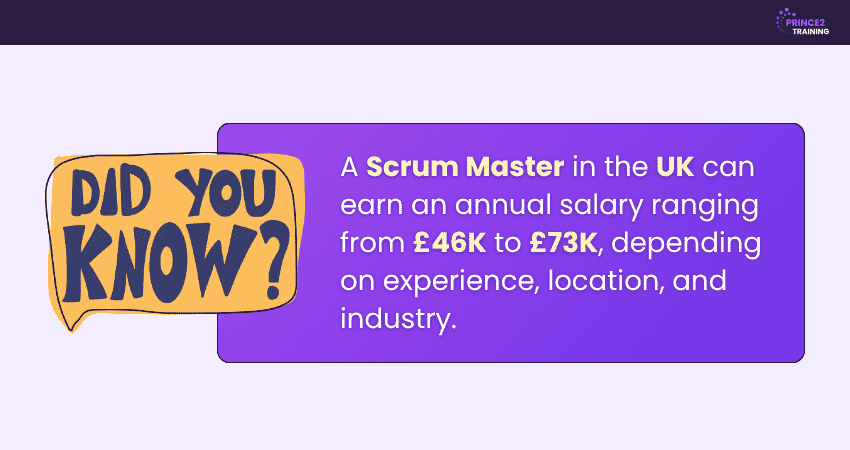
Source: Glassdoor
Conclusion
Kanban and Scrum may share the common goal of improving workflow, but they differ in their approaches. Kanban's continuous flow suits ongoing projects, while Scrum's structured sprints drive short-term goals. Making the right choice between Kanban vs Scrum depends on team dynamics, project needs, and the desired flexibility. Making the right decision is crucial for effective Project Management and successful outcomes.
Transform the way you manage projects with PRINCE2 Foundation and Practitioner Course – Register today!
Frequently Asked Questions
What is the Waterfall Methodology?
Waterfall Methodology is a traditional Project Management approach where work progresses through fixed, sequential phases such as planning, design, development, testing, and deployment. Each phase must be completed before moving to the next, making it suitable for projects with clear requirements and minimal changes.
Can You be Agile Without Scrum?
Yes, organisations can follow Agile principles without using Scrum. Agile is a broader mindset focused on flexibility, collaboration, and continuous improvement, while Scrum is one specific Agile framework. Teams may instead use Kanban, Lean, or hybrid approaches to manage workflows and deliver projects effectively.
Kanban vs Scrum: Which Offers Greater Flexibility?
Kanban generally offers greater flexibility because it allows teams to manage tasks continuously without fixed sprint cycles or predefined roles. Scrum follows structured sprints and ceremonies, making it better for teams needing defined processes, while Kanban adapts more easily to changing priorities.



 Continue Browsing