Contact@prince2training.co.uk
 01344203999




 Back
Back


Table of Content

24-Sep-2026

David Walter
Ever wondered why even the most carefully planned engineering projects still undergo changes? Whether it's a minor tweak or a major redesign, change is inevitable in engineering. The challenge isn't avoiding change; it's managing it effectively. That's where Engineering Change Management (ECM) comes into play. Let's explore what it is, and we'll discuss how to implement best practices to keep your teams aligned and your products top-notch.
Table of Contents
1) What is Engineering Change Management?
2) Steps in the Engineering Design Process
3) Preparing an Effective Engineering Change Order
4) Advantages of Engineering Change Management
5) Case Studies of Engineering Change Management
6) Conclusion
What is Engineering Change Management?
Engineering Change Management is the systematic approach to managing changes in engineering designs, products, or processes. It involves identifying, evaluating, documenting, and approving changes to ensure they are implemented efficiently and with minimal disruption.
ECM helps maintain product quality, reduce errors, control costs, and improve traceability. By involving relevant stakeholders and ensuring clear communication, it supports better collaboration, faster decision-making, and compliance with industry standards throughout the product development lifecycle.

Steps in the Engineering Design Process
Understanding the engineering design process is key to understanding where and when change typically occurs. Each stage comes with its risks and opportunities for introducing updates. Here's a breakdown of the key steps in which Engineering Change Management plays a pivotal role.
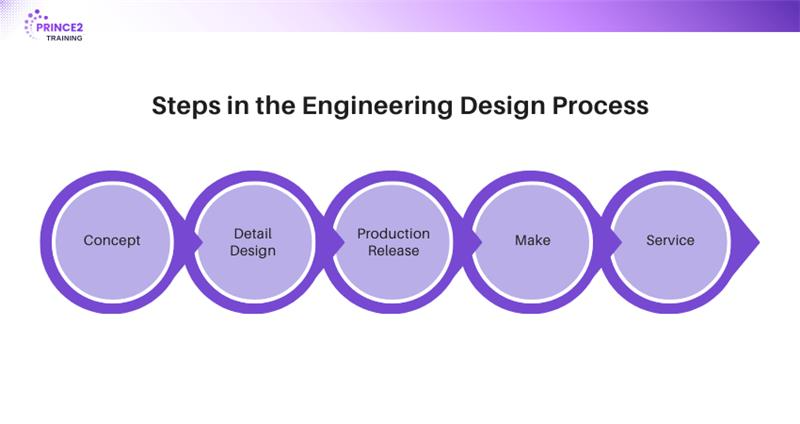
Concept
The concept stage is the idea-generating phase of any project. Teams brainstorm solutions, assess market needs, and explore potential product directions. Frequent and low-cost changes are expected at this stage.
ECM focuses on capturing early feedback and maintaining a record of decisions, ensuring design flexibility while avoiding revisiting rejected ideas later. Multiple concepts may be abandoned, and documenting these decisions helps prevent repeated mistakes.
Detail Design
Once a concept is selected, it moves into the detailed design phase. Engineers now begin producing detailed Computer-Aided Design (CAD) drawings, selecting materials, defining tolerances, and preparing for prototype development. Change becomes more expensive in this phase. Every revision can have cascading effects on tooling, supply chain contracts, and testing procedures.
An effective ECM framework ensures that updates made during detailed design are communicated clearly across departments and documented properly. Design freezes, version control, and cross-functional review become essential to prevent chaos.
Production Release
When designs are finalised and approved, they are released for production. This is a critical phase where changes can cause significant disruption. Engineering Change Management at this point focuses on controlling documentation, manufacturing instructions, and supplier notifications.
Small oversights, like a mislabelled drawing or outdated Bill of Materials (BOM), can lead to costly production delays or defects. ECM systems must offer high levels of control, ensuring that only approved documents are released and everyone is working from the latest version.
Make
The make phase refers to the actual manufacturing of the product. While most changes at this point are undesirable, they sometimes become necessary. Issues such as machine constraints, part failures, or operator feedback might necessitate design or process alterations.
ECM helps manage these changes by coordinating with the shop floor, quality assurance, and procurement. The goal is to introduce modifications with minimal disruption while maintaining traceability and compliance with original design intents.
Service
After a product hits the market, the service phase begins. This includes post-sale support, maintenance, updates, and in some cases, recalls. Customer complaints or failure reports often trigger engineering changes during this phase.
ECM ensures that all post-market changes, whether firmware updates, material changes, or retrofits, are documented and communicated to the appropriate teams. This includes service technicians, spare parts suppliers, and customer support teams, helping maintain brand trust and regulatory compliance.
Learn how to lead change effectively with practical tools and proven strategies by registering for our Change Management Training now!
Preparing an Effective Engineering Change Order
A well-prepared Engineering Change Order (ECO) is the backbone of a successful ECM process. It acts as the formal record that defines the nature of a change, the affected items, justification, and approval trail.
Creating an ECO typically involves the following steps:
a) Clear Problem Statement: Begin by outlining the specific issue or reason for the change. Is it a design flaw, a new compliance rule, or a supplier constraint? Clarity here helps reviewers understand urgency and relevance.
b) Affected Items List: Identify all parts, documents, processes, and systems that will be impacted. This includes CAD files, BOMS, manuals, software codes, and training materials.
c) Proposed Change Details: Describe what is changing using straightforward language. Include visual aids like annotated diagrams or comparisons to clarify the modification.
d) Impact Analysis: Evaluate the change's cost, timeline, quality, and supply chain impact. Will it delay product launch? Will it require supplier renegotiation? Who needs to be informed?
e) Review and Approval Process: Route the ECO to relevant stakeholders. This typically includes engineering leads, quality control, manufacturing, finance, and customer-facing teams.
f) Change Implementation: Once approved, roll out the change in a structured way. Update systems, train employees, and ensure all documentation is revised accordingly.
g) Closure and Audit Trail: Document outcomes, track effectiveness, and retain the ECO for future audits or reference.
A good ECO process improves transparency, speeds up approvals, and reduces back-and-forth between teams.
Advantages of Engineering Change Management
Here are the advantages of Engineering Change Management:
Enhanced Visibility
With ECM in place, changes are no longer isolated or ad hoc. Team members gain access to a central dashboard showing who proposed what change, its current status, and when it is expected to be implemented. This improves coordination and allows proactive management of priorities.
Full Traceability
Every change leaves a documented footprint, including what was changed, why, and who approved it. This level of traceability is essential for regulated industries like aerospace, defence, and medical devices. It also proves invaluable during audits or product recalls.
Strong Governance
Change governance isn't just about compliance, it's about smart decision-making. ECM ensures that only authorised personnel can initiate or approve changes. Reviewers get a clear picture of the impacts before giving the green light, reducing the chances of hasty or poorly considered modifications.
Higher Product Quality
When design and process changes are carefully vetted and tracked, the risk of introducing new defects is significantly reduced. ECM also ensures that all team members are aligned on the current product version, reducing inconsistencies and quality issues.
Better Collaboration
An ECM system fosters collaboration by connecting various departments involved in the change. Engineers, supply chain managers, quality inspectors, and customer service agents all stay informed through automated notifications and centralised records.
Increased Efficiency
Streamlined ECM processes prevent bottlenecks. Automation tools can flag duplicate changes, auto-populate change templates, and trigger notifications, saving time and reducing manual errors. Over time, this results in faster project delivery and improved resource utilisation.
Master the art of engineering change, learn to lead updates with precision, not panic. Start your journey with our Change Management Foundation Course today!
Case Studies of Engineering Change Management
Let's explore a few real-world examples where ECM made a significant difference:
Aerospace Manufacturer
A global aerospace firm used to rely on manual change approvals via email, which led to delays and miscommunication. After implementing a digital ECM platform integrated with their Product Lifecycle Management (PLM) system, they reduced change approval time by over 30% and improved audit readiness.
Automotive Supplier
In an industry with frequent design iterations, this supplier used ECM to sync updates across global teams. They automated BOM revisions and linked their engineering and procurement systems, which helped them reduce part errors and scrap rates.
Medical Device Company
ECM helped this company manage critical documentation required by regulators like the Food and Drug Administration (FDA). They were able to respond to post-market surveillance data by rolling out traceable and compliant design changes, avoiding product recalls and reputational damage.
Consumer Electronics Brand
To remain competitive, this brand frequently updates products based on customer feedback. Their ECM system allows them to process feedback, test updates, and launch improvements rapidly while ensuring documentation and service manuals are updated accordingly.
Conclusion
Change is part of the process, but managing it well sets successful teams apart. Engineering Change Management keeps your projects organised, efficient, and high-quality from start to finish. You can turn complexity into clarity and drive lasting results with the right approach. It's not just about fixing issues but building smarter systems. Embracing change the right way gives your team a real competitive edge.
Control the change before it controls your project, register in the Change Management Foundation & Practitioner Course now!
Frequently Asked Questions
What are the 10 Principles of Change Management?
The 10 principles of Change Management are given below:
a) Compelling Vision
b) Strategic Planning
c) Stakeholder Understanding
d) Open Communication
e) Cultural Awareness
f) Adaptability
g)Emotional Intelligence
h) Leadership
i) Ownership
j) Measurement and Feedback
What is Engineering Change Management in SAP?
Controlled modifications to product data, including materials, BOMs, and routings, are made possible by SAP Engineering Change Management. It assists businesses in maintaining consistency and traceability across the design and production phases by supporting version control, approval procedures, and change effect assessments.
What are the 3 C's of Change Management?
The 3 C’s of Change Management are:
a) Communication: Clearly convey the vision, purpose, and impact of the change to all stakeholders.
b) Commitment: Secure active support and involvement from leadership and teams.
c) Capability: Equip people with the skills, tools, and resources needed to adapt to the change.



 Continue Browsing