Contact@prince2training.co.uk
 01344203999




 Back
Back


Table of Content

15-Jun-2026

Veronica Davis
Ever walked into work and heard, "We're doing things differently now"? That sinking feeling of confusion or frustration is something we've all felt. But it doesn't have to be that way. With a clear Change Management Process, change can feel less like a surprise and more like a smart move forward.
The Change Management Process is a roadmap that guides teams through change with clarity and confidence. It ensures people feel supported, not overwhelmed. In this blog, we'll cover What is Change Management, its core processes and how to implement it in business. By the end, you'll have a clear understanding of how structured change can transform disruption into opportunity.
What is Change Management?
Change Management is the structured method used to manage the change of processes, systems or structures within an organisation. It includes preparing, supporting and guiding individuals and teams over organisational changes. The target is to minimise interruption, increase acceptance of change, and make sure that the expected outcomes are achieved successfully.
The Change Management Process incorporates strategies for communication, training, and supervision to ensure that everyone in the organisation is on the same page. It is not just about applying new processes but also about helping people to adapt to these changes with minimal resistance.

Five Steps in the Change Management Process
The Change Management Process includes five essential steps. Each step is designed to guide organisations to manage change effectively from preparation to implementation and evaluation. Let's break down each step:
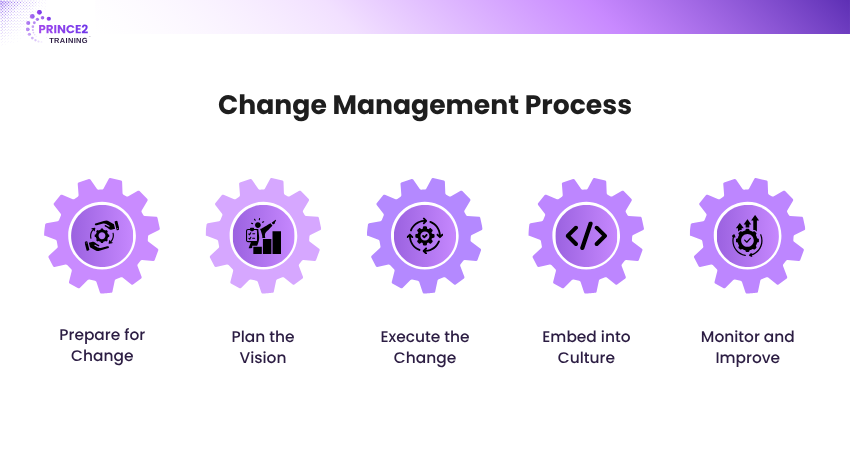
1) Get the Organisation Ready for Change
Before initiating any change, it is essential to see if the organisation is ready for it. This means monitoring the current situation, understanding possible challenges, and clearly explaining the necessity for change to employees.
1) Assessment and Analysis: Look at the current state of the organisation to see what needs to change. Identify specific areas for improvement and examine potential risks.
2) Communication Strategy: Create a simple communication plan to inform employees about the upcoming changes. Clearly explain the benefits and address any issues they may have.
3) Stakeholder Engagement: Discover who will be most affected by the change and include them in the planning process. Getting their input early can help decrease resistance.
Develop essential change leadership skills with the Change Management Foundation Course – Register now!
2) Craft a Vision and Plan for Change
Once the organisation is ready for the Change Management Process, the next step is to define a clear vision and detailed plan for implementation. This step involves:
1) Establishing the Vision: Explain the desirable future state and design how the change will help the organisation.
2) Setting Objectives and Goals: Make specific, measurable, achievable, relevant, and time-bound targets to monitor progress.
3) Developing the Plan: Establish a complete plan that involves timelines, responsibilities and resources required to execute the change.
3) Execute the Change Initiatives
Accomplishing the initiatives of the Change Management Process includes executing the planned actions and ensuring that they are executed effectively. These are the steps:
1) Resource Allocation: Give resources and duties to team members for every stage of the change initiative.
2) Training and Support: Give essential training and support to employees to check they understand the new processes and systems.
3) Monitoring Progress: Track the progression of the implementation and handle any problems or roadblocks immediately.
4) Integrate Changes Into Culture
For the Change Management Process to be bearable, it must be combined into the organisational culture. This includes:
1) Reinforcing New Behaviours: Promote employees to take new exercises and behaviours that match the change goals.
2) Celebrating Successes: Acknowledge and reward employees who successfully get involved in and execute the change.
3) Adjusting Policies and Procedures: Update organisational policies and procedures to reflect the changes.
5) Monitor Progress and Evaluate Outcomes
The final stage in the Change Management Process is to track progress and assess the outcomes of the change initiatives. These are the steps:
1) Performance Measurement: Use Key Performance Indicators (KPIs) to assess the productivity of the change.
2) Feedback Collection: Collect feedback from employees to evaluate how well the change was executed and understand areas for improvement.
3) Continuous Improvement: Use the feedback and assessment data to make necessary changes and ensure long-term success.
What are the Elements of Change Management Plan?
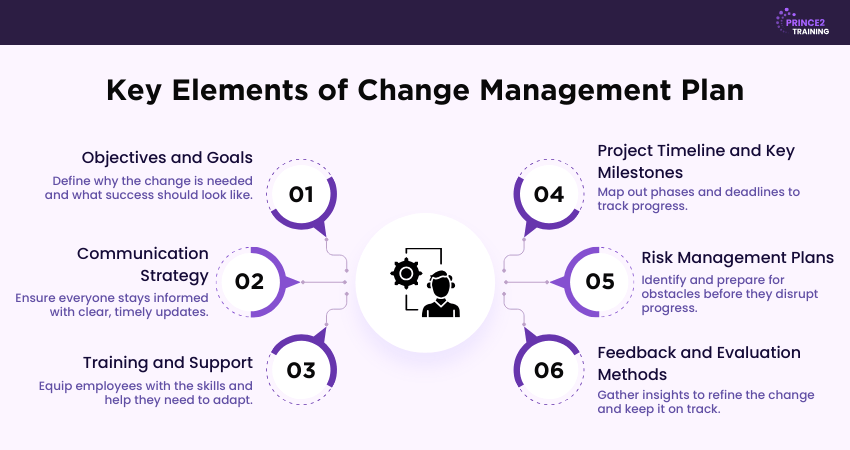
A strong Change Management Plan has key elements that help organisations to manage transitions seamlessly. Here are the essential elements every Change Management Process must include:
1) Objectives and Goals
For any change to be successful, it begins with clear goals. Your plan should outline why the change is required, what you want to achieve, and the outcomes you expect. Along with clarity, your goals must align with the wider strategies of the organisation. Setting measurable objectives and results can help you track progress effectively.
2) Communication Strategy
Communication is a key aspect of every Change Management Process. An effective plan should be able to explain how, when, and where you will communicate with stakeholders. This includes choosing communication channels, defining update frequency and ensuring messages remain consistent and transparent. A structured approach keeps everyone informed and aligned.
3) Training and Support
During any transition, individuals are required to adapt to new systems or learn new skills. Your plan must include training programmes, learning resources and support mechanisms to address skill gaps and build confidence. A well-prepared workforce enhances adoption and reduces resistance.
4) Projects Timeline and Key Milestones
A well-detailed timeline is valuable for helping everyone understand how to approach change. By planning clear phases, deadlines, and significant milestones, it ensures your team knows what will happen next and can implement effectively. A project timeline keeps the entire journey transparent and organised.
5) Risk Management Plans
During a change, there will be potential for obstacles. Your plan must identify potential risks, assess their impact, and outline contingency plans. This will enable teams to respond to issues proactively, address them early, and adjust the plan when needed. Risk assessments are valuable for mitigating issues before they escalate and maintaining control.
6) Feedback and Evaluation Methods
Feedback and evaluation keep your change initiative flexible and responsive. By establishing channels, such as surveys, meetings, feedback forms, or check-ins, you can collect feedback regularly. This helps teams and stakeholders refine change strategies, solve issues, and keep projects on track.
How to Implement a Change Management Process in Business?
Implementing a Change Management Process involves a structured approach that ensures a successful transition and minimal disruption. Here's how to implement it effectively:
1) Assess the Current State: Analyse the current processes, systems, and structures to identify areas that require change.
2) Develop a Clear Vision: Define the desired outcomes and how they will benefit the organisation.
3) Create a Detailed Plan: Develop a step-by-step plan that outlines the change process, including timelines, resources, and responsibilities.
4) Communicate Effectively: Keep all employees informed about the changes and provide them with the necessary training and support.
5) Monitor and Adjust: Regularly review the progression of the change initiatives and adjust as needed to ensure success.
Benefits of Change Management
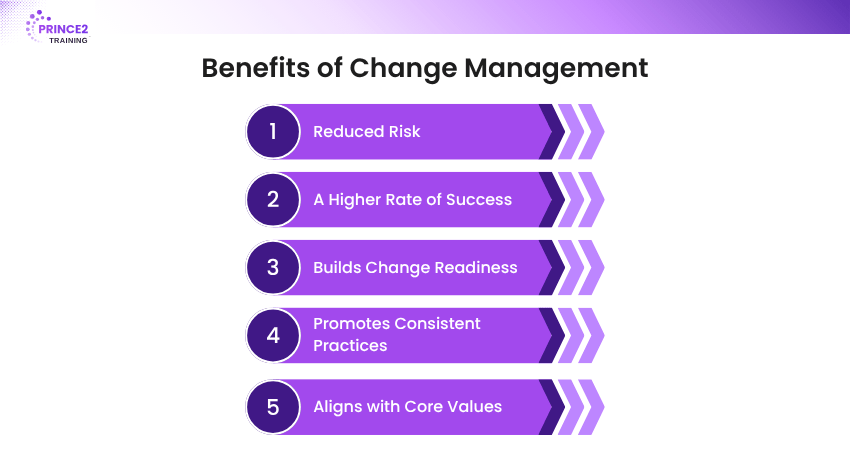
Executing a structured Change Management Process offers several benefits for organisations. Let's explore some of the key benefits:
Reduced Risk
An effective Change Management Process lowers project failure risk by ensuring changes are well-planned, communicated, and executed. It identifies obstacles early, reduces resistance, and provides structure, minimising confusion, delays, and costly mistakes.
Example: When a company moves to remote work, planning the change in steps is essential. Setting up secure systems and providing proper staff training can prevent tech issues and workflow disruptions.
A Higher Rate of Success
A well-planned Change Management Process improves the chances of successful project outcomes. With clear goals, engaged stakeholders, and proper training, teams are more confident and better equipped to manage change. This leads to smoother transitions, fewer delays, and greater overall impact.
Example: When a company rolls out a new CRM system, applying Change Management is key. Clear training sessions and strong team support can lead to quicker adoption and fewer user errors.
Develop practical insights into processes, systems, culture, and more. Join our Change Management Practitioner Upgrade Course today!
Enhances Future Change Readiness
Organisations that practise Change Management become more prepared for future changes. As employees grow used to change, they become more flexible and open to new ways of working, making future transitions quicker and easier.
Example: A business that regularly updates its internal tools with good communication and support benefits in the long run. Over time, staff become more open and responsive to new technologies.
Ensures Consistent Change Practices
A structured Change Management approach creates a repeatable process for handling change. This consistency reduces confusion, builds trust, and ensures that every department follows the same steps, improving overall coordination.
Example: Using the same step-by-step approach for launching new tools across departments creates consistency. It ensures every team follows the process, reducing confusion and saving time.
5) Aligns Operations with Core Values
Change Management ensures that changes support the company's long-term vision and values. It helps leaders shape new strategies in a way that stays true to the organisation's mission, creating a stronger alignment between daily operations and business goals.
Example: A company focused on sustainability makes sure each change supports its green values. For instance, switching to paperless systems aligns with its eco-friendly mission and brand promise.
Conclusion
The Change Management Process is key to making change work not just on paper but with people. By following the right steps, you can reduce resistance, build trust, and guide your team through any transition smoothly. When done right, change doesn't just happen; it leads to lasting growth and success. With the right approach, your organisation can turn every challenge into a new opportunity.
Refresh your knowledge of strategy, Leadership and communication with our Change Management Re-Registration Course – Register now!
Frequently Asked Questions
What are the Five Pillars of Sustaining Change?
The five pillars of sustaining change include effective communication, ongoing support, continuous monitoring, reinforcement of new behaviours, and Leadership commitment. These elements ensure that the changes are effectively embedded in the organisation’s culture.
What are the 7 R's of Change Management?
The 7 R’s of Change Management are Reasons, Risks, Resources, Return, Responsibility, Relationships, and Readiness. These elements provide a structured framework for assessing and managing change effectively.
What are Kotter's Eight Steps?
Kotter’s eight steps for successful change include:
a) Build a Guiding Coalition
b) Form a Strategic Vision and Initiatives
c) Enlist a Volunteer Army
d) Enable Action by Removing Barriers
e) Generate Short-Term Wins
f) Sustain Acceleration
g) Institute Change



 Continue Browsing