Contact@prince2training.co.uk
 01344203999




 Back
Back


Table of Content

15-Jun-2026

David Walter
In a world where change crashes like a tidal wave, you have two choices: ride it or get swept away. It may feel like navigating a storm, but with the right tools, you can sail straight through it. The secret? Proven Change Management Models that help you conquer uncertainty, inspire teams, and make change stick.
These models are built to save your projects from chaos and drive transformation with confidence. In this blog, you'll discover the top 10 Change Management Models that future-proof organisations. Choose your framework, empower your team, and turn the unknown into unstoppable momentum. Ready to take the helm? Let's make change your superpower.
Table of Contents
1) What are Change Management Models?
2) The Importance of Change Models
3) 10 Effective Change Management Models
a) Nudge Theory
b) The ADKAR Model
c) Satir Change Model
d) Deming Cycle (PDCA)
e) Bridges Transition Model
f) McKinsey 7-S Framework
g) Kubler-Ross Change Curve
h) Maurer 3 Levels of Resistance
i) Kotter's 8 Steps for Leading Change
j) Lewin's Change Management Model
4) Conclusion
What are Change Management Models?
Change Management Models are structured frameworks that guide organisations through transitions. They help leaders and teams understand, plan, and manage change effectively. Each model has its own strengths and style some are people-focused, and others are process-driven. Instead of just "hoping for the best," these models give you a roadmap for:
1) Preparing employees
2) Communicating changes
3) Managing resistance
4) Reinforcing new behaviours

The Importance of Change Models
Change isn't just about new tools or strategies, but about the people. Even the smartest innovations will fail if teams aren't ready or willing to adapt. Changing models provides structure, clarity, and direction during times of transition.
Without a model, change can feel chaotic, unpredictable, and overwhelming for both leaders and employees. Here are the reasons why change models matter:
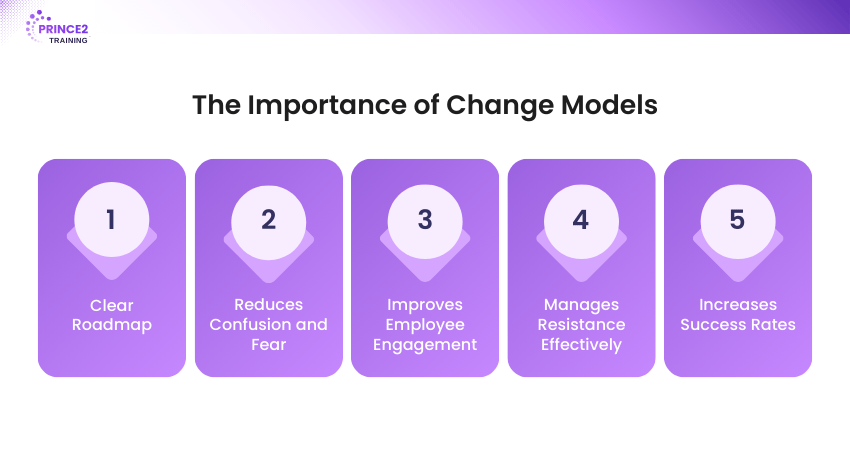
Clear Roadmap
Change models offer a step-by-step guide for planning and managing change. Instead of guessing what to do next, you have a clear process to follow, from preparing people to implementing changes to reinforcing new behaviours.
Reduces Confusion and Fear
Change naturally creates uncertainty and anxiety. People worry about how it will affect their roles, workload, or job security. A good model helps communicate what's happening, why it's happening, and what to expect, reducing fear and resistance.
Improves Employee Engagement
When employees understand the change process and feel supported, they're more likely to get involved and stay motivated. Change models encourage open communication, active participation, and buy-in, making change a shared effort rather than a top-down mandate.
Manages Resistance Effectively
Resistance is normal, but poorly handled resistance can derail even the best ideas. Changing models help leaders anticipate resistance, identify its causes, and address concerns with the right strategies. Whether through better communication, training, or emotional support.
Increases Success Rates
Studies show that companies using structured change models are far more likely to succeed with their transformations. Instead of stalling or abandoning initiatives midway, they remain focused, adaptable, and achieve the desired outcomes.
Don't just survive change - master it with our Change Management Foundation today!
10 Effective Change Management Models
Change can be exciting or overwhelming. To manage it well, businesses rely on proven Change Management Models that provide clear steps and guidance. Let's dive deeper into 10 of the most effective models that can help you lead change successfully:
1) Nudge Theory
Nudge Theory is based on the idea that small, positive "nudges" in the environment can influence behaviour without forcing change. Instead of using authority, leaders encourage better decisions through subtle suggestions. Key areas:
1) Influences behaviour through gentle suggestions, not force
2) Shapes environments to encourage better decisions naturally
3) Focuses on small, subtle changes for big impact
4) Keeps individual freedom of choice intact
5) Common in marketing, HR, and organisational change
Examples: Default options, positive messaging, peer comparisons
Aims for easy, effortless adoption of desired behaviours
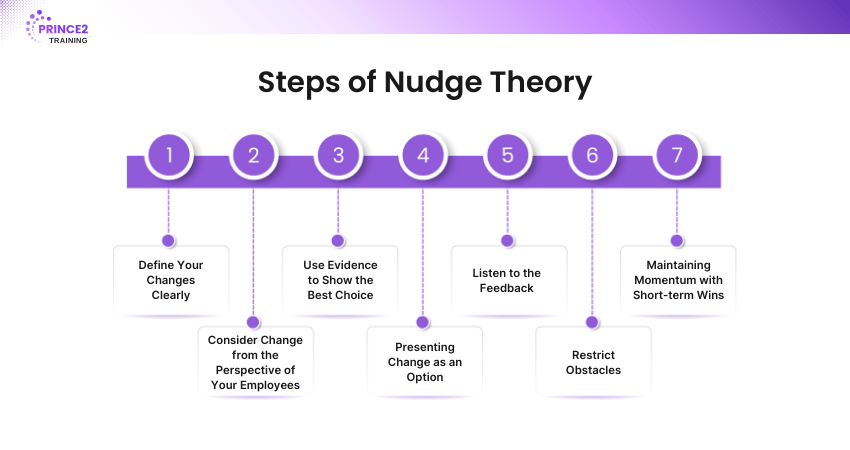
Best For: Gradual, low-resistance behavioural change
2) The ADKAR Model
Developed by Prosci, the ADKAR Model focuses on individual change, believing that organisations only change when people do. It follows five steps: Awareness, Desire, Knowledge, Ability, and Reinforcement.
1) Understand why change is needed
2) Build personal motivation to support the change
3) Learn how to change effectively
4) Develop the skills to implement the change
5) Sustain the change with recognition and support
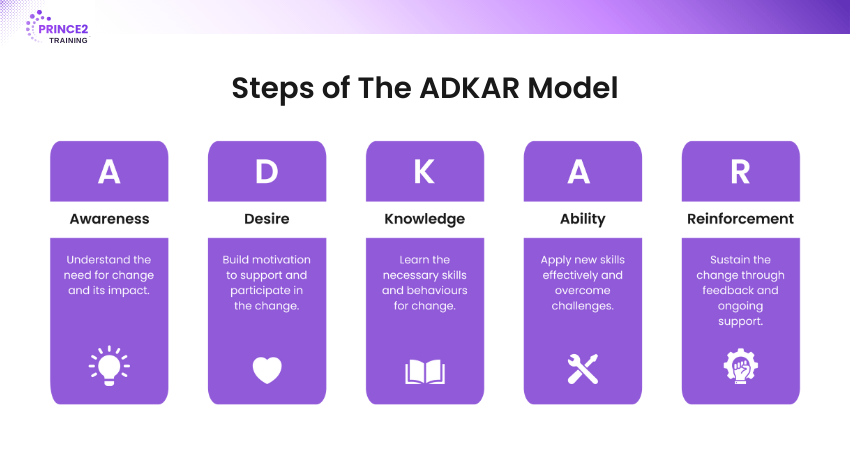
Best For: Structuring personal change journeys within broader organisational changes
3) Satir Change Model
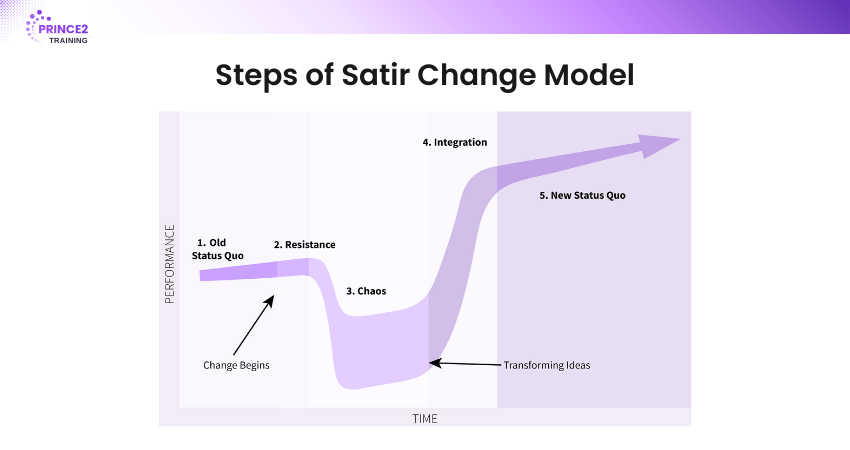
The Satir Change Model focuses on the emotional responses people have during change. It highlights the stages of Late Status Quo, Resistance, Chaos, Integration, and New Status Quo.
1) Current comfortable state before change
2) Initial pushback or fear of change
3) Confusion and disruption as change begins
4) Stability returns at a higher performance level
Best For: Helping teams manage emotional transitions and stay resilient
Secure your Change Management qualification – renew now and future-proof your leadership skills with our Change Management Re-Registration Course – join now!
4) Deming Cycle (PDCA)
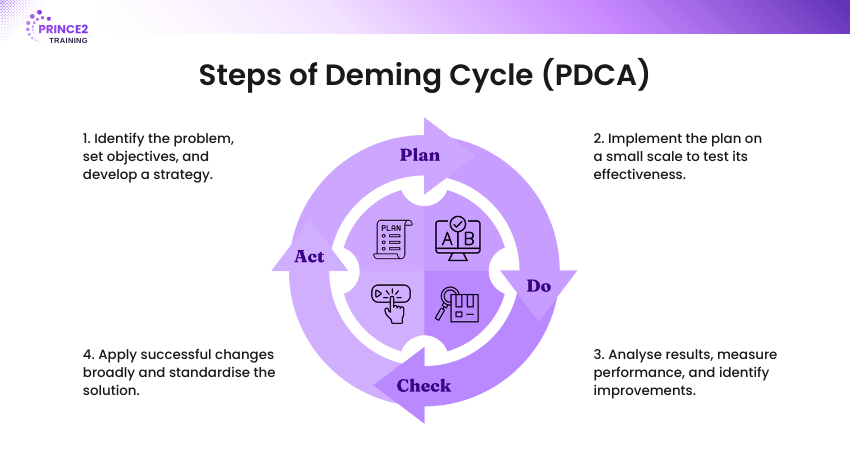
The Deming Cycle, or Plan-Do-Check-Act (PDCA), is all about continuous improvement through small, repeatable steps. Teams plan changes, implement them, check results, and adjust actions accordingly. Key areas are:
1) Identify a goal and plan the change
2) Implement the plan on a small scale
3) Review and analyse the results
4) Adjust and improve based on what was learned
Best For: Agile environments and quality improvement initiatives
5) Bridges Transition Model
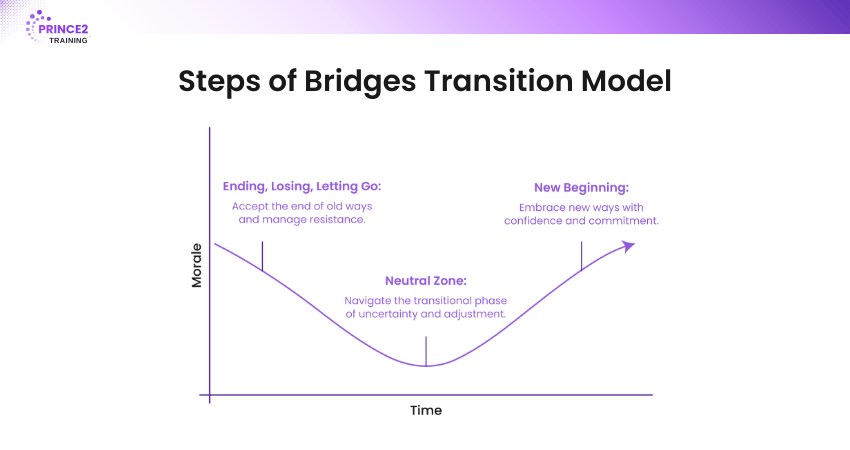
Unlike other models, the Bridges Transition Model focuses on the human side of change: endings, neutral zones, and new beginnings. It emphasises that change succeeds when leaders support emotional transitions, not just technical shifts.
1) People deal with loss and old ways
2) A time of confusion, exploration, and adjustment
3) Embracing new goals, roles, and processes with energy
Best For: Managing uncertainty and employee emotions during major changes
6) McKinsey 7-S Framework
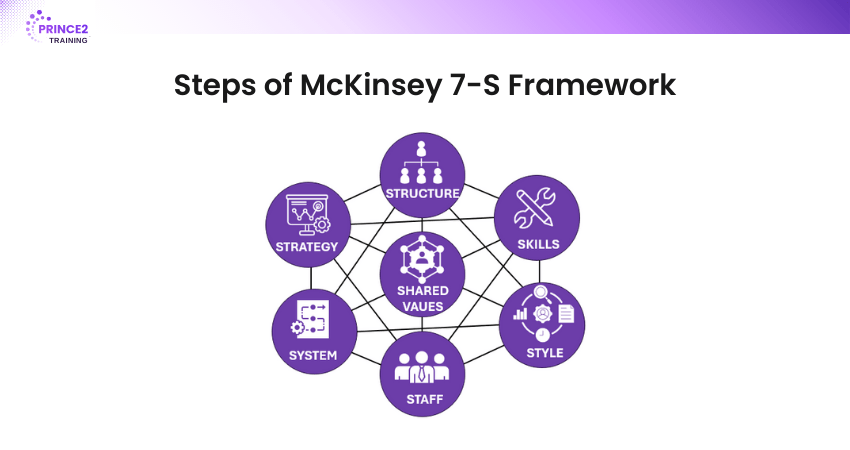
The McKinsey 7-S Framework looks at seven elements that must align for successful change: Strategy, Structure, Systems, Shared Values, Style, Staff, and Skills.
1) The plan to achieve competitive advantage
2) How the organisation is arranged
3) Daily activities and procedures followed
4) Core beliefs and company culture
5) Leadership approach and management style
6) People and their capabilities
7) Core competencies and strengths of the team
Best For: Complex organisational changes where multiple areas need simultaneous adjustment.
7) Kubler-Ross Change Curve
Originally designed for stages of grief, the Kubler-Ross Change Curve also maps emotional reactions to change: Denial, Anger, Bargaining, Depression, and Acceptance.
1) Initial reaction to unexpected change
2) Refusing to accept the change
3) Anger and resistance toward the change
4) Feeling low and helpless about the situation
5) Choosing to adapt to the change
6) Fully accepting and embracing the new reality

Best For: Supporting employees through emotional stages of major transitions
8) Maurer 3 Levels of Resistance
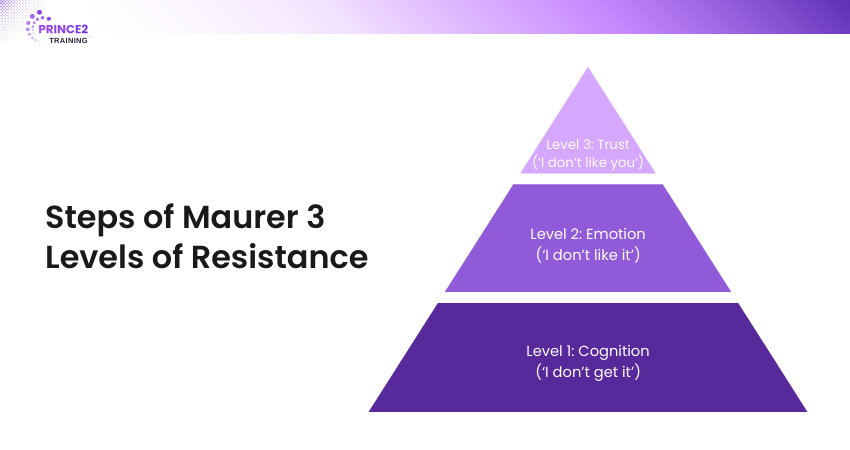
Change is rarely smooth, and resistance is a natural part of any transition. Rick Maurer, a well-known Change Management expert, developed the 3 Levels of Resistance model. It is to help leaders better understand why people resist change and what to do about it.
1) Lack of information or understanding
2) Emotional resistance and fear of change
3) Distrust of leadership or intentions
Best For: Diagnosing why employees resist change and strategies to address each level
9) Kotter's 8 Steps for Leading Change
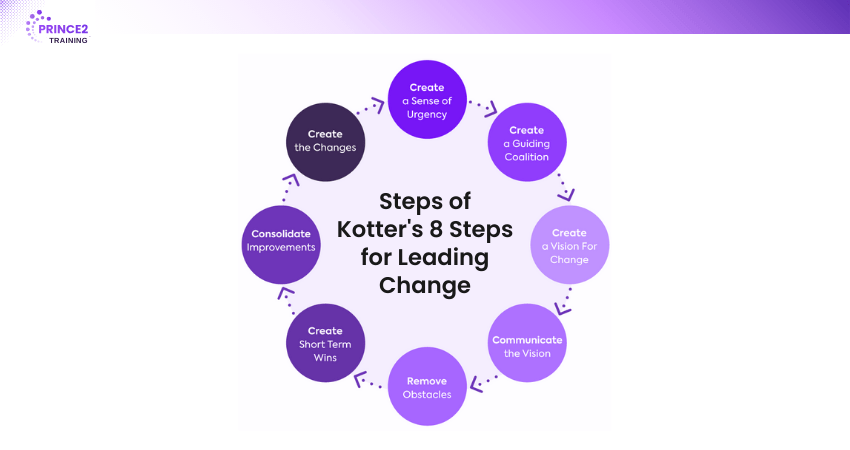
John Kotter's model offers a step-by-step process: creating urgency, forming coalitions, creating and communicating vision, empowering action, creating wins, and anchoring new approaches into culture.
1) Inspire the need for change.
2) Build a strong change leadership team.
3) Develop a clear direction.
4) Share the vision often and clearly.
5) Tackle barriers and empower action
6) Celebrate quick, visible successes
Best For: Leading large-scale organisational transformations
10) Lewin's Change Management Model
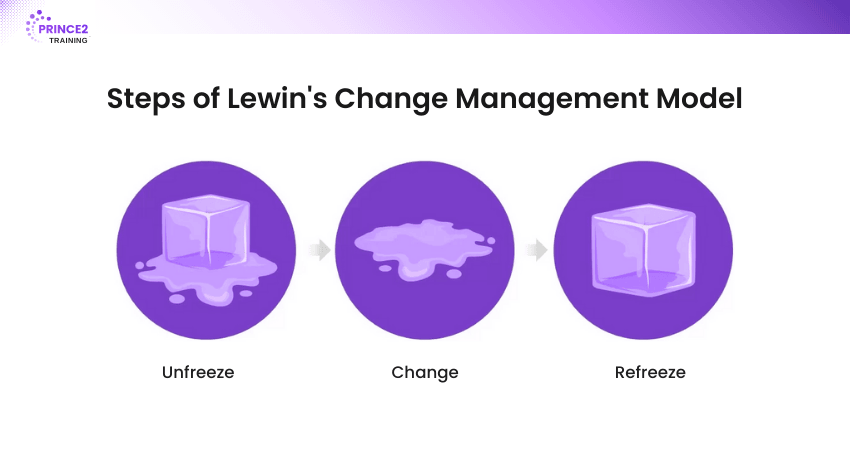
Lewin's model is simple, clear, and easy to apply. It guides people through the transition and stabilising the new state to ensure lasting success. Developed by Kurt Lewin in the 1940s, Lewin's Change Management Model is one of the simplest and most influential frameworks for managing change. It breaks the process into three clear stages:
1) Prepare people for change by challenging the current state
2) Implement new processes, behaviours, or systems
3) Stabilise and reinforce the change to make it stick
Conclusion
Change is never easy, but the right Change Management Model can make it much smoother. No single model fits every situation. The best approach is to understand your team's needs and pick the model that matches your goals and culture. With a good plan, strong communication, and a clear structure, you can help your business handle change with confidence and success. Remember that change isn't just about processes but the people. Support them well, and your organisation can move forward stronger than ever.
Lead fearlessly and manage change powerfully with our Change Management Foundation & Practitioner now!



 Continue Browsing