01344203999




 Back
Back


Table of Content


05-Oct-2026

Veronica Davis
Have you ever wondered how you can streamline operations to outpace competitors? Business Process Improvement (BPI) is your strategic ally, serving as a beacon to guide companies through the complexities of operational enhancement. But what exactly is BPI, and how can it transform your organisation? This comprehensive blog delves into the intricacies of BPI, offering a step-by-step approach to refining your processes.
Are you ready to unlock the full potential of your business operations? Let's embark on this blog on Business Process Improvement (BPI) and explore how it can lead to remarkable outcomes for your company.
Table of Contents
1) What is Business Process Improvement?
2) Why Business Process Improvement is Important?
3) Working of Business Process Improvement
4) Types of Processes to Improve Business
5) Business Process Improvement Techniques
6) Best Practices for Business Process Improvement
7) Conclusion
What is Business Process Improvement?
Business Process Improvement (BPI) is an approach where company executives scrutinise their operational processes to pinpoint opportunities for enhancing precision, effectiveness, and efficiency. Subsequently, they implement modifications to these processes to achieve the identified enhancements.
BPI operates by determining which aspects of operations, employee competencies, or supportive technologies can be enhanced or introduced to promote more streamlined operations, a more productive workflow, and, consequently, expansive business development. Also referred to as functional process improvement, this methodology falls under the wider umbrella of Business Process Management, a field dedicated to the management discipline.

Why Business Process Improvement is Important?
Business Process Improvement (BPI) is crucial for maintaining market competitiveness and efficiency. Let's take a look at its significance:
1) Boosted Productivity and Efficiency:
Adopting effective Business Process Improvement strategies can eliminate inefficiencies, thereby enhancing team member productivity. Organisations can leverage tools to assess performance metrics and refine processes without constraining team dynamics. Insights from reporting and analytics can help identify and address bottlenecks, anticipate potential challenges, and modify workflow processes to bolster productivity.
2) Accelerated Market Readiness:
Utilising tools like Kanban boards and Gantt Charts, companies can expedite the delivery of software applications and other products to market. Scrum, Kanban, and operations teams can maintain a steady stream of value by promptly identifying and resolving obstacles.
3) Elevated Product Quality:
Business Process Improvement not only speeds up development but also contributes to superior product quality. Implementing appropriate testing protocols ensures that products meet performance, security, and integration standards before proceeding to production.
4) Enhanced Customer Satisfaction and Loyalty:
Delivering top-notch products promptly can result in happier customers, who are more likely to become repeat patrons. This customer satisfaction and loyalty can translate into increased business revenue.
5) Boosted Employee Morale:
Cumbersome processes can demoralise employees. A robust system free from inefficiencies can uplift the spirits of even the most diligent workers, as they no longer feel their efforts are negated by systemic flaws.
6) Competitive Edge:
Ongoing improvements in business processes can distinguish a company from its competitors. In addition, the uniqueness of product design, customer service, manufacturing, and distribution processes can provide a competitive edge, which is also the focus of continuous improvement initiatives.
Working of Business Process Improvement
Business Process Improvement generally involves certain crucial steps. Let's look at them in the following points:
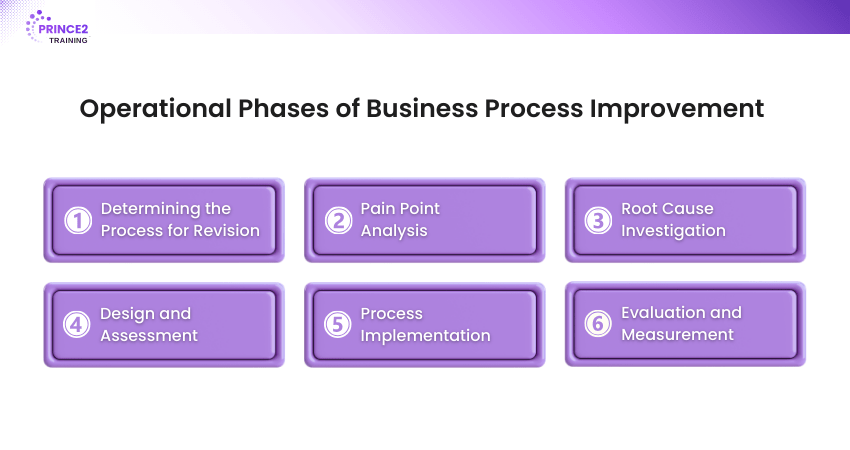
Step 1: The initial step involves pinpointing the process that requires modification, typically achieved through business process mapping or other methods that visualise the sequence of steps, activities, and workflows involved.
Step 2:
This phase entails the identification of bottlenecks, inefficiencies, redundancies, and other issues within the workflow. It utilises visualisation tools and stakeholder feedback to pinpoint these areas of concern.
Step 3:
Performing a root cause analysis is crucial to devise an effective strategy for enhancing or removing the identified problem areas within the process.
Step 4:
This step may include simplifying tasks, retraining personnel, or integrating new technologies like Robotic Process Automation (RPA). It also involves a thorough analysis and testing of the proposed changes to prevent any adverse side effects.
Step 5: Applying change management strategies is essential to ensure the smooth adoption of new or updated procedures or technologies.
Step 6: Finally, reviewing metrics is vital to confirm the implementation of process changes and to evaluate the results of these modifications. This helps in quantifying the impact and success of the improvements made.
Elevate your professional standing with our
Six Sigma Green Belt Course
- secure your spot now!
Types of Processes to Improve Business
Any type of business process can be improved, from the most strategically important to the most mundane. Processes can be formal or informal.
1) Formal Processes
Formal processes are generally codified and follow a series of established steps, often known as procedures. For example, a company may have specific procedures for processing invoices or initiating partnerships with new clients.
Such formal processes are particularly crucial in areas concerning employee or customer safety, legal matters, financial transactions, and other vital or sensitive operations. Clearly defined procedures are instrumental in ensuring that every step is executed to the highest standard.
2) Informal Processes
Conversely, informal processes tend to be developed organically by individuals or teams within an organisation to accomplish specific tasks. While they may not be formally documented, they play a significant role in goal attainment.
Both types of processes share a common objective: to optimise the efficiency of how individuals and teams function. Moreover, adhering to a well-established set of procedures can minimise errors and delays, reduce redundant work, and increase satisfaction among staff and customers.
Business Process Improvement Techniques
Optimising business processes is essential for bolstering efficiency and productivity. Consider these potent methodologies:
1) Kanban
Kanban is a visual management method that aids teams in orchestrating their workflow and pinpointing blockages. Utilising cards and boards offer a transparent overview of tasks, facilitating the prioritisation of work, enhancing communication, and amplifying productivity.
2) Kaizen
Kaizen, which translates to "continuous improvement," is centred on minor, progressive modifications that cumulatively yield substantial enhancements. This approach motivates all employees to suggest process improvements, fostering an environment of perpetual progress and operational efficiency.
3) 5S
The 5S framework encompasses five phases: "Sort, Set in order, Shine, Standardise, and Sustain". It's designed to structure the workspace, eradicate inefficiencies, and uphold a tidy and effective setting. Implementing 5S can elevate safety standards, diminish mistakes, and escalate productivity.
4) PDCA
PDCA, an acronym for Plan-Do-Check-Act, is a repetitive blueprint for ongoing refinement. It starts with strategising an enhancement, executing the alteration, evaluating the outcomes, and acting on the insights gained. PDCA promotes a methodical tactic for resolving issues and advancing processes.
Seize the opportunity to enhance your skills with our
Lean Six Sigma Green Belt Course
- join us and begin your transformation now!
5) Value Stream Mapping
Value Stream Mapping (VSM) is a graphical instrument employed to scrutinise and devise the sequence of material and information flows needed to deliver a product or service to a consumer. By distinguishing between activities that add value and those that don't, VSM assists organisations in streamlining their processes, curtailing waste, and heightening efficiency.
Best Practices for Process Improvement
While these methodologies vary, they all advocate for a version of the following best practices:
1) Identifying Processes for Enhancement
The journey to process improvement begins with the selection of specific processes to refine. Starting on a smaller scale, such as at the team level, allows for a comprehensive examination and complete address of the process. Although organisational-level improvement is commendable, it comes with inherent complexities.
2) Process Mapping
With a chosen process in mind, delineate each step from start to finish. Documenting the process using flowcharts or diagrams is crucial. Involvement from regular process users critical step is missed. A SIPOC Diagram can complement this mapping process by outlining suppliers, inputs, processes, outputs, and customers at a high level.
In addition, understanding where the current process falters is key to implementing impactful changes. Resist the urge to find solutions immediately; instead, aim to capture an accurate depiction of the process as it currently stands.
3) Process Analysis
Leverage your flowchart to dissect the process and identify issues. Include all stakeholders in this analysis to gain diverse perspectives that will inform your improvement efforts.
Facilitating this analysis can take various forms, such as group discussions or pre-meeting questionnaires. Encouraging team members to reflect on the process beforehand can lead to a more fruitful dialogue.
4) Process Redesign
After a thorough analysis, it's time to rework the process to resolve identified issues. Engage with those intimately involved with the process, as they may offer innovative solutions and are more likely to embrace changes if they've been part of the early discussions.
Ensure everyone comprehends the process's objectives and collaboratively explore solutions to the identified problems. For complex processes, consider conducting an impact analysis to gauge the full extent of the proposed changes.
5) Resource Acquisition
Identify and secure the resources necessary for the new process. This includes seeking guidance from senior management and liaising with departments like IT, finance, or HR. Communicate the benefits of the new process to these groups and clarify their roles in facilitating the improvements.
6) Change Implementation and Communication
Implementing Business Process Improvements may necessitate alterations to systems, teams, or processes. A pilot test can help identify potential issues before a full-scale implementation.
Change can be challenging and may encounter resistance. Early involvement and input from those affected can foster acceptance.
Monitoring Outcomes
Before implementing changes, establish key indicators to evaluate the effectiveness of the improvements. Post-implementation, monitor the process closely to confirm it's performing as intended. This monitoring allows for timely corrections.
Regular check-ins with those involved in the new process can provide insights into its functionality and reveal if further adjustments are necessary.
Conclusion
We hope that this blog on Business Process Improvement (BPI) provided you with the essential insights and strategies. Embrace BPI as your compass for innovation and efficiency, and watch your business soar to new heights of success. Let the transformation begin!
Join the ranks of elite professionals with our comprehensive
Lean Six Sigma Black Belt Course
- start your journey to excellence now!



 Continue Browsing