Contact@prince2training.co.uk
 01344203999




 Back
Back


Table of Content

15-Jun-2026

David Walter
Customers notice everything today, from speed and service to consistency and reliability. In 2026, businesses can no longer afford to treat quality as optional. That is where the Benefits of Total Quality Management become truly powerful. It helps organisations refine processes, reduce errors, and deliver consistent value.
More than a quality tool, Total Quality Management (TQM) builds a culture of teamwork, accountability, and continuous improvement across every level of the business. In this blog, you will explore what TQM is and how its benefits can help your organisation thrive in a changing environment.
What is Total Quality Management?
Total Quality Management is a management approach that prioritises quality in every function and operation. Its primary aim is to improve the quality of processes, products, and services while reducing errors, increasing customer satisfaction, and improving business outcomes.
It encourages a culture where every employee takes responsibility for quality and continuous improvement. By using data, feedback, and structured methods, organisations can make informed decisions and achieve sustainable long-term success.

What are the Benefits of Total Quality Management?
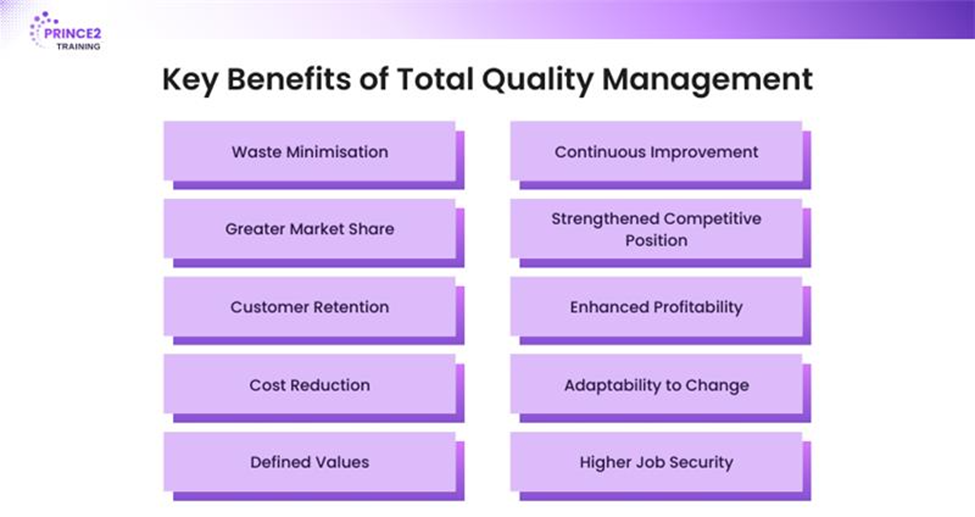
Total Quality Management is more than a method. It is a mindset that transforms how organisations operate, compete, and grow. Let's look at the 20 Benefits of Total Quality Management in 2026.
1) Waste Minimisation
Total Quality Management focuses on removing inefficiencies, waste, and defects from processes. This leads to better-quality products, smoother operations, and fewer errors across the organisation.
Key Points:
a) Identification of Inefficiencies: TQM helps pinpoint areas of waste such as overproduction, delays, and defects.
b) Streamlined Operations: Processes are optimised to remove non-value-adding activities.
c) Cost Reduction: Reducing waste leads to lower operational costs.
d) Environmental Sustainability: Efficient resource utilisation supports eco-friendly practices.
2) Greater Market Share
High-quality products and services increase customer trust and satisfaction. This encourages repeat purchases, positive word-of-mouth, and revenue growth. This helps organisations to expand their market share.
Key Points:
a) Customer Trust: Consistent quality builds customer confidence.
b) Brand Loyalty: Satisfied customers are more likely to recommend the brand.
c) Competitive Edge: High-quality products and services differentiate the business from competitors.
d) Market Expansion: A Positive reputation attracts new customers, increasing market presence.
3) Customer Retention
Consistent quality of strong customer service improves customer loyalty. When customers are retained, it reduces future complaints, increases lifetime value, and turns customers into brand advocates.
Key Points:
a) Customer Focus: TQM ensures quality at every stage of the customer journey, from design to delivery.
b) Loyalty Through Satisfaction: Meeting or exceeding expectations encourages repeat business and strengthens long-term relationships.
c) Reduced Churn: Consistent quality reduces the likelihood of losing customers to competitors.
d) Sustainable Revenue: Loyal customers provide a stable income stream and are less expensive to maintain than acquiring new ones.
4) Cost Reduction
Total Quality Management streamlines processes and optimises resources to help cut unnecessary expenses. This reduces rework, eliminates waste, and directly improves revenue margins of the organisation.
Key Points:
a) Lower Rework Costs: Reducing errors minimises rework and waste.
b) Fewer Returns: Fewer product defects result in fewer refunds or warranty claims.
c) Lean Operations: Efficient systems cut unnecessary expenses.
d) Reinvested Savings: Cost savings can support innovation or expansion.
5) Defined Values
Total Quality Management builds a culture of collaboration, communication, and continuous learning. Employees at every level share responsibility for quality, and each person is aware of the roles they need to perform.
Key Points:
Unified Vision: TQM promotes shared goals and organisational alignment.
a) Employee Engagement: Everyone contributes to quality and improvement.
b) Guided Behaviour: Clear values steer everyday decisions.
c) Stronger Identity: A unified culture reinforces the brand internally and externally.
6) Continuous Improvement
Total Quality Management promotes ongoing evaluation and improvement of processes, products, and services. This reduces errors, adapts to change, and maintains consistent quality and improvement over time.
Key Points:
a) Ongoing Progress: TQM fosters regular updates to processes and standards.
b) Innovation Culture: Small changes often lead to breakthrough improvements.
c) Agility: Continuous upgrades allow fast market adaptation.
d) Employee Involvement: All team members contribute to improving outcomes.
7) Strengthened Competitive Position
Total Quality Management helps organisations to deliver consistent quality. This is useful for standing out in the competitive market. A strong reputation for consistent quality draws more customers than competing businesses.
Key Points:
a) Quality Differentiation: Reliable products stand out in saturated markets.
b) Customer Preference: High standards attract quality-conscious buyers.
c) Reputation for Excellence: Sustained quality builds brand prestige.
d) Strategic Flexibility: Enables quicker responses to market shifts.
8) Enhanced Profitability
Total Quality Management reduces waste, improves efficiency, and increases customer retention. This directly supports higher revenue, lower rework, and improved productivity, driving steady revenue growth.
Key Points:
a) Operational Efficiency: Waste reduction increases productivity and lowers costs.
b) Customer Loyalty: Repeat customers ensure steady revenue.
c) Higher Margins: Fewer losses translate into greater profits.
d) Growth Capital: Increased profits enable reinvestment and expansion.
Learn the fundamentals of Agile project delivery the right way with the Agile Project Management Foundation (Agile PM®) Course now!
9) Adaptability to Change
TQM encourages flexibility through continuous improvement. Organisations can adapt more easily and rapidly to evolving market needs, emerging technologies, and rising customer needs to maintain business momentum.
Key Points:
a) Flexible Processes: TQM enables quick pivots in response to shifts.
b) Future Readiness: Anticipates and prepares for evolving trends.
c) Tech Integration: Simplifies adoption of new tools and platforms.
d) Crisis Resilience: Supports business continuity during disruptions.
10) Higher Job Security
TQM is useful for keeping businesses stable. With stable business performance and improved work culture, this supports long-term growth, creating greater job security for employees at every level.
Key Points:
a) Stable Operations: Quality-driven success leads to organisational stability.
b) Reduced Layoffs: Improved performance lowers financial risk.
c) Skill Growth: Employees evolve through continuous learning.
d) Positive Workplace: A stable job fosters trust and satisfaction.
11) Upgraded Processes
Total Quality Management regularly monitors and updates processes. This is done to ensure processes meet regulatory compliance standards, evolving market trends, and overall business objectives.
Key Points:
a) Routine Evaluation: Regular audits identify outdated procedures.
b) Modern Techniques: Processes are updated to align with current standards.
c) Efficiency Gains: Smooth workflows reduce time and cost.
d) Error Reduction: Improved methods minimise mistakes and delays.
12) Cross-functional Teamwork
TQM encourages teams from different departments to work together towards shared quality goals. This improves communication, reduces silos, speeds up problem-solving, and ensures a seamless process.
Key Points:
a) Unified Collaboration: Teams work together to meet shared goals.
b) Open Communication: Breaks down silos across departments.
c) Shared Success: Team members celebrate improvements together.
d) Innovation Boost: Diverse input leads to better problem-solving.
13) Decision Making
TQM is reliant on data to drive decisions. It uses data to reduce risk and improve the effectiveness of strategic planning and problem-solving. This helps organisations make informed and confident business decisions.
Key Points:
a) Data-backed Choices: TQM encourages the use of performance data and KPIs.
b) Feedback Loops: Customer input informs better strategic decisions.
c) Bias Reduction: Decisions are fact-driven, not assumption-based.
d) Goal Alignment: Ensures actions support long-term business objectives.
14) Effective Risk Management
TQM is proactive in detecting issues and helping to prevent errors and avoid crises. Due to continuous improvement, it is beneficial for reducing operational disruptions and business risk by offering long-term solutions to any issues.
Key Points:
a) Risk Identification: Early detection of potential quality issues.
b) Preventive Measures: Systems are built to avoid repeat failures.
c) Controlled Processes: Better oversight ensures consistency.
d) Crisis Avoidance: Proactive planning reduces unexpected disruptions.
15) Improved Employee Morale
TQM fosters a culture where employees are involved in quality initiatives. Also, due to well-defined roles and responsibilities, it increases ownership, satisfaction, and teamwork across the organisation.
Key Points:
a) Employee Empowerment: Everyone has a voice in quality initiatives.
b) Recognition Culture: Staff are appreciated for their contributions.
c) Growth Opportunities: Upskilling keeps roles engaging and valuable.
d) Workplace Pride: People feel good about delivering excellence.
16) Increased Stakeholder Value
TQM is focused on delivering consistent quality. This directly improves profitability, market image, and revenue. At the end, it results in benefiting customers and employees and builds trust in investors.
Key Points:
a) Strong Returns: Operational excellence boosts financial outcomes.
b) Reputation Growth: Stakeholders benefit from association with a trusted brand.
c) Sustainable Practices: Quality adds long-term value, not short-term fixes.
d) Transparency: Reliable metrics keep stakeholders informed and confident.
Advance your Agile expertise and manage complex project challenges confidently with the Agile Project Management Practitioner Upgrade (Agile PM®) Course today!
17) Stronger Supplier Relationships
Total Quality Management requires collaboration with suppliers. This is to ensure consistent quality of inputs, reducing defects, controlling any delays, and avoiding supply chain disruptions.
Key Points:
a) Clear Expectations: Standards are well-communicated to suppliers.
b) Quality Consistency: Suppliers align with your quality goals.
c) Fewer Disruptions: Reliable supply chains reduce production delays.
d) Long-Term Trust: Strong partnerships lead to better terms and loyalty.
18) Better Compliance with Standards
Total Quality Management is important for maintaining compliance with set industry standards and regulations. This is key for organisations wanting to avoid potential legal risk and penalties, safeguarding brand reputation and avoiding additional costs.
Key Points:
a) Regulatory Alignment: Processes meet legal and industry requirements.
b) Audit Preparedness: Documentation is structured and ready for review.
c) Fewer Penalties: Compliance reduces the risk of fines or shutdowns.
d) Global Trust: Certification supports international credibility.
19) Improved Customer Trust and Brand Reputation
TQM's consistent quality and reliable service delivery build customer trust over time. When organisations meet customer expectations regularly, it develops confidence in customers, leading to a stronger brand reputation.
Key Points:
a) Consistent Delivery: Customers get what they expect every time.
b) Positive Perception: Quality earns favourable reviews and feedback.
c) Referral Power: Trust drives word-of-mouth marketing.
d) Loyal Brand Advocates: Customers become long-term supporters.
20) Faster Problem Resolution
TQM helps teams to identify any issues proactively through regular monitoring and data analysis. Problems are addressed quickly at their root causes, reducing any delays, rework, and negative impact on customers.
Key Points:
a) Real-Time Insights: TQM uses feedback to catch issues early.
b) Root Cause Tools: Structured methods resolve problems at their source.
c) Quick Action: Empowered teams fix issues efficiently.
d) Service Continuity: Minimal disruptions keep operations running smoothly.
Conclusion
The Benefits of Total Quality Management go far beyond improving products or services. Total Quality Management helps organisations to build strong processes, engaged teams, and higher customer trust. Embedding these qualities into everyday work helps businesses to reduce waste, improve performance, and adapt confidently.
Build Agile skills for real-world project success and drive effective business results with Agile Training - Agile Project Management!
Frequently Asked Questions
What is the Main Purpose of TQM?
The main purposes of TQM are:
a) Upgrade product, service and process quality
b) Improve customer satisfaction
c) Minimise defects and errors
d) Reduce waste and inefficiencies
e) Foster continuous improvement
f) Guarantee long-lasting business success and competitiveness
What are the Principles of Total Quality Management?
These are the principles of Total Quality Management:
a) Customer Focus: Give priority to customer needs.
b) Continuous Improvement: Always improve processes.
c) Employee Involvement: Involve all staff in quality activities.
d) Process Approach: Optimise workflows for efficiency.
e) Systematic Management: View the organisation as an interconnected system.
f) Factual Decision Making: Base decisions on data.
g) Supplier Relationships: Encourage strong, joint partnerships with suppliers.
How Does TQM Affect Quality?
It improves quality by ensuring consistent standards, reducing defects, and focusing on customer satisfaction. It supports a culture of continuous improvement, leading to sustained quality enhancement. By optimising resources and eliminating waste, TQM improves both product quality and operational efficiency.



 Continue Browsing