01344203999



 Back
Back


Table of Content

06-May-2024

Rose Alfred
Have you ever wondered what would happen if you were in a rapidly transitioning environment but did not respond to it with speed and attention? You wouldn’t be able to cope with change! And would lag way behind in your responses. Failing to adapt with Agility would lead to failure. This is very true for organisations as well, specifically in the case of projects. Now, there is the new ‘Agile’ methodology, which divides the project work into phases. These phases are visited again and again to update them with the market and changes in customer needs. This results in a highly customised product that not only meets but exceeds customer expectations. These phases are called ‘iterations’ or ‘sprints. This is quite contrary to the traditional ‘waterfall’ approach, where work phases are carried out in a sequence, and there is no re-visiting a phase once you are past it. This makes it very difficult to make any changes in the product life cycle. As a result of this, the final product is outdated and lags way behind customer specifications.
So, contemplating on and investing in an Agile training course would be a very wise move. These days, agile training courses can be accessed from accredited and recognised institutes across the globe. These can be accessed both online and via classroom training.
The five most sought-after certifications in the Agile industry are:
- Certified Scrum Master (CSM). It requires no experience.
- Professional Scrum Master-I-(PSM-I). It requires no
experience.
- Certified Scrum Practitioner. It requires 2000 hours of
experience.
- PM-I Agile certified practitioner. It requires 2000 hours of experience.
Agile Foundation Level. A certificate assesses the ability to apply basics and requires no practical experience.
Agile certification is demonstrable proof of the skillset of the individuals who can manage risk better and are able to deliver the most value with the least resources and reduced time.
Agile foundation is for individuals who are moving towards change in Agile application projects and going in for a practitioner exam. It is also for individuals wanting a career in project management and who want to be effective project leaders and want their knowledge to be tested before they appear for a practitioner exam.
Scrum is the most used Agile process. It typically consists of three roles:
- Product Owner: He takes the initiative to ensure that the product is manufactured in the right sequence and supports the team when they need him/her and has full empowerment to take product related decisions.
- Scrum Master: He is the coach and mentor of the team and reviews team progress. He is also responsible for removing hindrances and supporting meetings and discussions.
- Team: The team works in unison to ensure product goals and quality are achieved. The team also is responsible for task allocation.
Another agile software development methodology that is most used is extreme programming, which intends to improve software quality and Agility in response to changing customer needs. Agile projects are very flexible and highly scalable.
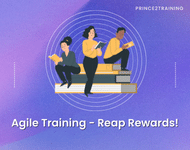
Investing in Agile training would yield high returns both in terms of career for the individual and improved bottom line for the organisation. So, go for Agile training right away and reap the rewards that you so much deserve.


 Continue Browsing