Contact@prince2training.co.uk
 01344203999




 Back
Back


Table of Content


24-Sep-2026

David Walter
Have you ever felt like a project was going great, but the final product didn't quite meet expectations? Maybe you've worked on a website redesign where the Developers were busy coding, but the marketing team's vision was never fully communicated. This is where an Agile Business Analyst makes all the difference, by aligning the business goals with the development efforts, ensuring a smoother project delivery.
In this blog, we'll explore who an Agile Business Analyst is and their key role in successful projects. We'll cover their main responsibilities, essential skills, required qualifications, and salary expectations across regions. Let's delve in!
Who is an Agile Business Analyst?
An Agile Business Analyst (BA) is a professional who ensures that a team works efficiently in an Agile methodology. They collaborate closely with all team members, making sure that everyone understands the project's goals and objectives. Their role is to help the team stay aligned with the business's needs, ensuring that tasks are prioritised based on business value.
The Agile Business Analyst also listens to customer needs and ensures that the team builds the right product. They make sure that business goals are clear, and the team remains focused and flexible, adjusting to any changes while meeting those goals. Their aim is to keep the project on track and ensure successful delivery.
Roles of an Agile Business Analyst
The roles of an Agile Business Analyst can change based on the team and project. But there are some key tasks they do to help make sure the project moves forward smoothly. Some of the roles include:
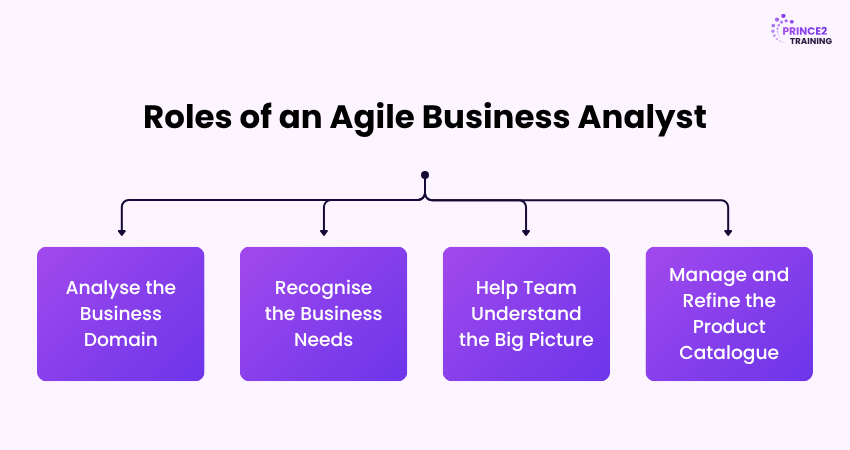
1) Analyse the Business Domain
An Agile Business Analyst starts by understanding how the organisation works. They take time to learn about the company’s operations, goals, and overall objectives. This helps them ensure that any project they work on is aligned with the business vision. By having a clear picture of the bigger ecosystem, they can better define what the project is expected to achieve and how it contributes to the company’s success.
2) Recognise the Business Needs
A key part of the role is understanding what stakeholders and customers actually need. Agile Business Analysts regularly interact with them, ask the right questions, and gather insights from both external stakeholders and internal team members. They then use this information to guide the direction of the project, thus ensuring that the final outcome meets expectations and delivers real value.
3) Help Team Understand the Big Picture
An Agile Business Analyst makes sure the entire team is aligned with the overall goals. They help connect the dots by explaining how individual tasks contribute to the bigger project. By keeping everyone focused on the end objective, they enable better collaboration and ensure the team stays on track throughout the project.
4) Manage and Refine the Product Catalogue
The Agile Business Analyst plays a vital role in managing the product backlog, which is essentially a list of tasks and requirements for the project. They keep it updated as new needs arise and make sure the most important tasks are prioritised. This way, the team always works on what matters most, helping deliver value efficiently and effectively.
Enhance your Project Management skills. Join our Agile Project Management Foundation (Agile PM®) Course today!
Key Responsibilities of an Agile Business Analyst
An Agile Business Analyst wears many hats and plays a crucial role in ensuring Agile projects succeed. Let’s break down what their responsibilities are:
1) User Story Creation and Refinement
User stories are at the heart of Agile development. As an Agile BA, you’re responsible for turning high-level business needs into clear, actionable user stories. You’ll work closely with Product Owners and development teams to refine these stories so that everyone understands what needs to be built and why.
2) Facilitating Agile Ceremonies
Agile comes with its own set of regular meetings like sprint planning, daily stand-ups, reviews, and retrospectives. An Agile Business Analyst helps keep these sessions productive by making sure discussions stay focused, goals are clear, and any roadblocks are addressed. Your involvement helps the team stay aligned and move forward smoothly.
3) Eliciting and Managing Requirements
In Agile, requirements aren’t fixed, they evolve over time. That’s why gathering and managing them is an ongoing process. You’ll use techniques like workshops, interviews, and brainstorming sessions to understand what’s needed. Then, you’ll document and manage those requirements using collaborative tools, keeping them flexible and up to date.
4) Data Analysis and Decision Support
Agile teams rely heavily on data to make smart decisions. As an Agile BA, you’ll analyse data, identify insights, and help guide the team toward the best course of action. You might also collaborate with Data Analysts or scientists to ensure decisions are backed by solid evidence and contribute to overall project success.
How to Become an Agile BA From a Traditional BA?
Moving from a traditional Business Analyst role to an Agile BA isn’t as hard as it might seem. You just need the right approach. Here are a few practical ways to make that shift:
a) Get Hands-on with Agile Teams: One of the best ways to learn Agile is by actually working with Agile teams. Being part of their day-to-day activities helps you understand how things work in real situations and pick up best practices along the way.
b) Take Agile Training: Consider joining workshops or courses focused on Agile. These can help you quickly understand core concepts, frameworks, and techniques, giving you a solid foundation to build on.
c) Learn from Agile Resources: Books, blogs, and articles on Agile can be really helpful. They’ll give you deeper insights into how Agile works and how you can apply it in your role.
d) Start Using Data in Your Decisions: Agile BAs often rely on product data and analytics to make decisions. Learning how to use data to back your insights can make your contributions much more impactful.
e) Learn to Use Agile Tools: Get familiar with common Agile tools like Jira, Confluence, and Azure DevOps. These tools help manage user stories, track project progress, and support collaboration, making it easier to contribute within Agile teams.
f) Improve Stakeholder Engagement Techniques: In Agile, engaging stakeholders effectively is key. Work on techniques that help you better communicate, collaborate and gather requirements in a way that keeps everyone involved and aligned.
Skills Required to be an Agile Business Analyst
Being a good Agile Business Analyst requires a mix of different skills. Here are some of the most important ones:
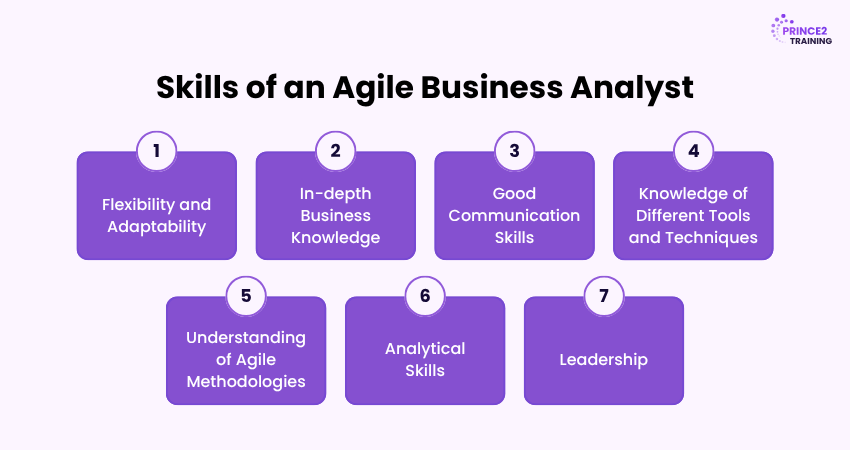
1) Flexibility and Adaptability
Agile environments are always evolving. Teams are self-organising, and priorities can shift quickly. That means you need to be comfortable with change and ready to adjust your approach as needed. A good Agile BA stays aware of what the team needs at any moment and contributes where they can add the most value.
2) In-depth Business Knowledge
To guide the Agile team well, you need a deep understanding of the business including its processes, products, and long-term vision. Often, you’ll be the go-to person when stakeholders or team members need clarity or direction, so having that strong business knowledge is crucial.
3) Good Communication Skills
Strong communication is one of the most important skills for an Agile Business Analyst. They interact with stakeholders, business users, developers, Product Owners and managers every day. Their job is to understand requirements, explain ideas clearly, resolve misunderstandings, and keep everyone aligned with the project's goals. They should also be confident in leading meetings, facilitating workshops, writing clear user stories, and creating easy-to-understand project documentation.
4) Knowledge of Different Tools and Techniques
Tools like Jira, Asana, ClickUp, Trello and others can make your work much more efficient. They help with tracking progress, managing tasks, and creating reports for sprints and releases. Being comfortable with these tools and knowing how to use them effectively can really boost your productivity.
5) Understanding of Agile Methodologies
A good Agile Business Analyst should be familiar with Agile frameworks such as Scrum, Kanban, and Lean. They should understand Agile principles, iterative delivery, sprint planning, Backlog Management and continuous improvement to help teams deliver value more effectively.
6) Analytical Skills
Agile BAs need to think critically and pay attention to detail. You’ll often be analysing complex information, identifying patterns, and finding solutions to problems. Skills like Root Cause Analysis, impact assessment and risk evaluation help you make better decisions and ensure the solution aligns with project goals.
7) Leadership
Even if you’re not officially managing the team, you’ll still be guiding them. That means you will be involved in leading discussions, facilitating workshops, and helping the team stay aligned with Agile principles. Good leadership also involves taking accountability and supporting your team when challenges come up.
Iterate and innovate through every project by signing up for our Agile Training. Join today!
Qualifications of an Agile Business Analyst
To become an Agile Business Analyst, you usually need a degree in a related field, like business, Information Technology (IT) or management. Many Business Analysts also complete certifications to demonstrate their understanding of Agile principles and practices. Some common certifications include:
1) Agile Project Management Foundation (Agile PM®)
2) Agile Project Management Practitioner Upgrade (Agile PM®)
3) Agile Project Management Foundation & Practitioner (AgilePM®)
Having these certifications can help an Agile Business Analyst show they have the skills needed for the job.
Practical Agile Experience:
Hands-on experience working in Agile teams is one of the most valuable qualifications. Participating in sprint planning, backlog refinement, user story creation, and stakeholder collaboration helps develop the practical skills needed to perform effectively as an Agile Business Analyst.
Continuous Professional Development:
Agile practices continue to evolve, making continuous learning essential. Attending workshops, participating in Agile communities, and staying updated with industry trends help Agile Business Analysts maintain their knowledge and enhance their professional capabilities.
Agile Business Analyst Salary
The salary of an Agile Business Analyst can vary depending on where they work, how much experience they have, and the size of the company. In general, the salary is considered competitive and rewarding. Below are some salary highlights for Agile Business Analysts across different regions:
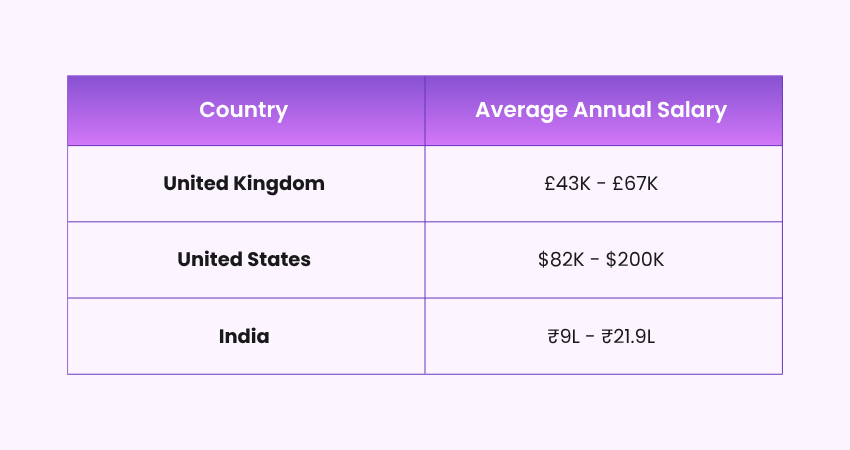
Source: Glassdoor
Conclusion
An Agile Business Analyst plays an indispensable role in any Agile project. They help the team stay focused on the business goals, communicate well with everyone and make sure the project stays on track. The role requires good communication skills, flexibility and a solid understanding of business needs. If you enjoy working with teams and solving problems, becoming a Business Analyst in Agile could be a great career choice.
Fulfil the Agile journey from fundamentals to mastery with our Agile Project Management Foundation & Practitioner (AgilePM®) Course - Join now!
Frequently Asked Questions
What Tools do Agile Business Analysts Commonly Use?
Agile Business Analysts commonly use tools such as Jira, Confluence, Azure DevOps, Trello, Miro, Lucidchart, Microsoft Visio, Figma, Microsoft Teams, Slack and Excel. These tools help with requirement gathering, product backlog management, process mapping, collaboration and documentation.
What Does an Agile Business Analyst do?
An Agile Business Analyst works closely with stakeholders and Agile teams to understand business needs, define requirements, prioritise the product backlog and refine user stories. They make sure that the solutions deliver customer value and support continuous collaboration throughout the project lifecycle.
What is the Difference Between Agile BA and Scrum Master?
An Agile Business Analyst focuses on understanding the business requirements and ensuring the solutions meet stakeholder needs. A Scrum Master facilitates Scrum ceremonies, removes team impediments, promotes Agile practices and helps the development team work efficiently.



 Continue Browsing