Contact@prince2training.co.uk
 01344203999




 Back
Back


Table of Content


09-Jun-2026

Veronica Davis
An office buzzing with creative energy, camaraderie, productivity, celebration and laughter! That is the ultimate dream for any employee. It’s not just about deadlines and spreadsheets; it’s about shared purpose and genuine connections. That’s the magic of a great Company Culture. It fuels productivity, innovation, joyful collaboration and employee satisfaction.
This makes knowing How to Improve Company Culture extremely important for both employers and employees. This blog will guide you through expert tips to build an environment that not only inspires but retains top talent. Implement these strategies to build a winning culture that propels your organisation to new heights and transforms your workplace into a thriving, dynamic hub of excellence.
What is Company Culture?
At its core, Company Culture reflects the everyday experience of working within an organisation. It includes the shared values, behaviours and attitudes that shape how teams collaborate and engage with customers in a professional environment.
The culture you build directly influences recruitment, brand reputation, customer trust, and employee satisfaction. Ultimately, Company Culture serves as the unifying force that aligns everyone toward a shared purpose, enabling teams to work effectively together in pursuit of a common mission.

Why is it Important to Improve Company Culture?
Improving Company Culture brings plenty of benefits:
1) Stronger Employee Alignment:
When organisational values align with employee goals, people feel more connected, motivated, and satisfied in their roles.
2) Higher Productivity:
A positive culture encourages employees to stay focused, proactive, and committed to delivering their best work.
3) Increased Creativity and Innovation:
Supportive cultures empower employees to share ideas freely, driving innovation and continuous improvement.
4) Improved Morale and Resilience:
Employees who feel valued remain motivated and perform well, even during periods of change or challenge.
5) Attraction of Top Talent:
A strong culture appeals to skilled professionals seeking growth, purpose, and a positive working environment.
6) Better Employee Retention:
Valuing and supporting employees builds loyalty, thus reducing turnover and strengthening organisational stability.
7) Sustainable Business Growth:
Engaged teams deliver better customer experiences, contributing to long-term performance and success.
How to Improve Your Company Culture?
Now that you have an understanding of what constitutes Company Culture, let’s explore these expert tips on crafting a successful culture for your company:
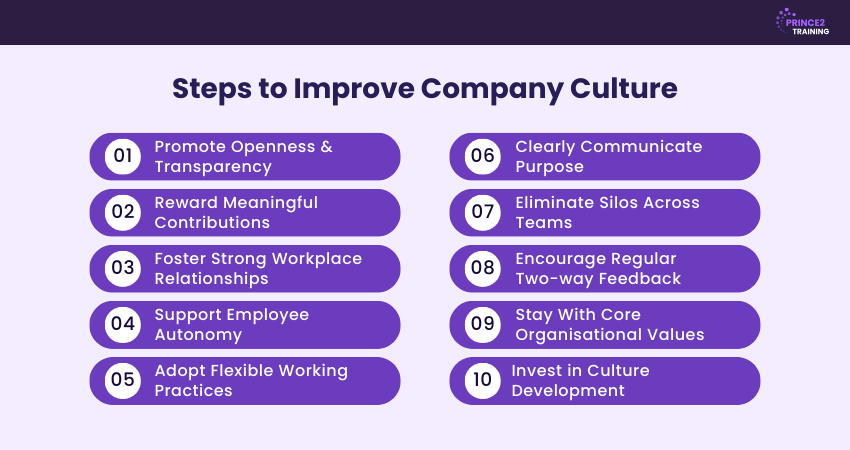
1) Embrace Transparency
Transparency builds trust and psychological safety across the organisation. To create a transparent culture, ensure teams have access to reliable communication and collaboration tools. Equally important is adopting a mindset that defaults to openness unless there is a clear reason to withhold information. Celebrate successes openly and communicate challenges honestly, inviting employees to share ideas and contribute solutions.
2) Recognise and Reward Valuable Contributions
Recognition plays a vital role in shaping a positive workplace culture. Acknowledging behaviours and outcomes that reflect company values reinforces what matters most. Recognition should not be limited to leadership alone; peer-to-peer appreciation can be just as powerful. When employees feel appreciated by both leaders and colleagues, motivation increases and workplace relationships strengthen.
3) Cultivate Strong Coworker Relationships
Strong workplace relationships do not happen by chance. They require intention, time, and a supportive environment. Encourage informal interactions through shared spaces, team-building activities, and collaboration beyond routine tasks. For hybrid or remote teams, prioritise meaningful in-person or virtual interactions to maintain trust, familiarity, and team cohesion.
4) Embrace Employee Autonomy
Micromanagement undermines trust and engagement. Encourage your employees to take ownership over their work, decision-making opportunities and flexibility in how tasks are completed. Autonomy encourages accountability, confidence and initiative. This allows employees to take pride in their responsibilities and outcomes.
The art of process perfection is in your hands. Sign up for our
Lean Six Sigma Black Belt Upgrade Course
and drive Transformational Change with ease!
5) Be Flexible
Flexibility supports employee wellbeing and morale. This can include flexible working hours, remote or hybrid options, adjusted schedules for personal commitments or extended breaks when needed. Recognising that employees have lives beyond work fosters loyalty and a healthier work environment.
6) Communicate Purpose and Passion
People want to understand why their work matters. Leaders play a crucial role in connecting daily tasks to broader organisational goals and impact. Regularly highlight how individual contributions support customers, teams and the organisation’s mission. Purpose is strengthened through meaningful relationships, visible impact and opportunities for personal growth.
7) Break Down Silos
Silos restrict collaboration and slow progress. Encourage teams to view themselves as part of a unified organisation rather than isolated departments. Promote cross-functional collaboration, shared goals, and open communication to improve alignment, drive innovation, and achieve collective success.
8) Give and Solicit Regular Feedback
Feedback should be ongoing, constructive, and two-way. Annual reviews alone are not enough to support growth and improvement. Use regular one-to-one conversations, stay interviews and engagement surveys to understand employee experiences and address concerns early. Timely feedback helps reinforce positive behaviours and resolve issues before they escalate.
9) Stay True to Your Core Values
Core values should guide decisions, behaviours, and leadership actions, not just exist as statements on a website. Authentic values reflect what the organisation truly stands for and inform how people work together. Align recognition, expectations and culture initiatives with these values to ensure consistency and credibility.
10) Give Culture Building the Effort it Deserves
Company Culture does not develop on its own. It requires continuous attention and reinforcement. As organisations evolve, so do their people and cultural needs. Invest time in nurturing culture daily, model it through leadership behaviour and treat it as an ongoing priority rather than a one-time initiative.
Become the change agent your organisation needs. Sign up for
Lean Six Sigma Green Belt Course
- Join now!
Important Features to Include in a Company Culture
Building a positive Company Culture demands intentional effort and dedication. It must be consistently developed, implemented, and reinforced across the organisation. Here are five key elements to focus on when fostering a strong Company Culture:
1) Recognition
Recognition is among the most significant contributors to a winning Company Culture and is one of the biggest drivers of employee engagement. Recognition should be frequent, timely and specific for maximum impact. It reinforces positive behaviour and motivates employees to maintain high performance. Consistent recognition also helps individuals feel valued and appreciated for their contributions.
2) Values
Company values such as integrity, innovation, honesty, and accountability should be at the heart of your Company Culture. These values should guide decision-making and everyday behaviour across the organisation. When leaders actively demonstrate these values, they become embedded in how teams work and collaborate.
3) Employee Voice
Employees should feel comfortable when voicing their feedback. Managers must actively encourage open dialogue through channels such as pulse surveys and always-on HR chatbots. Acting on feedback builds trust and shows employees that their opinions genuinely influence workplace improvements.
4) Leadership
A great culture is a reflection of strong leadership. Leaders should act as role models and maintain open, two-way communication with their team members. Effective leadership sets clear expectations, builds trust and inspires employees to align with organisational goals.
5) Belonging
A sense of belonging is fundamental to a strong Company Culture. Employees are more engaged when they feel welcomed, known, included, supported and connected. Encouraging inclusive practices and meaningful relationships helps create a workplace where people feel respected and valued.
Amplify your business improvement prospects and boost your Company Culture with our Lean Six Sigma Black Belt Course - Sign up now!
5 Types of Events for Improving Workplace Culture
Here are several types of events you can use to create a more positive and connected workplace:
1) Networking:
Networking events allow employees to connect with others in similar roles or industries, exchange experiences, and build professional relationships. These can be internal sessions within larger organisations or external events such as conferences and trade shows.
2) Trust-building:
Trust-building activities help strengthen communication and teamwork. Team-based experiences create shared moments that build confidence, trust and stronger working relationships.
3) Skill Development:
Events focused on learning new skills include workshops, seminars, conferences and structured training sessions. These events contribute to a forward-looking workplace culture.
4) Giving Back:
Community-focused events such as volunteering days, charity initiatives, or fundraising activities help embed social responsibility into Company Culture.
5) Social Events: Social gatherings offer employees the chance to connect informally outside of work responsibilities. Regular social events help build rapport and foster a sense of belonging within the organisation.
How to Use Employee Surveys to Improve Company Culture?
Employee surveys are a powerful way to measure how your workforce perceives key aspects of your culture. By collecting honest feedback, you gain insight into how aligned your organisation truly is with its cultural goals. Follow these steps:
1) Start by aligning survey questions with the core elements of a great culture, such as mutual respect, shared goals, open communication, and growth opportunities.
2) Make surveys confidential and inclusive so employees feel safe sharing genuine perspectives.
3) Use survey data to pinpoint the strengths and weaknesses in your culture. Look for themes in responses that highlight areas needing improvement, such as leadership or communication.
4) Turn insights from employee surveys into concrete initiatives. For example, if feedback shows a need for clearer communication around company goals, implement forums for dialogue.
5) Repeat surveys periodically to measure progress and adjust strategies. Continuous listening shows employees their voices matter.
Conclusion
Learning how to Improve Company Culture is not a one-time endeavour. It’s an ongoing journey that demands dedication and thoughtful strategies that align with diverse employee mindsets. By nurtuting meaningful connections, career development opportunities, transparency, flexibility and recognising achievements, you can create a thriving workplace that strengthens your company.
Turbocharge your business improvement skills with our Lean Six Sigma Yellow Belt Course - Sign up now!
Frequently Asked Questions
What are the Four C's of Company Culture?
The Four C's of Company Culture are Communication, Collaboration, Community, and Contribution. They are essential for building a positive and productive workplace. Together, they encourage transparency, teamwork, shared values and purpose, thus helping organisations strengthen engagement, trust and long-term performance.
How to Fix a Broken Company Culture?
Fixing a broken culture starts with listening to employees and identifying root issues. Leaders must rebuild trust through transparency and accountability. Aligning behaviours with company values, improving communication and taking visible action on feedback are essential steps.
What are Core Values in a Culture?
Core values are the guiding principles that define how an organisation operates and makes decisions. They shape behaviours, influence leadership styles and set expectations for employees, thus serving as a foundation for culture, purpose and long-term direction.



 Continue Browsing